
 E-Paper



From parlour to animal husbandry, government loans enabling Haryana women become self-sufficient
Shimla Devi has started a beauty parlour after getting a loan of ₹1 lakh from Haryana Sarva Gramin Bank under Haryana Mukhyamantri Antyodaya Parivar Utthan Yojana (MMPAUY)

 Prefer HTon Google


Having lost her husband Pawan Kumar in 2018, 45-year-old Shimla Devi, a mother of two daughters, was left with no other option but to start working as a labourer in her native Tandwal village.
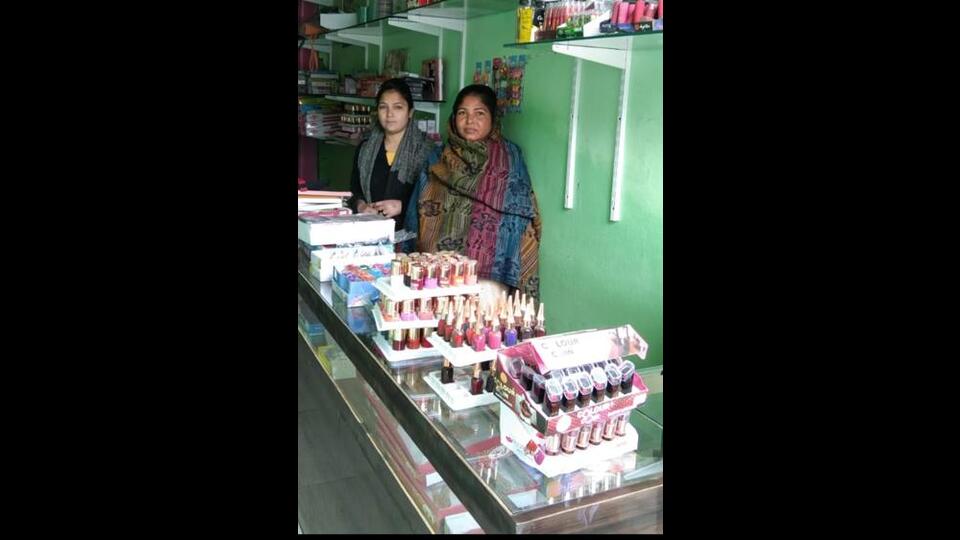
To improve her living conditions, Devi later started making mats at the village with the help of a ₹20,000 loan from Aarti Samuh, a self-help group under Haryana State Rural Livelihoods Mission (HSRLM).
However, after the death of her son-in-law two years later, Devi also had to provide for her elder daughter Aarti, 20, and her two children. Not losing hope, she started her own cosmetics shop in Barara town with a ₹50,000 loan from the same self-help group. Last year, she started a beauty parlour for Aarti, after getting a loan of ₹1 lakh from Haryana Sarva Gramin Bank under Haryana Mukhyamantri Antyodaya Parivar Utthan Yojana (MMPAUY).
Devi is not alone. Pooja and Manju, both from Ambala Cantonment, also received loans under the scheme which helped them become self-employed. Now, they both run grocery stores in Bihari Lal Building and BC Bazaar, respectively. Pooja’s relative Gaurav Kumar said that she has been running the store for the last 15 years after getting divorced. “Though her two kids live with the ex-husband, she always wanted to become self-employed. We never thought that any government could actually provide a loan to us,” he said.
Officials said that both had attended an MMPAUY Mela at SD College in December last year and were sanctioned a loan of ₹1.5 lakh each by Punjab and Sind bank, of which some amount has been disbursed to both already.
In another part of the district, 35-year-old Mamtesh runs a dairy business with her relatives in the Naraingarh sub-division to supplement the income of her husband, a labourer, to sustain their family of five. A resident of Badoli village, she owns four cattle and supplies milk to a local firm. “We were provided with a loan of ₹1.6 lakh under the scheme and have added a buffalo to our farm with some amount disbursed initially. This will surely help in increasing our family income,” she said.
Additional deputy commissioner, Ambala, Sachin Gupta, said that the objective of the scheme is to ensure economic upliftment of families with an annual income of below ₹1 lakh per year through skill development, wage employment, self-employment, and job creation and subsequently increase it to at least Rs. 1.80 lakh per annum.


