
 E-Paper



GI testing sees sharp rise as Kashmir Valley handicraft dealers eye coveted tag
The Pashmina Testing and Quality Certification Centre (PTQCC) spokesman said that the testing rate, which was 40-45 per day in 2024-25, has now risen to 170 per day in 2026-27.

 Prefer HTon Google


The handicraft dealers of Kashmir have embraced Geographical Indication (GI) tagging in a big way as the Pashmina Testing and Quality Certification Centre (PTQCC) at the Craft Development Institute (CDI) here has recorded a sharp rise in the testing of products, especially Kashmir Pashmina, Kani and Sozni embroidered shawls, during the current financial year.
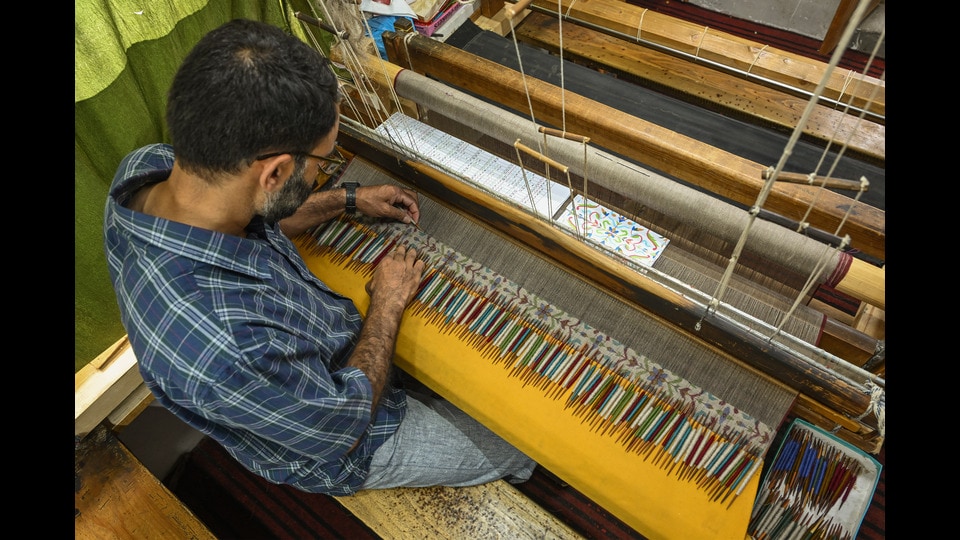
“The surge reflects stronger institutional capacity, upgraded laboratory infrastructure and growing demand for authentic GI certification and QR coding,” a spokesperson of the Handicrafts and Handloom Department, Kashmir, said.
The spokesman said that the testing rate, which was 40-45 per day in 2024-25, has now risen to 170 per day in 2026-27. “In 2024-25, PTQCC conducted 13,369 tests at an average of 40-45 tests per day. This rose to 22,351 tests in 2025-26, with the daily average increasing to 75-85 tests. In the current financial year, PTQCC has already performed approximately 21,000 tests. With another 21,000 tests projected between November 2026 and March 31, 2027, the annual total is expected to reach around 42,000 tests, nearly doubling the testing rate achieved in the previous years,” the spokesman said.
To support this expansion, the laboratory has been strengthened with advanced equipment, including a Scanning Electron Microscope (SEM) and two High-Resolution Digital Microscopes. “The department is in the process of procuring another OFDA 2000 fibre analyser and an additional digital microscope under CAPEX. These additions are expected to further accelerate testing, improve precision in fibre identification and quality assessment and meet the rising demand for GI testing and QR coding of certified products,” he said, adding that those GI authorised users who submit hand-spun, hand-woven Pashmina products with Sozni embroidery are being given preferential treatment.
To bring greater transparency in GI testing, certification and QR coding at PTQCC, the department has developed an in-house online appointment token management system to further streamline the operations across all testing labs of the department, including IICT and QCD (Quality Control Division). “The web application has been developed by the resource cell of the department, which shall be operational shortly on a pilot basis,” he said.
The directorate is in the process of augmenting additional manpower to operate the machines for which technical staff is being sent to Wool Research Association (WRA), Thane, Maharashtra for technical training. “With trained manpower, we shall have more teams in place to conduct tests in PTQCC so that the rising demand for GI testing and QR coding post aggressive media campaign, by GI Authorised Users is met.


