
 E-Paper



Guest column: Grassroots vaccine distribution needed
The challenge before developing countries such as India, with large rural populations, is distribution of vaccines to small towns, villages and slums


India and governments across the world are struggling to bring vaccines within reach of 7.67 billion people. Many countries are simply flummoxed by the overwhelming task. In cities, people can visit hospitals for jabs. However, in villages and slums, the vaccines will have to travel to the people.
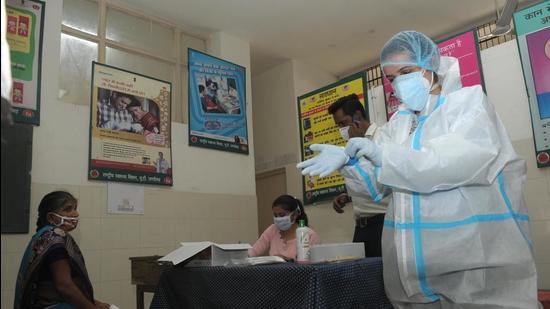
The challenge before developing countries such as India, with large rural populations, is distribution of vaccines to small towns, villages and slums. Of 6,64,369 villages in India, 35.5%, which is 2,36,004 villages, have a population less than 500. It will be an enormous undertaking, to bring vaccines to people in these areas due to lack of motorable roads.
Companies are using grassroots distribution techniques to reach consumers in small towns and villages. Middlemen are not available for this ‘last mile distribution’. Companies have innovated techniques such as motorcycle brigades, retail foot soldiers, distribution and propaganda vans and distribution boats. These mass-distribution ideas can be deployed for vaccinations in small towns and villages.
‘Covid-19 warrior motorcycle brigade’
The ‘motorcycle brigade’ model comprises teams of youngsters visiting villages and slums to retail small packets of toothpaste and washing powder among other essential items. ‘Riders for health’ in Africa visit villages on motorcycles to distribute anti-malaria medicines. The health departments could launch ‘Covid-19 warriors motorcycle brigades.’ These would be health workers, with ice boxes carrying vaccines mounted on motorcycles, visiting villages to inoculate residents. Two health workers on a motorcycle could cover one or two villages daily and vaccinate 500 villagers.The visiting health workers should carry hand-held terminals to record names, ages and locations of the people they inoculate. Small printers, attached to the terminals, can print vaccination certificates. The ‘warriors motorcycle brigade’ programme should inform villages being visited in advance. Then, residents will be ready, at a central place like the village school, temple, mosque or church.
‘Covid-19 foot-soldiers’
A major challenge in developing countries is to vaccinate people in villages that have no motorable roads at all. Even motorcycles find it difficult to reach some villages due to rainfall and slush. We had initiated a scheme called ‘Mama-Mia distribution programme’, in our company, which translates to ‘hundred mamas distribution programme’. These were 100 housewives who collected a carton of toothpaste every morning and sold the tubes to villagers in their homes.
The scheme can be relaunched as ‘Covid-19 foot soldiers’. Health workers could carry an ice-box of vaccines to villages, which are inaccessible by road and vaccinate the villagers. The execution of the programme will require resolving logistical issues such as sourcing the appropriate type and number of ice-boxes.Each team of two ‘Covid-19 foot soldiers’ should aim to cover at least one village with 300-500 vaccines per day. The foot soldiers should carry hand-held terminals and micro-printers to record their vaccinations.
‘Distribution and propaganda’ vans
To accelerate vaccinations and create awareness about Covid-19, health authorities should use ‘distribution and propaganda’ vans. These are vans or autos, which undertake vaccinations and propaganda activities. Health authorities can deploy vans with freezers, to transport the vaccines to villages and slums. The workers can vaccinate from the vans.A propagandist distributes masks free to the assembled villagers. He makes announcements on how to avoid infections and videos can be used to demonstrate how to observe Covid-19 protocols. The van can cover two villages per day. If three hundred villagers congregate at every meeting, a van could vaccinate 600 villagers daily.
‘Covid-19 warrior boats’
Many interior villages are surrounded by backwaters or rivers and are inaccessible by roads. In Kerala , many villages can be accessed only through boats. The company I worked with deployed boats to sell soaps to village shops along the bank of different waterways, including the Amazon River in Peru, Colombia and Brazil. In water-bound regions, health departments can initiate ‘warrior boats’, which will carry medical staff, vaccines and masks. They will visit five to six villages per day, vaccinate and distribute masks. They can also organise demonstrations on Covid-19 protocols. A refrigerated mother ship could carry the vaccines and feed 10 to 15 smaller ‘warrior boats’ every night.
Operation vaccine flood
Globally, around 230 vaccine candidates are being researched to fight Covid-19. Of these, ten vaccines are now being deployed. By the end of 2021, we could have 15 to 20 approved vaccines. India should launch ‘operation vaccine flood’, to ensure that by mid-2022 every person is be able to buy a vaccine of choice, from any pharmacist.
( The writer, an alumnus of Harvard Business School, is a Mumbai-based management consultant)


