
 E-Paper



Guest column: Remembering the intellectual legacy of Bhagat Singh
A grateful nation remembered Bhagat Singh on his 92nd martyrdom anniversary this week by paying glowing tributes to the great nationalist who embraced the gallows with a smile on his face while fighting against the British colonial rule.


A grateful nation remembered Bhagat Singh on his 92nd martyrdom anniversary this week by paying glowing tributes to the great nationalist who embraced the gallows with a smile on his face while fighting against the British colonial rule. His courage continues to inspire successive generations of Indians.
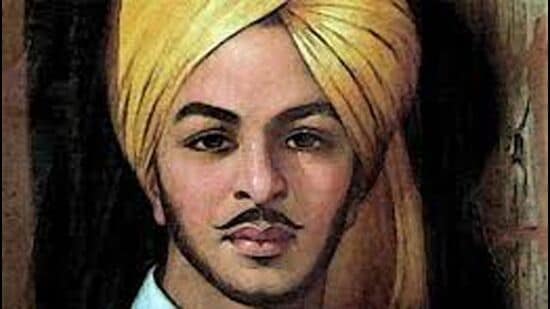
So what makes him one of the most enduring symbols of the freedom movement? Bhagat Singh is venerated for his intellectual legacy encompassing an egalitarian society, free from communal and caste bias. He was a voracious reader and he devoured new publications on the global fight against imperialism, poverty, religion and equality in society. He was also a prolific writer and wrote widely on issues confronting the nation in Kirti, Arjun and Pratap — well-known papers of that time. He also circulated pamphlets and posters expressing his views. Bhagat Singh’s ‘Jail Diary’ encapsulates his political philosophy and ideas are as relevant today as they were then.
“It is easy to kill individuals but you cannot kill the ideas,” read the pamphlet Bhagat Singh threw in the Central Assembly on the April 8, 1929. “ Great empires crumbled but the ideas survived. Bourbons and Czars fell, while the revolution marched ahead triumphantly,” he said, as he made no attempt to escape. He went on to shake the pillars of the colonial empire in his defence before the courts.
Pushed for egalitarian society
Bhagat Singh was equally concerned about the social set up in free India as he took cudgels against slavery.”Revolution does not mean the transfer of power from one set of exploiters to another. True revolution is the complete overthrow of the existing oppressive order and a gradual and painstaking construction of a new egalitarian social order,” he said. In a historic meeting held at Feroz Shah Kotla in 1928, The Hindustan Republican Association (HRA), formed by young freedom fighters, was rechristened as the Hindustan Socialist Republican Association (HSRA) at the instance of Bhagat Singh and socialism was adopted as its official goal. Being deeply concerned about the socio-economically deprived sections of the Indian society, he declared in his last testament, “To Young Political Worker”, his ideal as the “Social reconstruction on a new i.e. Marxist basis”.
When Hindu-Muslim riots broke out in Lahore after Mahatma Gandhi called off the Non-cooperation Movement, Bhagat Singh began to question the religious ideologies. He asked how could members of these two groups, initially united in fighting against the British, be at each other’s throats because of religious differences. The essay ‘Religious Riots and their Solution’ was published in the June 1927 issue of Kirti. “The condition of Bharatvarsh,” he said, “is pitiable today. The devotees of one religion are sworn enemies of the devotees of the other religion. How the Muslims killed innocent Hindus and Sikhs, and how even the Sikhs did their worst when the opportunity came baffled the young nationalist. These religions have ruined the country. And one has no idea how long these religious riots will plague Hindustan… As far as I have seen, communal leaders and newspapers are behind these riots. These days the Indian leaders exhibit such shameful conduct that it is better not to say anything. It appears that the leadership of Bharat has gone bankrupt. The other people who have played a special role in igniting communal riots are the newspaper people. These people print provocative headlines and rouse passions of people against one another, which lead to rioting.”
Crusade against untouchability
In March 1926 Bhagat Singh founded the Nau Jawan Bharat Sabha, a more public face of the Hindustan Republican Association. Two of its prominent rules were: To have nothing to do with communal bodies or parties that disseminate communal ideas and to create a spirit of general tolerance among people considering religion as the personal belief of man.
In the June 1928 issue of Kirti, Bhagat Singh wrote two articles titled ‘Sampradayak Dange aur Unka Ilaj’ (Communal Riots and their Solution) and ‘Achoot ka Sawaal’ (on untouchability). The anguished cry of the patriot is even relevant today as communal conflagrations flare up at regular intervals and his solution is the panacea that political parties and the media need to adopt whole-heartedly.
Besides the ideas on an egalitarian society, free from communal bias, Bhagat Singh wrote copiously against the discrimination of the untouchables.
“Our country is unique,” he wrote, “where six crore citizens are called untouchables and their mere touch defiles the upper castes. Gods get enraged if they enter the temples. It is shameful that such things are being practiced in the twentieth century. We claim to be a spiritual country but hesitate to accept equality of all human beings while materialistic Europe is talking of revolution since centuries. They had proclaimed equality during the American and French revolutions. “
In conclusion, while we remember Bhagat Singh’s supreme sacrifice with pride, we need to emulate his ideas to create an egalitarian society free from caste and communal biases. As the famous historian Irfan Habib has pointed out “projecting Bhagat Singh as a passionate anti-colonialist is not inaccurate, it is incomplete.” The nation must pay heed to the insightful intellectual legacy of Bhagat Singh to realise the India of his dreams.
dhanbirbains@gmail.com
The writer is a retired IAS officer and a former home secretary of Punjab.


