E-Paper



Haryana herders at wits’ end as bovines come down with lumpy skin disease
Major outbreaks of the viral disease – which is spread by bloodsucking insects, certain species of flies and through contaminated food and water– have also been reported in Rajasthan and Gujarat

 Prefer HTon Google


Herders in Haryana are at their wits’ end with cattle coming down with the occasionally fatal and highly contagious lumpy skin disease in the northern districts of the state.
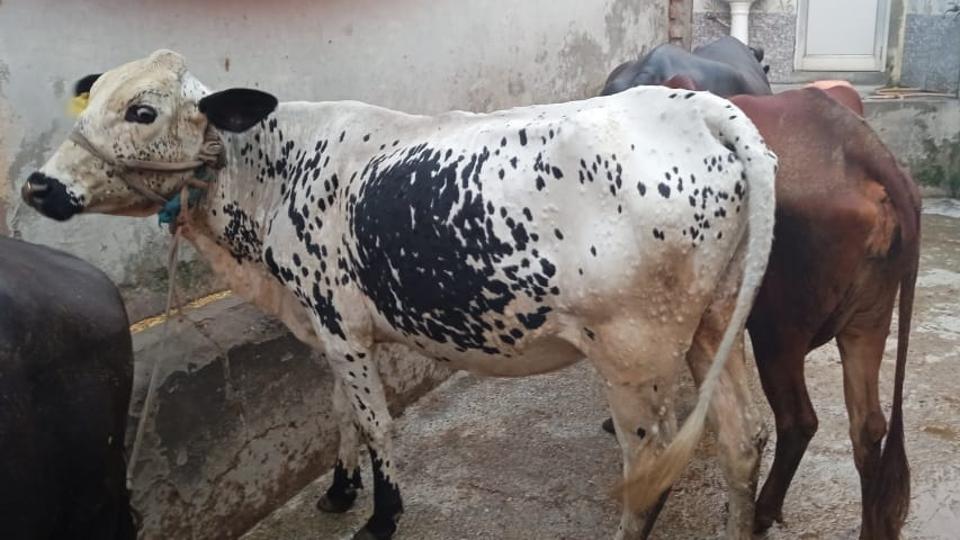
Major outbreaks of the viral disease – which is spread by bloodsucking insects, certain species of flies and through contaminated food and water– have also been reported in Rajasthan and Gujarat. The disease causes acute fever, discharge from the eyes and nose, salivation, soft blister-like nodules all over the body, marked reduction in milk yield, difficulty in eating, and sometimes, also leads to the animal’s death. The mortality rate for the contagion is 1 to 5%.
Farmers say a significant population of foreign breeds have contracted the infection in Yamunanagar and Kurukshetra districts. Officials are yet to carry out a survey to gauge the extent of the transmission among the bovine population. Alarmed farmers say they had approached veterinary doctors and administrative officials, but to no avail.
A Ladwa-based private veterinary doctor, Pankaj Kumar, said, “Hundreds of cattle are exhibiting symptoms of the disease in the area, and two have even succumbed to the infection over the past couple of days.”
Saying that the recovery rate for the disease was “negligible,” a veterinary doctor Ravinder Kumar, said, “We receive at least a hundred calls a day from farmers, worried that their cattle had contracted the disease. There is no specific medicine for it, but we are consulting senior doctors and are trying to contain the spread of the contagion.”
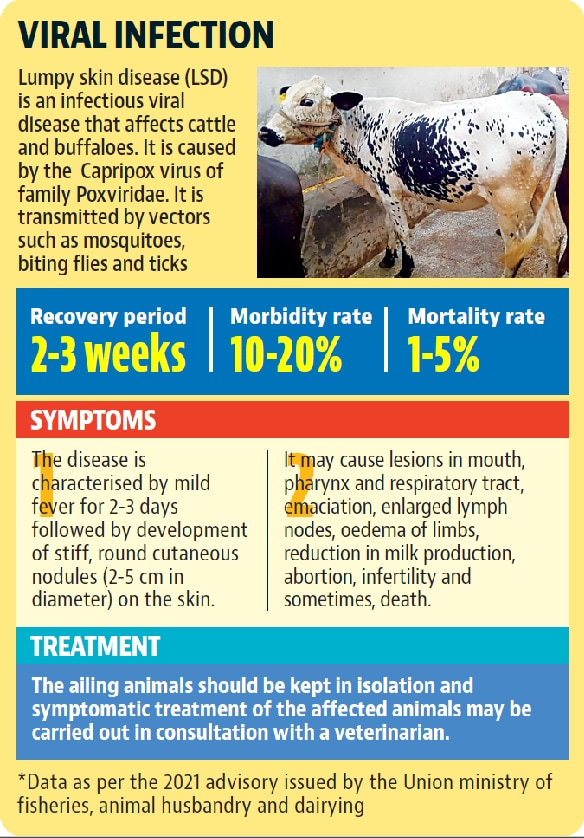
“In our village, five cows have died in the last two days and several others have nodules on their skin, and are feverish. The outbreak is concerning as there is no vaccine for the disease,” a farmer, Rajesh Kumar of Radaur, Yamunanagar, said.
Another worried farmer, Amit Kumar of Mehra village, Ladwa, said, “My cow started exhibiting symptoms four days ago, but there has been no improvement in her condition. Medicines are not helping.”
Department of Animal Husbandry and Dairying veterinary surgeon Dr Narender Thakral, “In September, out of a sample size of 60, 12 cattle were found infected with the skin disease in a research conducted by The Lala Lajpat Rai University of Veterinary and Animal Sciences (LUVAS). One of the animals also succumbed to the disease. An advisory was circulated and webinars were arranged to sensitise people about the disease and state-level nodal officers were designated.”
“We were already collecting monthly reports from districts, but we will ramp up surveillance and will take measures to arrest the spread of the disease. There is no certified vaccine for this infection but goat pox vaccine is known to be useful in controlling the spread of the infection, and ring vaccination has also been found effective,” he added.
Experts say the disease was reported for the first time in West Bengal in 2019.