
 E-Paper



High court takes note of delay in allotting houses to judges in Chandigarh
Court verbally directs UT’s senior standing counsel to look into the issue; asks whether ₹1-crore cap on tenders for sprucing up houses was behind the delay

 Prefer HTon Google


The Punjab and Haryana high court on Friday verbally directed UT administration’s senior standing counsel to look into why there was a delay in handing over allotted houses to its judges.
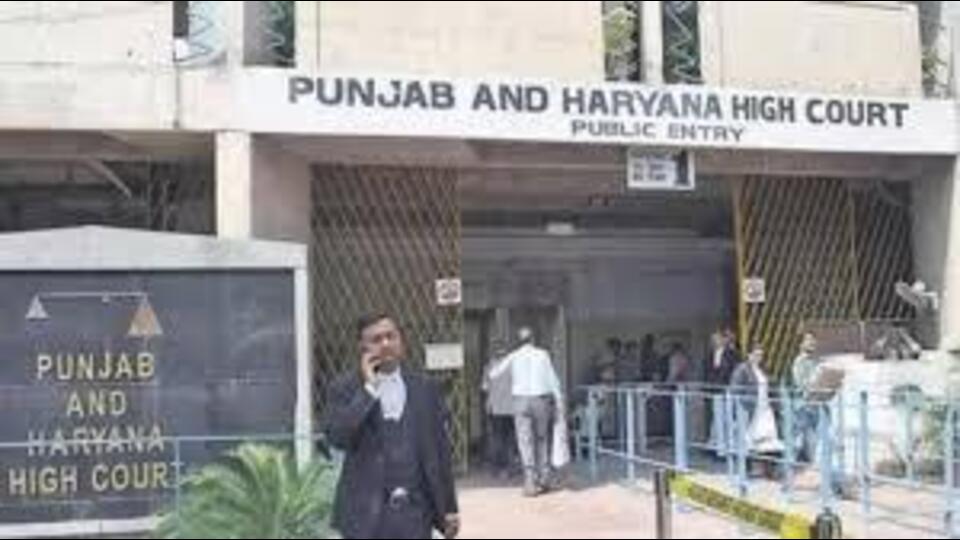
During the hearing of a matter related to the Union territory, the bench of chief justice Sheel Nagu and justice Sanjiv Berry sought to know from UT’s senior standing counsel Amit Jhanji whether there was a delay in sprucing up the allotted houses due to a spending limit of ₹1 crore on allotment of tenders for different works imposed by the Union ministry of home affairs (MHA).
Though the exact number of houses, etc., was not discussed, it is reliably learnt that houses in question are of some judges transferred from other high courts.
Responding to this, Jhanji told the court that the condition on allotment of tenders was in respect of all UTs and not just Chandigarh. However, this condition was not applicable on the works already initiated by the Chandigarh administration. “I am not fully aware of the facts about this. I will find out from the officers and apprise the court,” Jhanji said as the court asked him to find out reasons behind the delay in handing over the possession of houses meant for HC judges.
In September, the UT administration had come out with a notification following MHA’s intervention, stripping local officers of financial powers.
Until then, HoDs could approve works up to ₹1.5 crore, chief engineers up to ₹3 crore, administrative secretaries up to ₹20 crore, the chief secretary up to ₹50 crore and the administrator up to ₹100 crore.
All these powers now stand revoked and officers need MHA’s clearance for works above ₹1.5 crore.
The UT finance department had also issued a circular to all departments, directing them to prepare tender documents at the time of sending the project file to MHA. The goal is to enable the immediate issuance of work orders as soon as approval is received, avoiding any slowdown in project implementation. The measures introduced by the administration virtually brought the tendering processes to a halt.
Bar body seeks covered walkways between HC building, parking lots
The Punjab and Haryana Har Court Bar Association on Friday sought high court’s intervention to provide covered walkways between the main court complex and parking lots for protection from rain, winter fog and intense summer heat.
The Bar association counsel also suggested that another covered corridor was also required between lawyers’ chambers and gate number 4 of the new court complex.
Additionally, the court was requested to ask the UT to construct public toilets outside the courts for general public, which are currently unavailable.
The bench of chief justice Sheel Nagu and justice Sanjiv Berry, while taking note of the submissions, asked UT’s counsel to look into the issue.
Meanwhile, Jhanji informed the court that the proceedings regarding expansion of high court, for which a panel has been set up under a high court judge, are underway and a report will be submitted soon.
The high court had formed the panel to look into the issue of space crunch at the court complex. It is headed by a sitting high court judge and has members from the Bar, Chandigarh administration, Punjab, Haryana and Centre, apart from other stakeholders. The panel has met on a few occasions to discuss the issue.
The committee was set up as the lawyers’ body opposed shifting of high court out of the present complex after UT offered around 45 acres in Sarangpur for the purpose. Even the HC administration was sceptical of shifting there due to traffic congestion on the road between PGIMER and Sarangpur.
The administration maintains that expansion can take place at the current site itself. However, the area earmarked for the purpose will have to be brought down to 2-3 lakh square metres with clearance from UNESCO, as the high court is part of the Capitol Complex, declared a world heritage site in 2016.
Now, the panel is to examine afresh how much land UT can provide at the present location and how it can be utilised keeping in view the future requirements.
The expansion plan envisages constructing multi-storey buildings to address the pressing space crunch, given that the court handles over 10,000 lawyers, 3,300 employees, thousands of litigants and around 10,000 vehicles daily, triggering massive traffic jams daily.
There are also not adequate court rooms if the current strength of 60 odd judges were to go up to the sanctioned 85 in future.


