
 E-Paper



Indian students relocated to Qom amid air strikes in Iran
Indian Embassy begins moving students to safer zones; Kashmir faces second day of strict restrictions as protests over Ayatollah Khamenei’s killing trigger largest security lockdown in Valley since 2019.

 Prefer HTon Google


As the security situation in Iran turns increasingly hostile following joint US-Israel airstrikes, the Indian embassy in Tehran has initiated the emergency relocation of Indian students to safer locations.
According to the Jammu and Kashmir Students Association (JKSA), which has been monitoring the situation, students based in the Iranian capital have been moved to Qom, about 140km south of Tehran, in buses arranged by the mission.
“The decision to relocate is a precautionary measure in view of the deteriorating security situation,” the JKSA said in Srinagar, confirming that all Indian students, including those from Jammu and Kashmir, are currently safe.
The association added that a formal evacuation process to bring the students back to India is expected in the coming days, though it remains subject to the resumption of airspace operations and the evolving ground situation.
On Monday, distressed parents in Kashmir urged Lieutenant Governor Manoj Sinha and the central government to fast-track their children’s return. Families estimate that over 1,000 students were unable to leave Iran before the strikes commenced.
Back in the Kashmir Valley, the administration enforced the strictest movement restrictions in years for the second consecutive day on Tuesday. The crackdown follows violent protests against the killing of Iran’s supreme leader, Ayatollah Ali Khamenei, on February 28.
The authorities cancelled all security force convoy movements across the Valley on Tuesday to prevent potential flashpoints. Furthermore, road opening parties, the standard security protocol for clearing highways, were not deployed to minimise friction with locals. This shift in strategy follows a violent Monday where 75 rallies were recorded across the region, resulting in injuries to at least 14 people, including six security personnel.
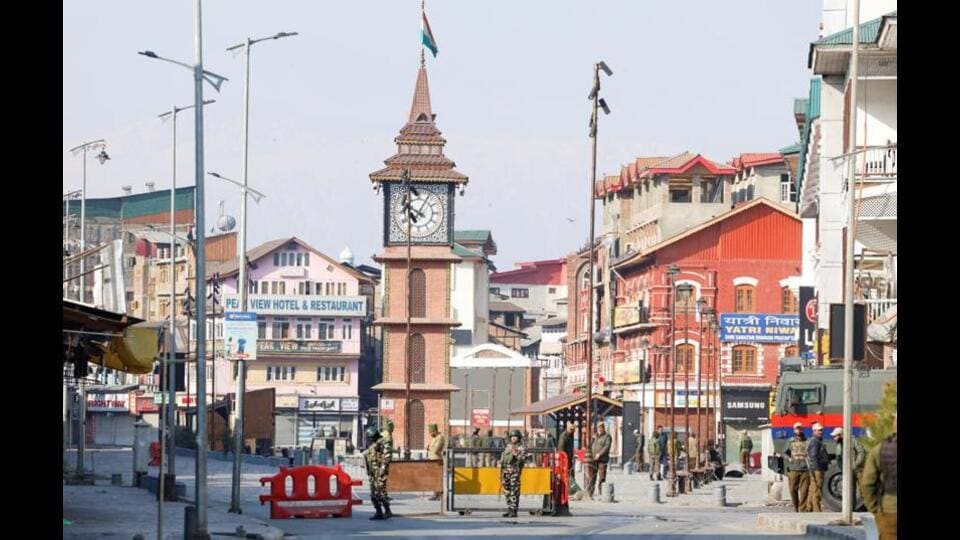
Mobile internet speeds remain throttled, and educational institutions have been ordered shut. In Srinagar, the iconic Ghanta Ghar at Lal Chowk has been sealed with concertina wires and barricades, while a heavy deployment of police and CRPF personnel remains on high alert.
This marks the largest scale of civil unrest in Kashmir since the abrogation of Article 370 in August 2019. The divisional administration of Kashmir issued a formal appeal for restraint, urging citizens to avoid digital provocation and share only verified information.
“We acknowledge the role of all communities in maintaining peace,” a spokesperson said, announcing a 24-hour helpline (0194-2740003) for those seeking assistance. The J&K Police have similarly warned of strict legal action against instigators of violence while pleading with the public to refrain from provocation.


