
 E-Paper



Interview: Punjab’s law & order better than most states, says DGP Gaurav Yadav
Punjab Police Chief Gaurav Yadav addresses security challenges, crime trends, and anti-drug efforts in Punjab, emphasizing control over law and order.

 Prefer HTon Google


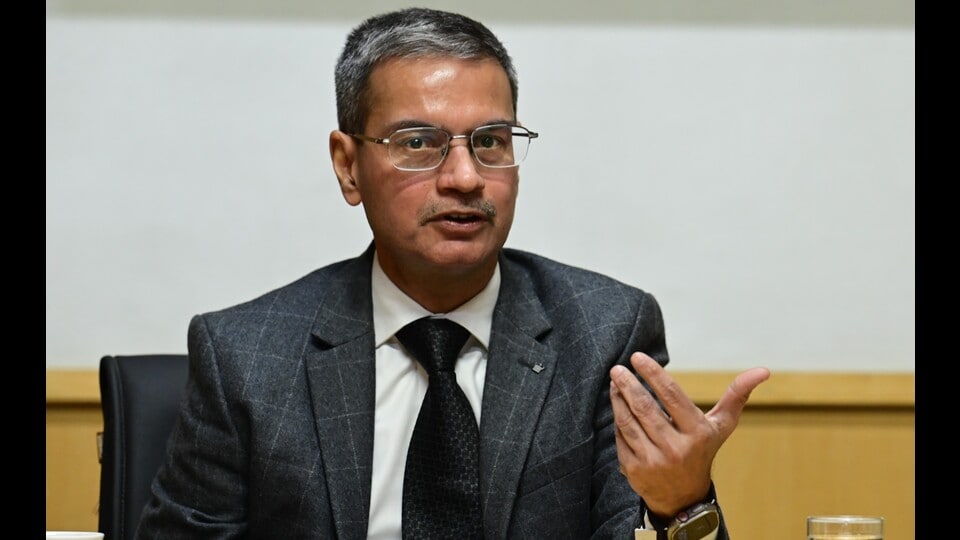
As a sensitive border state with a not-too-distant past of violent extremism, Punjab faces a raft of internal security challenges stemming from Pakistan and foreign-based elements. As the head of Punjab police for nearly three and a half years, Gaurav Yadav, a battle-hardened 1992-batch IPS officer, has been at the forefront of neutralising the ceaseless threats to the state’s fragile peace while helming the complex law and order dynamics. In a year-end interaction on Tuesday with Hindustan Times, moderated by Executive Editor Ramesh Vinayak, Yadav addressed wide-ranging questions, including a rapidly-morphing terror-gangster nexus, fight against drugs, political interference in policing, and modernisation of the force. Edited excerpts:
How do you assess the overall law and order situation in Punjab this year?
The situation is fully under control and is better than most other states. Punjab Police encountered multiple challenges and has proactively addressed them in close coordination with central agencies. Attempts to destabilise Punjab continue, but we are on top of the game.
Punjab has lately seen targeted killings and a string of attacks on police stations. How serious is this trend?
These are high-impact crimes, but not high-volume crimes. Since September 2024, there have been 24 incidents, mostly grenade attacks, targeting police stations. All cases have been solved. Networks behind them were busted, accused were arrested and some handlers were detained or deported from abroad. Every major incident has been traced.
But organised crime seems more visible in Punjab
The national crime rate, according to the latest National Crime Record Bureau report, is 448 crimes per lakh population. In Punjab, the figure is 227, almost half of the national average. The crime rate of Chandigarh is 338, and in case of Haryana, it is 740. In Himachal, relatively a peaceful state, it is 267. There is no denying that the individual crime incidents in Punjab create a big impact because of high penetration of social media. But, the overall crime rate remains under control.
Pakistan’s role is often mentioned in major crimes in Punjab. How real is this threat?
It is very real. Pakistan has a clear agenda of bleeding India through a thousand cuts. Drugs, arms and explosives are pushed into Punjab. Pakistan’s intelligence operatives, whom we call PIUs (Pakistan Intelligence Units), use drones, social media and criminal networks to destabilise Punjab. The Inter-Services Intelligence’s (ISI’s) gameplan is to push a narrative that Punjab is a destabilised state. Such is the level of desperation that even if a few grams of potash is thrown at the police station here, claims are made about grenade attacks. Systematic efforts are being made to disturb social harmony in Punjab. Post Operation Sindoor, there has been a massive push of arms in Punjab from Pakistan. Almost five times more than the past trends. Now, one kg of heroin is being dropped by using drones with one or two Khyber Pakhtunkhwa-made pistols.
What is the new crime pattern you see in Punjab?
There are three major factors. First, as Punjab shares a 554-km long border with Pakistan, it has seen rising instances of drone-based smuggling of drugs, arms, explosives and ammunition. Since 2019, a total of 1,500 drone intrusions have been detected. Several state and non-state actors sitting there (in Pakistan) are behind this. Second, foreign-based extremist and criminal networks, Khalistani elements and organised crime syndicates abroad have increasingly converged to push arms, ammunition and drugs through rogue drones. There has been a gradual shift in integration of all these elements in organised criminal networks. The third element is the recruitment of foot soldiers lured through social media, money, promises of entry into foreign countries and glorification of crime by foreign-based syndicates. All these dynamics create a complex internal security challenge.
Involvement of gangsters operating from abroad and inside jails like Lawrence Bishnoi, Jaggu Bhagwanpuria and Goldy Brar has repeatedly figured in major crimes.
I agree that the main fulcrums are either sitting overseas or are in jails here. There are about 50 crime operators, based in foreign lands, who keep on changing their locations. But we have been able to track them through intelligence, geolocation, coordination with the CBI and other central agencies. Getting them back is a long process, but we have had significant successes this year.
Why do gangsters and the ISI continue to find foot soldiers in Punjab?
They exploit unemployment, the lure of easy money and social media glorification to recruit and radicalise youth. In the rocket-propelled grenade attack on the Punjab Police intelligence headquarters in Mohali on May 9, 2022, one accused was from western Uttar Pradesh and the other from Haryana. The youth involved in such crimes are often not ideologically driven but are motivated by financial incentives and manipulation.
Do you see an effort to revive separatist movement in Punjab?
Desperate attempts are being made time and again. However, the vast majority of Punjabis are nationalist and non-radical. There is no public support and, therefore, they have now shifted to the alternative discourse to project Punjab as a disturbed territory.
Opposition parties often claim that extortion calls have become rampant in Punjab. How true is this narrative?
Extortion is an issue in Punjab. But it is an issue in the entire north India. Around 80% of extortion calls are made by local criminals with no gang links. Only about 20% are linked to organised gangs abroad.
How effective has been the anti-drug drive ‘Yudh Nashian Virudh’?
It has been quite effective. Availability of heroin has reduced and prices have increased in the open market. There is a shift towards pharmaceuticals and synthetic drugs, which we are tackling. We have achieved a conviction rate of around 88% in NDPS cases, which means a very high professional standards of investigation. Even the demand for drugs has fallen because of large de-addiction and sports campaigns. Footfalls in de-addiction centres have increased. This campaign is not mere optics, it has resulted in a major change on ground.
Many politicians have repeatedly set a deadline for making Punjab drug-free.
To a large extent, we are already moving in that direction. Taliban’s ban on opium cultivation has reduced the heroin supply. Anti-drone systems and enforcement have improved. Overall drug availability has reduced significantly. With sustained efforts on supply and demand sides, Punjab can be largely drug-free. It’s a big war.
Punjab has long been pushing for a stringent law against organised crime in the form of Punjab Control of Organised Crime Act (PCOCA). Is there any move to have such law against organised crime and witness protection?
The new criminal laws have broadly defined organised crime and provide for witness protection. We are shifting from witness-dependent investigations to technical and corroborative evidence.
Politicians in Punjab have been accusing each other of patronising gangsters? How serious in your view is the politician-criminal nexus?
We have not come across that in the sense that whenever we have made an arrest, we have always had a free hand. I cannot comment on political statements. But whether it is the drug trade or gangsters, I would say that it is a pat on the back of all politicians that nobody has pressured us in sensitive cases. There might be political patronage but whenever we make an arrest, at least I have never got a call from any politician.
Frequent transfers of police officers, especially SSPs in few districts, has led to a perception about political interference in policing.
There is no political interference at all. All decisions are made as per the situation whether it is internal security or the law and order. As far as transfers are concerned, they are done on merit. As a head of the police force, I have always been a votary of minimum fixed tenures not only for SSPs but SHOs as well.
Arrest of DIG-rank officer Harcharan Singh Bhullar by the CBI with huge cash has again brought to the fore the rampant corruption in the police circles. How do you plan to deal with such officers?
Since Bhullar’s case is sub judice it won’t be apt on my part to make a comment. But we have been taking action on corrupt officers and many have been suspended and even dismissed from service as well. There is zero tolerance for corruption.
Is staff shortage at police stations affecting policing?
To some extent, yes. However, we have recruited over 11,000 personnel in three years, and have plans for 10,000 more posts. Promotions and technology are also improving efficiency.
How prepared are Punjab Police to tackle increasing cases of cybercrime?
Cybercrime is a priority. We have invested heavily in cyber infrastructure, trained personnel, district cyber cells and fast fund-freezing mechanisms. We have pumped in ₹40 crore to strengthen ourselves in this field.
What would be your priorities for 2026?
Capacity building, modernisation, cybercrime response, border security, police welfare, infrastructure, faster emergency response and internal security. We have plans to upgrade our response to 112 helpline next year for which the state government has agreed to give ₹200 crore.
What do you consider your toughest decisions as DGP?
Decisions related to internal security, farmer protests, religious sensitivities and threat perceptions. These require balancing law enforcement with public sentiment.


