
 E-Paper



Joint teaching, research in focus at PAU-BFUHS meet in Ludhiana
During the session, PAU vice-chancellor SS Gosal highlighted the varsity’s legacy of agricultural innovation


Punjab Agricultural University (PAU), Ludhiana, and Baba Farid University of Health Sciences (BFUHS), Faridkot, discussed collaborative teaching, research and extension projects at PAU on Wednesday, with a focus on cross-disciplinary research and educational exchanges to drive innovation and to address the pressing needs of society.
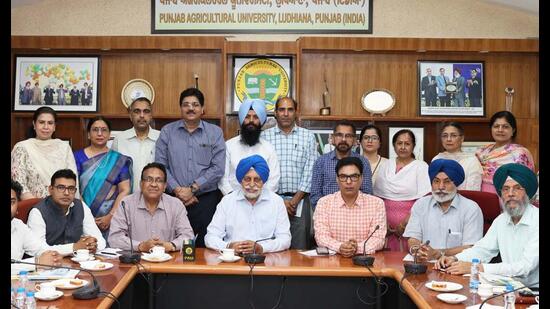
During the session, PAU vice-chancellor (V-C) SS Gosal highlighted the varsity’s legacy of agricultural innovation. “As a leader in conservation agriculture, apiculture and farm mechanisation, PAU has made significant contributions to improving farmers’ livelihoods,” he said.
PAU V-C maps out key areas for joint research
Gosal mapped out key areas for joint research, including studies on nutrient-rich colourful fruits and vegetables, crop biofortification, bio-enzymes, tissue culture and medicinal plants. He further discussed the role of the skill development centre, which works in tandem with the Punjab Agri-Business Incubator, both located at PAU, fostering entrepreneurial ventures and supporting the growth of successful agricultural start-ups.
PAU registrar Rishi Pal Singh proposed a range of partnership opportunities, including academic interactions, faculty exchanges and joint seminars.
BFUHS DoR emphasises on cross-disciplinary, institutional research
Representing BFUHS, Parveen Bansal, director of research (DoR), shared the university’s growing prominence in medical education. Stressing the importance of cross-disciplinary and cross-institutional research and innovation, he described the university’s approach towards fostering a culture of inquiry and evidence-based practices. He specified possible areas for cooperation, including nursing, physiotherapy, geriatric care, clinical trials and scientific validation. Regarding aromatic and spice plants, he noted their potential as adjutants in medical applications. He also suggested establishing course equivalence in fields like microbiology and biochemistry to leverage the combined strengths of both institutions.
PAU’s director of research Ajmer Singh Dhatt emphasised the university’s advanced cropping system technologies, focusing on trait-specific specialty varieties and speed breeding to secure both food and nutrition. He highlighted the university’s efforts to increase zinc content in wheat through varieties like PBW 1 Zn and PBW Zinc 2. He also mentioned PBW RS1, a resistant starch wheat variety, and PBW1 Chapati, a premium variety for chapati. Additionally, Dr. Dhatt mentioned ongoing research into iron-fortified pearl millet and carotene-rich horticultural crops to enhance dietary diversity and nutrition.
During the session, various department heads from PAU outlined their contributions to agriculture, plant breeding and genetics, horticulture, community science and food and nutrition. Kiran Bains, dean of PAU’s College of Community Science, put forth collaborative efforts entailing domains like nutrition counselling in the context of health and disease, value addition in foods for enhancing their nutritional content and market appeal, evaluation of the nutrient content of foods and diets for a broader understanding of nutritional health.
“Food analysis and food safety are also crucial, with research on food composition, safety, and consumer awareness, promoting both public health and safety,” she added. Bains also detailed the entrepreneurial training offered to students at PAU.
Describing PAU’s focus areas in food and nutrition, Kiran Grover, head, department of food and nutrition, enumerated food and nutrition security, assessment of nutritional and health status across age groups and implementation of community-based interventions to combat nutritional deficiency disorders. She said additional priorities involve creating value-added and functional foods from biofortified crops and agro-waste, validating their nutritional benefits and managing metabolic disorders through targeted diets.


