
 E-Paper



Kashmir continues to grapple with cold wave, subzero temperatures
All weather stations in Kashmir observed above normal day temperatures, with Srinagar recording 12 degrees Celsius, 5.1 notches above normal


There was no respite from the intense cold wave in Kashmir as the Valley recorded extreme subzero temperatures on Monday night, officials said. Tourist resorts of Pahalgam and Konibal were coldest places in the Valley on Tuesday. Pahalgam recorded minus 6.2 degrees Celsius and Konibal recorded minus 6.8 degrees Celsius on the intervening night of Monday and Tuesday.
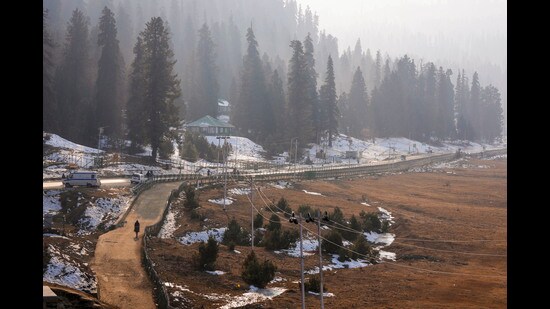
All weather stations in Kashmir observed above normal day temperatures, with Srinagar recording 12 degrees Celsius, 5.1 notches above normal.
The tourist resorts of Pahalgam in south Kashmir and Gulmarg recorded maximum temperatures of 10.7 and 6 degrees Celsius. Both the places saw sub-zero minimum temperatures during night.
Jammu, however, recorded a maximum of 10.7 degrees Celsius, over eight notches less than normal. Over the past few days, Srinagar has been warmer than summer capital due to foggy conditions in the plains of Jammu. Leh in Ladakh recorded 3.1 degrees Celsius day temperature.
The MeT office in its daily bulletin said dry weather is likely to continue till January 24.
“From January 25 to 26, the weather will be generally cloudy with light snow at isolated higher reaches. On January 27 and 28, the weather will be generally cloudy with light rain and snow over scattered places.”
“From January 29 to February 1, possibility of light to moderate rain and snow at many places is likely. “There will be moderate to dense fog and fall in day temperature over plains of Jammu division during next two days,” the bulletin said.
The MeT office has warned that Western Disturbances may lead to temporary closure of roads of higher reaches and important passes like Sinthan Pass, Mughal Road, Sadhna and Razdan Pass, Zojila from January 28 to 31. “Travellers are advised to plan accordingly.”
Kashmir’s winter pans out in three stages, starting with the 40-day intense period from December 21, accompanied by most of the snowfall, followed by 20 days of comparatively less intense chill (Chilla-i-Khurd), and final 10 days of mild cold (Chill-e-Bache).


