
 E-Paper



Guest column: Nanhi Chhaan — A wave for social change through girl empowerment
This revolutionising movement, launched 15 years ago, is set to create a society based not only on gender equality but also on gender harmony. This has special psychological relevance to our times in which the issue of the definition of gender itself has become a major issue


For me, it did not require the traumatic incidents of inhuman indignities heaped on women in Manipur and later the humiliation of women wrestlers in the national capital to tell how women continue to face discrimination at every step. These are only symbols of the gruesome reality surrounding the plight and status of women, particularly adolescent and young girls, in our society. This disturbing and painful awareness has always weighed heavy on my mind, conscience and soul. The fact that I have been brought up in relatively privileged surroundings has never blinded me to the need to do something for the millions of hapless girls in their growing years and for women as a whole.
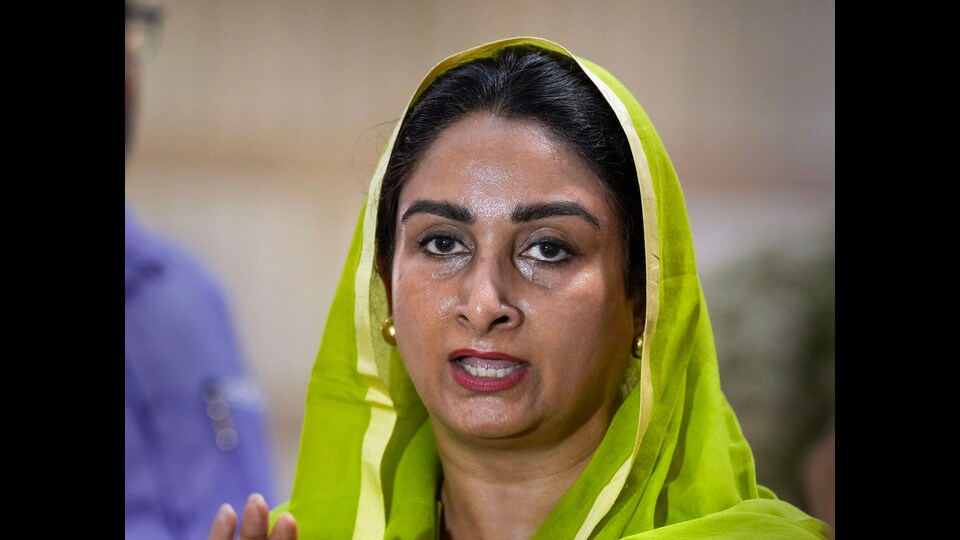
Fifteen years ago, this pain drove me to go beyond mere pious sentiments, thoughts and intentions to start a concrete initiative to do something for girls who continue to battle visible and invisible handicaps. The passion soon turned into a mission, and Nanhi Chhaan Punjab Public Charitable Trust got off the ground. Nanni Chhaan literally translates as “a little spot of shade” and symbolises the role of girls as “an oasis in the scorching desert of life”. This vision was inspired by Guru Nanak Dev ji’s famous tribute to women and hailing woman as next only to the Almighty (Nanak bhande baahra, eko saacha soye).
These have been 15 eventful years. Though the challenges and tasks are infinite, I have this satisfaction that a meaningful start has been made to make a difference in the lives of girls, the thought of whose daily travails and challenges motivate me to plough on.
Fighting female foeticide
Women in India outnumber the total population in many large countries of the world and almost equal the entire population of Europe, and more than double the female population of that continent. They equal the total female population of the entire African continent.
At the outset, we defined the challenges before Nanhi Chhaan as fighting societal bias against the girl child and the fixation for a male child. It is criminal to think how the girl child is cruelly ‘murdered’ at the foetal stage itself, and we dismiss it with a mechanical expression – female foeticide, not realising the horrendous, traumatic inhumanity involved in this abhorrent sin of parents killing their own child. The very thought would give me sleepless nights of pain and even shame in that I belong to a society in which all this is accepted as just a routine crime, at the most.
I put this sinful crime (female foeticide) on top of the agenda of Nanhi Chhaan and decided to start a movement for awareness against this horrific gender-based discrimination. We decided to sensitise people on the need to eradicate this disgrace from our foreheads, and replace it with putting women on top of the societal ladder with the slogan, “Dheeaan da satkar karo (Respect your daughters)”. Nothing gets done without love. So, we crusaded for love for the girl child, on a par with boys, at least.
Education, employment and environment
I focused on three things – encouraging female literacy and taking concrete steps to ensure employment and employability.
Education and skill remain the key areas. This must be matched with gender equality. Girls must get what they deserve as a birth right, they must be given equal opportunities for growth, education, and development. So, we challenged conventional stereotypes and focused on promoting a positive culture and environment for girls and women’s employment and employability.
By now, everyone can see that girls make more dedicated workers. Convinced that women as creators both need and guarantee environmental purity, the Nanhi Chhaan movement emphasises environmental conservation. Actually, Chhan itself symbolises environment for there can be no shade without a tree. Planting trees and promoting green initiatives have been our priority areas. Environment itself symbolises motherhood, needing a nurturing hand from its children – us.
Tree plantation drives: The movement has organised tree plantation drives across Punjab to promote environmental sustainability to promote re-forestation, aligning it with the symbolism of nurturing both the girl child and the environment.
Awareness campaigns: Nanhi Chhaan has conducted awareness campaigns, seminars, and workshops to educate people about the adverse consequences of female foeticide and the significance of gender equality. These initiatives aim to challenge societal norms and bring about positive changes in mindset.
Educational initiatives: The movement encourages female literacy by supporting educational initiatives, especially for underprivileged girls. By providing skill centres, Nanhi Chhaan spreads women empowerment. By distributing sewing machines and imparting skill training to girls to enhance their self-employment and employability, we have transformed the lives of 13,000 girls with skill that has made them self-reliant.
Gender equality and harmony
As Gurbani focuses on gender equality and our Guru Sahiban have paid glowing tributes to women, we have focused on inculcating a religious sensibility in girls. We regularly organised kirtan darbars at Guru Ki Nagri Amritsar and Talwandi Sabo, which prides itself on being one of the five Takhts of the Khalsa Panth. Nanhi Chhaan organises pilgrimages to holy places, such as Harmandar Sahib.
In my capacity as a political figure, I used every platform to advocate for policy changes and legal measures to address gender-based discrimination and violence against women. This helped bring the movement’s concerns to a larger audience and policy discussions.
This is a revolutionising movement set to create a society based not only on gender equality but also on gender harmony. This has special psychological relevance to our times in which the issue of the definition of gender itself has become a major issue.
I look forward to making this movement a defining one on societal transformation with regard to the way women’s role in our society is viewed. Issues such as safety and protection for women will remain among the key focus areas. But more important than even equality is the dignity of women in our society. With the blessings of the Almighty and the support of our people, I hope to carry this movement forward for the creation of a society in which women are empowered to contribute to humanity’s progress at least on a par with their male counterparts. I remain convinced that our girls have more to contribute than our menfolk.
I thank everyone – men and women, boys and girls – who have directly or indirectly become a part of this wave for social change.
The writer is the Shiromani Akali Dal MP from Bathinda and a former Union minister. Views expressed are personal


