
 E-Paper



No hike in Haryana power tariff despite ₹357 crore revenue gap
Going into poll mode, Haryana government owned power distribution companies -- the Uttar Haryana Bijli Vitran Nigam (UHBVN) and Dakshin Haryana Bijli Vitran Nigam (DHBVN), had prayed before the power regulator to allow the existing levels of electricity tariff and charges to be continued in 2023-24 financial year. The Haryana Electricity Regulatory Commission (HERC), which is responsible for the regulation of power sector and fixing electricity tariff in the state, seems to have played along.


In good news for electricity consumers in Haryana, they will continue to pay the existing electricity rates in the next financial year starting April 1.
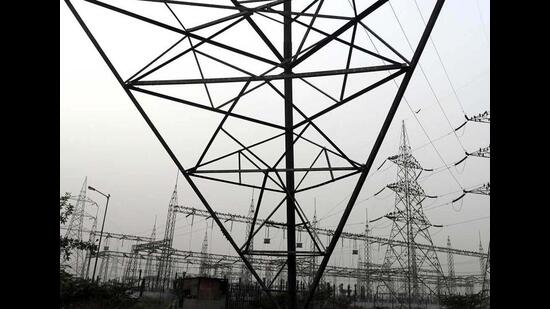
Going into poll mode, Haryana government owned power distribution companies -- the Uttar Haryana Bijli Vitran Nigam (UHBVN) and Dakshin Haryana Bijli Vitran Nigam (DHBVN), had prayed before the power regulator to allow the existing levels of electricity tariff and charges to be continued in 2023-24 financial year. The Haryana Electricity Regulatory Commission (HERC), which is responsible for the regulation of power sector and fixing electricity tariff in the state, seems to have played along. The regulator, in its February 15 order on retail supply tariff for 2023-24, accepted the no-escalation plea of the state-owned power distribution companies (discoms) despite the fact that the two companies projected a revenue deficit of ₹397.36 crore at the existing tariff. The regulator allowed the discoms’ plea of no escalation in power tariff by accepting their argument of bridging the ₹397.36 crore revenue gap by way of efficiency gains.
The power regulator though noted with concern that the average cost of power (without transmission cost) for 2023-24 has been projected by the discoms at ₹3.83 per unit while it has been more than ₹5 per unit in 2022-23 financial year (up to December 2022).
However, the regulator noted that the landed cost of short-term power proposed for their consideration and approval is also significantly higher and spills over to the months, so far, considered as off-peak months. “The discoms are directed to examine the discrepancies in its power purchase cost vis-à-vis the cost projected, to bring out the facts that would lead to reduction in cost of power to the extent projected for the ensuing financial year. A report regarding the same may be submitted within a month from the date of the present order,” the Commission said.
The regulator said that given the uncertainty in availability of coal including the requirement to blend 10% imported coal with domestic coal at thermal power plants as well as the requirement to use torrefied biomass pellets, the cost of power is likely to work out more than the power purchase cost considered by them in the present order.
“In view of non-availability of power from a few power generating units, the discoms are likely to purchase short-term power from power exchange or otherwise, and cost thereto is likely to be more than the average power purchase and the average rate of short-term power considered on the basis of quantum and cost of such power procured during 2022-23,’’ the HERC said.
The Commission said that at the existing tariff, there is a revenue gap of ₹357.18 crore after considering the surplus on account of true-up for the 2021-22 financial year and holding cost thereto.
The commission, in its order, said that it is of the considered view that at this stage the distribution and retail supply tariff ought not to be revised. In view of the above, the Commission directs that in the next aggregate revenue requirement (ARR), the discoms will submit a tariff proposal as well; it may not necessarily be for increase or decrease in tariff but for improvement in tariff design, reduction in the number of category or sub-categories, re-alignment of fixed charges etc. The proposal should include its impact on a typical consumer, it said.
The Commission also noted that the amount collected by the discoms in the 2022-23 fiscal by way of minimum monthly charges and expected to be collected at the same level in the 2023-24 exceeds the estimated revenue gap, the said amount shall be carried over as surplus to be trued up at the time of truing-up exercise of the 2023-24.


