
 E-Paper



No plan to amend laws regarding construction outside ‘lal dora’ in UT: Ministry of home affairs
MP Manish Tewari had questioned the Union government on the relevance of applying the lal dora regulations on 22 villages of Chandigarh, while these are now under the municipal corporation

 Prefer HTon Google


The ministry of home affairs (MHA) stated in the Parliament on Tuesday that there was no proposal to amend laws such as the Punjab New Capital (Periphery) Control Act, 1952 which governs construction outside ‘lal dora’ in Chandigarh. This was stated by the minister of state for home affairs Nityanand in response to a question by Chandigarh MP Manish Tewari.
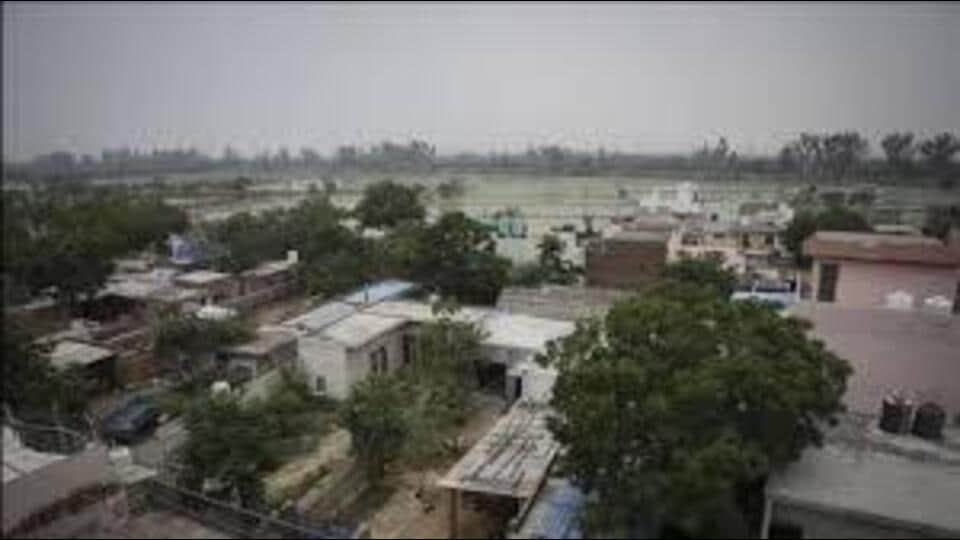
Tewari had questioned the Union government on the relevance of applying the lal dora regulations on 22 villages of Chandigarh, while these are now under the municipal corporation (MC). Tewari also sought to know as to how the concept of lal dora aligned with the UT’s urban planning and objectives of “Chandigarh Master Plan 2031”.
The MHA added that development outside lal dora is regulated by the master plan, which has been notified to exercise the powers under the capital of Punjab (Development and Regulation Act) Act, 1952, and the Punjab New Capital (Periphery) Control Act, 1952. Construction within lal dora is governed by Chandigarh Rural Inhabitations Construction and Reconstruction Building Bylaws for villages falling within the UT.
The MHA stated that as per the Punjab New Capital (Periphery) Control Act, 1952, no person is allowed to erect or re-erect any building in an area outside lal dora without previous permission of the competent authority.
The reply comes as a setback to the residents of 22 villages of Chandigarh who have their houses outside the lal dora and have been waiting for regularisation.
The lal dora issue
Lal Dora is an extension of the village habitation, which can be used by the villagers for non-agricultural purposes only, like for keeping livestock. The land revenue department originally marked these areas by tying a red thread (lal dora) as a boundary. Any construction on the agricultural land beyond this boundary is illegal.
Regularisation of constructions outside the lal dora in Chandigarh has been a burning topic in this year’s Lok Sabha polls with both the Congress and the BJP promising to regularise the constructions outside it in their respective manifestos. The move affects thousands of people who have their houses outside lal dora.
These constructions continue to crop up in most villages, including Kishangarh, Manimajra, Hallomajra, Maloya, areas around Bapu Dham Colony, near Sukhna Choe, Khuda Ali Sher and Kaimbwala.
It was also stated by MHA that the release of water connections is governed by Chandigarh Water Supply Bylaws, 2011, wherein the civic body can release water connections only within the lal dora. Disconnection of unauthorised water connections is a continuous process and is undertaken by MC authorities from time to time.
Tewari dissatisfied by response
MP Tewari said the home minister has yet again ducked his questions. He asked how the concept of lal dora was relevant when the areas outside the villages have been incorporated within MC limits and how can anyone distinguish and discriminate between what is inside the lal dora and what is outside. He further accused the central government of hiding behind the inane rules, having no satisfactory answer to the serious issues being faced by the city.


