
 E-Paper



Nomadland: Paradise lost as scant rainfall, heat dry up Himalayan pastures
Scant rainfall and hot weather in Kashmir have dried up pastures, affecting livestock grazing. Rainfall deficit leads to poor grass quality, impacting shepherds and agriculture.


Scant rainfall and unusually hot weather this year in Kashmir has an unexpected impact high up in the Himalayan pastures.
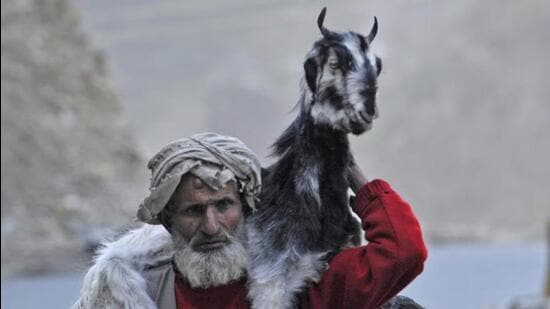
The shepherds grazing their livestock in the Valley’s upper reaches are unable to find grazing grass for the cattle and sheep.
Thousands of Gujjars, Bakarwals and shepherds move from plains of Jammu and Kashmir to graze their livestock in the meadows and grazing land located between 10,000 to 13,000 ft above the sea level.
According to the India Meteorological Department (IMD) data, Jammu and Kashmir has witnessed 39% rainfall deficit in the months of June and July so far. The UT has recorded 130.5 mm of rain against the normal 213.1 mm. South Kashmir’s Anantnag district also received a 60% deficit, North Kashmir’s Baramulla and Kupwara 23% and 63% deficit respectively. Jammu’s Kishtwar district, meanwhile, also reeled under a 69% deficit.
At the Sinthan Maidan top, around 35 km from Chatroo Kishtwar where dozens of Gujjar and Bakarwals have set up tents along with their sheep and buffaloes, the pastures are looking dry — the greenery being replaced by drier golden grass. However, the few parts where the meadows do look greener have attracted a large number of shepherds.
“The pastures are dry, with only a few patches having a green cover of grass as we have been watering them ourselves by bringing water from the nearby streams. This is the first time that we have had to water pastures for grass to enable constant grazing for the cattle,” Akbar Awan, a young man sitting next to his sheep flock, said.
“There are dozens of pastures around. The snow melted in May and June. Since then, there hasn’t been enough rainfall which has affected the quality of grass in the pastures,” he said pointing towards the vast dry patches in the meadow.
The snow-fed streams gushing from the glaciers, however, keep the nomads in these meadows. “Earlier, every place here looked green and surrounding areas had tall grass, now it’s devoid of grass. We water the patches to keep it fresh,” Khursheed Mongal, who had brought his sheep to the meadow all the way from Kulgam, said.
Ghulam Ahmad Ahanger, a resident of Afti village at Vadwan, Kishtwar, was perturbed by the state of rainfall in the high pastures in the remote valley. “Usually our area experiences good snowfall followed by rains, which help our agricultural products in limited months of summers. Unfortunately, we are passing through a dry spell and there has not been enough rainfall in the past couple of months which is not only affecting the quality of grass, but also pulses and maize produce. Now our shepherds have to toil hard in upper regions to get quality grass for sheep and castles. Its an unusual situation here.”
Apart from hundreds of local shepherds, thousands of Bakarwals and Gujjars travel from Jammu region to the pastures in Doda, Kishtwar and Kashmir after August 15.
A senior agricultural officer in North Kashmir’s Baramulla district, Daljit Singh, who recently visited a meadow in Bosian in north Kashmir, said the situation is almost the same everywhere. “The rainfall has affected our meadows and pastures, especially it’s also playing havoc with agricultural products,” he said, adding that the seed multiplication potato farm in Bosian is experiencing a significant drought leading to a lack of vegetative growth in the plants.
“There has been very little tuber formation till date, which will adversely affect the overall yield. The situation is dire if the drought continues, which is beyond the managerial control....” he added.


