
 E-Paper



Over 92MT paddy arrives at Haryana mandis in three days
In Ambala, 9,200 tonnes was purchased of 25,000 tonnes, while in Yamunanagar 3,500 tonnes were bought by the agencies out of the 15,000 tonne crop that has arrived at various mandis.


Over 92,000 tonne paddy has arrived at various purchase centres of Haryana in the first three days of the procurement which began on September 22. Of this around 30,000 tonnes has been purchased by various agencies till Wednesday.
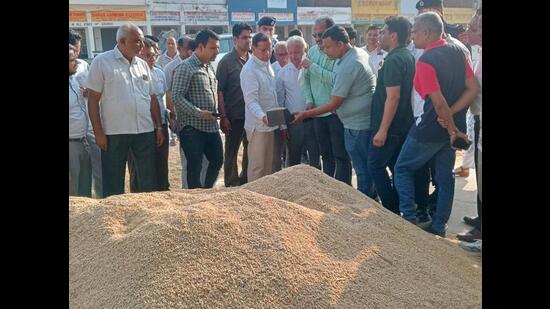
As per the figures from the e-Kharid portal till 8 pm, a total of 17,168 gate passes have been issued to the farmers with maximum 6,125 at Kurukshetra district alone, where a 35,000 tonne crop has reached and 15,000 tonne crop has been purchased in Kurukshetra so far.
In Ambala, 9,200 tonnes was purchased of 25,000 tonnes, while in Yamunanagar 3,500 tonnes were bought by the agencies out of the 15,000 tonne crop that has arrived at various mandis.
At Kurukshetra’s Pehowa grain market, farmer unions claimed that the government had started the procurement without making enough arrangements and getting rice millers registered.
The farmers alleged that the procurement was not initiated even on the third day at the market, despite government claims.
However, as the market committee officials arrived at the spot, the purchase started.
On the other hand, a delegation of the rice millers met minister for food, civil supplies and consumer affairs Rajesh Nagar at his residence in Chandigarh along with the department officials.
Haryana Rice Millers and Dealers Association president Amarjeet Chhabra said that the minister ensured that the government will address all the problems faced by the millers on a priority basis and farmers, commission agents, and millers will not face any difficulties during the procurement season.
Chhabra said that during the meeting, several serious and long-pending issues related to rice millers, commission agents, and farmers, were discussed and a memorandum was submitted.
“We were ensured that a circular regarding CMR rescheduling and pending bonus will be issued soon, providing relief to millers regarding past payments; the bank guarantee/FDR will remain at 1.5% as before, and there are no plans to increase it; and the process for the new bonus has also been initiated. Following the same policy as last year regarding the 10% procurement rate, the association has requested that the FCI provide the PP/plastic bags themselves, and that the remaining 15% procurement be collected from the rice mills within 10 days,” he added.
Meanwhile, the agriculture department is carrying out awareness among the farmers for stubble residue management and keeping a tight vigil on the fields to prevent its burning.
So far, three FIRs have been registered in Karnal against farmers for burning stubble and one in Kurukshetra, and were imposed fines as per the revised rates of ₹5,000 for up to 2 acres, ₹10,000 for up to 5 acres and ₹30,000 for more than 5 acres.
Apart from the fines, the farmers have been marked with a “red entry” on the Meri Fasal Mera Byora (MFMB) portal, barring them from selling their crops at minimum support price (MSP) for the next two procurement seasons.
Procurement for pulses and oilseeds
The Haryana government has fixed schedule and designated mandis for procurement of kharif pulses and oilseeds for 2025-26 marketing season.
Chief secretary Anurag Rastogi on Wednesday reviewed the arrangements for procurement and production of kharif pulses and oilseeds at more than 100 mandis across the state.
An official spokesperson said that moong will be procured from September 23 to November 15 at 38 mandis while arhar and urd will be procured in December.
Groundnut procurement will start from November 1 to December 31, 2025 at 7 mandis, while til (sesame) will be procured in December 2025 at 27 mandis. soyabean and niger seed will be procured between October and November.
Agriculture principal secretary Pankaj Agarwal said the cultivable area under moong has expanded from 1.09 lakh acres in 2024-25 to 1.47 lakh acres in 2025-26, with yields increasing from 300 kg to 400 kg per acre. As a result, production is expected to rise sharply from 32,715 metric tonnes to 58,717 metric tonnes. Arhar and urd have also shown modest increases in both area and yield. Til cultivation has more than doubled—from 800 acres to 2,116 acres—with production likely to reach 446 metric tonnes, the spokesperson said.


