
 E-Paper



Patients with severe Covid develop thyroid dysfunction: PGIMER study
Experts of the department of endocrinology, PGIMER, suggested the hospitals to supplement low cortisol steroids to severe Covid patients, as they believe that the high steroid dose given without supervision, and continued indiscriminately, may worsen hormonal imbalance


Patients with acute Covid-19 infection get more frequent and severe thyroid hormonal imbalances, revealed the medical experts of Post Graduate Institute of Medical Education and Research (PGIMER) on Tuesday.
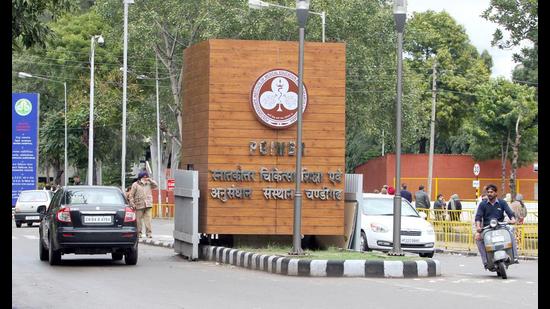
In a study titled “Spectrum of endocrine dysfunction and association with disease severity in patients with Covid-19”, the experts of the department of endocrinology, PGIMER, suggested the hospitals to supplement low cortisol steroids to severe Covid patients, as they believe that the high steroid dose given without supervision, and continued indiscriminately, may worsen hormonal imbalance.
The study was published in a scientific journal, Frontiers in Endocrinology, on July 2, 2021.
Giving details, professor Sanjay Kumar Bhadada, the head of endocrinology department, PGIMER, said, “Experts associate severe Covid-19 infection with multiple pre-existing endocrine conditions such as diabetes, obesity and metabolic syndrome. But PGIMER has assessed the hormonal changes in the bodies of the patients and found that 50% developed thyroid dysfunction.
“The health conditions of as many as 84 patients admitted in the dedicated Covid care centre of the hospital were assessed: 42% of the patients had moderate-to-severe-disease and even had low oxygen saturation and comorbidities, and 58% of the patients had a mild infection,” he said.
“We evaluated various hormonal parameters of the patients within 24 to 48 hours of their admission to the hospital,” said Bhadada, adding that the department was studying the levels of hormonal imbalances to expand their research.
A close follow up was, however, required to know whether the condition was transient or permanent, he added.
Dr Liza Das, a research scientist, said that patients with severe Covid-19 were developing thyroid dysfunction, which could be hypothyroidism, euthyroid sick syndrome (ESS) or atypical thyroiditis.
“Though ESS does not usually need treatment, both secondary hypothyroidism and thyroiditis need follow-up and timely management. Also, low cortisol and testosterone levels were more common in those with severe Covid-19 infection. These hormonal dysfunctions need to be recognised both during the acute state and on follow-up for timely management,” concluded Dr Das.


