
 E-Paper



Punjab: Implementing holy city status for Amritsar walled city uphill task for govt
The resolution, passed during a special session of the Punjab Vidhan Sabha held at Anandpur Sahib on Monday prohibits the sale of non-vegetarian food, tobacco, alcohol and other intoxicants in these designated areas.

 Prefer HTon Google


The Punjab government’s decision to grant holy city status to Amritsar’s walled city, along with Anandpur Sahib and Talwandi Sabo, has raised concerns over its practical implementation, especially regarding its impact on local businesses.
The resolution, passed during a special session of the Punjab Vidhan Sabha held at Anandpur Sahib on Monday prohibits the sale of non-vegetarian food, tobacco, alcohol and other intoxicants in these designated areas.
Livelihood concerns
The walled city of Amritsar, the historic core of the city, was established by the fourth Sikh master Guru Ramdas, and later fortified by Maharaja Ranjit Singh, who built robust walls and gates. During the colonial period, the British expanded and rebuilt several of these gates, further strengthening the city’s fortifications.
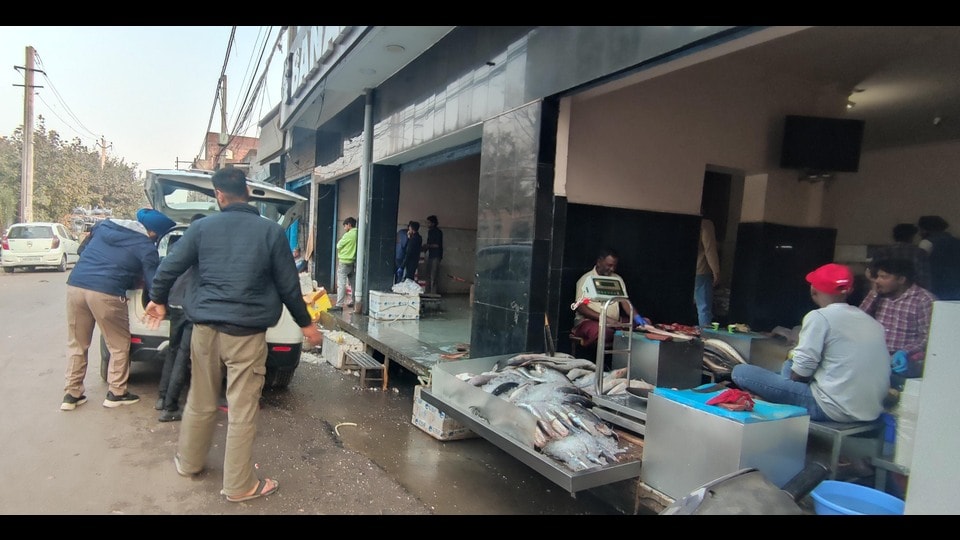
For decades, several eateries which sell non-vegetarian food, have been running in the walled city, which spread over 3.52 sq km, said Balwinder Singh, a noted heritage conservation expert and retired professor of Guru Nanak Dev University (GNDU) Amritsar. There is a full-fledged fish market inside Hall Gate.
The walled city has seen substantial growth in recent decades, particularly with the influx of tourists visiting the Golden Temple. Many small hotels and eateries selling non-vegetarian food have flourished in the area.
Though a notification in this regard is yet to be issued by the government, the announcement has left owners of non-vegetarian eateries situated in walled city worried. Jasvir Singh, owner of the famous Pal Dhaba near Hathi Gate, expressed his concerns: “Our dhaba has been running for 70 years. We don’t have any other branch or source of income. If our shop is shut down, we’ll be left unemployed.”
Gurjit Singh, who runs a fish shop in the Hall Gate area, said he would have no objections to moving his business to an alternative location outside the walled city. However, many stakeholders argue that relocating such long-standing businesses will not be an easy task.
Mixed reactions
While some welcome the move, others have expressed concern over its impact on local businesses. Surinder Singh, president of the Hotels and Guest Houses Association, noted that many non-vegetarian eateries have already shifted to areas like the Civil Lines in recent years. He suggested that the government should consider developing a food court to help affected businesses.
APS Chatha, president of the Amritsar Hotels and Restaurants’ Association (AHARA) in Civil Lines, supported the move, comparing it to the situation in Haridwar, where certain banned items are permitted in areas outside the core religious zones. “This will help maintain the sanctity of the holy city while still catering to the needs of those seeking non-veg food,” he said.
Calls for strict building bylaws
Local groups like the Amritsar Vikas Manch, led by Kulwant Singh Ankhi and Surinderjit Singh, have stressed the need for strict legal frameworks to enforce prohibitions on non-vegetarian food, alcohol, tobacco and immoral activities in the holy city. They also emphasised the importance of preserving the architectural integrity of the area.
“Building regulations should be enforced, particularly the restriction on multi-storey buildings near the Golden Temple,” said Ankhi, referring to existing bylaws that limit the height of buildings to 38.5 feet. “This should be mandatory, even for structures built by the Shiromani Gurdwara Parbandhak Committee (SGPC) or kar sewa babas,” he added.
Advocate Sarabjit Singh Verka, chief investigator at the Punjab Human Rights Organisation (PHRO), raised concerns about illegal hotels operating near the Golden Temple. Despite pending cases in the Supreme Court, these establishments continue to function, often unchecked by local authorities.
Officials have refrained from commenting on these matters, stating they are awaiting further written directives from the government on how to proceed with the legal framework for the holy city status.


