
 E-Paper



Punjab: Tighten taps, BBMB cautions partner states as weak monsoon strains Bhakra reserves
Peak inflow currently hovering at 42,000 cusecs compared to over 1 lakh cusecs around the same time last year, threatening reserves for the dry months ahead

 Prefer HTon Google


In stark contrast from past few monsoons which saw surplus rain, the Bhakra Beas Management Board (BBMB), amid a relatively weaker rainy season this year, has issued a word of caution to partner states Punjab, Haryana and Rajasthan to draw water prudently to conserve supply for the year-long demand for potable water and irrigation.
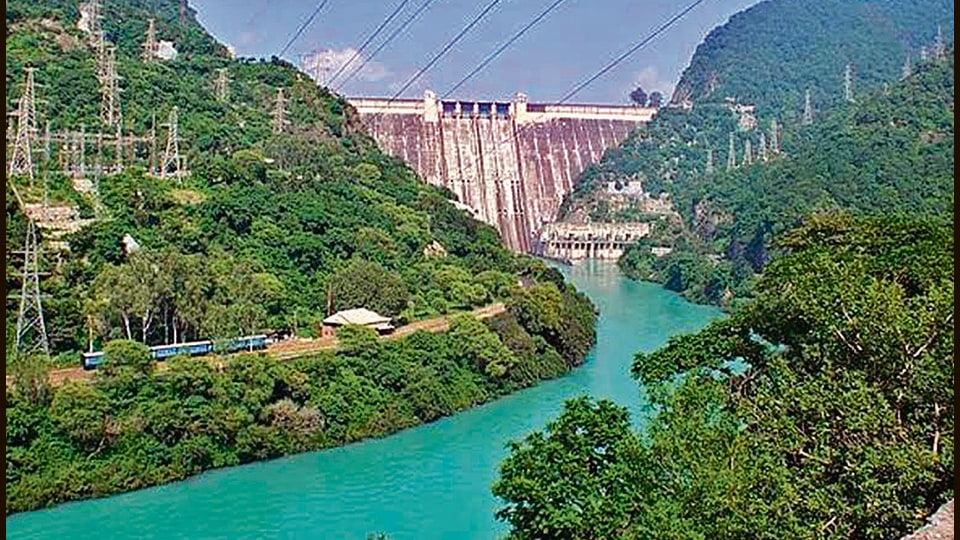
According to officials, the water level of Bhakra Dam Reservoir — Gobind Sagar lake — as on Monday was 1,634 feet, at least 25 feet short of the average and 46 feet short of full reservoir level —1,680 feet.
“Ideally at this stage, during the monsoon, the water level nears 1,660 feet, but we are way behind in the current season,” explained Manoj Tripathi, chairman, BBMB.
“Hence, on August 21, we have issued a caution to states to draw water strictly as per need and don’t overdraw to save water for the dry season,” he added.
Last year, around this time, the water levels were rising fast, hitting the maximum water level of 1,680 feet on September 5. This was despite opening the flood gates on August 19 that left downstream areas of Punjab flooded in the state’s worst-ever deluge that lasted until the second week of September.
Cloudbursts and heavy rains in the catchment of Bhakra Dam reservoir had caused the inflow to cross 1 lakh cusecs, dramatically increasing the water levels.
However, amid a weaker monsoon this year, the system is under immense strain. As of August 24, the peak inflow struggled to even cross the halfway mark, hovering at just 42,000 cusecs (cubic feet per second).
Yet, despite these depleted inflows, gross withdrawals by partner states continue to remain high. According to board data, Punjab is currently pulling nearly 17,000 cusecs, Rajasthan is drawing between 13,000 and 14,000 cusecs, and Haryana is taking around 8,600 cusecs, reaching 39,000 cusecs in all, leaving the reservoir virtually unable to save water for the dry months ahead.
The Pong Dam reservoir is undergoing a similar trend, with the current water levels, at 1365 feet, remaining 25 feet short of full reservoir level.
“We will also take up the matter with the partner states in the technical committee meet (TCM) scheduled in the first week of September,” the BBMB chairman said.
Speaking about hopes from the remainder of the filling season, which ends on September 20, the BBMB chairman said the predictions of rainfall were quite low now, limiting the possibility of a significant surge in reservoir levels.
The filling period runs through the monsoon months of June, July, August and September, ending on September 20. Following this, the depletion period begins on September 21, when the stored water is systematically released according to the demands of partner states.


