
 E-Paper



Punjab’s weak borders responsible for drug trafficking, says Gujarat guv at Chandigarh Press Club
When asked about drugs arriving from Gujarat’s sea ports to Punjab during a programme at the Chandigarh Press Club, Gujarat governor Acharya Devvrat remarked, “Aap ke border kamzor hain (your borders are weak ),” referring to the state’s border controls


In a satirical twist during a programme at the Chandigarh Press Club on Tuesday, Gujarat governor Acharya Devvrat humorously addressed concerns about drug trafficking from Gujarat and blamed Punjab’s borders, quipping that the real issue lies with the “weak borders” of the state.
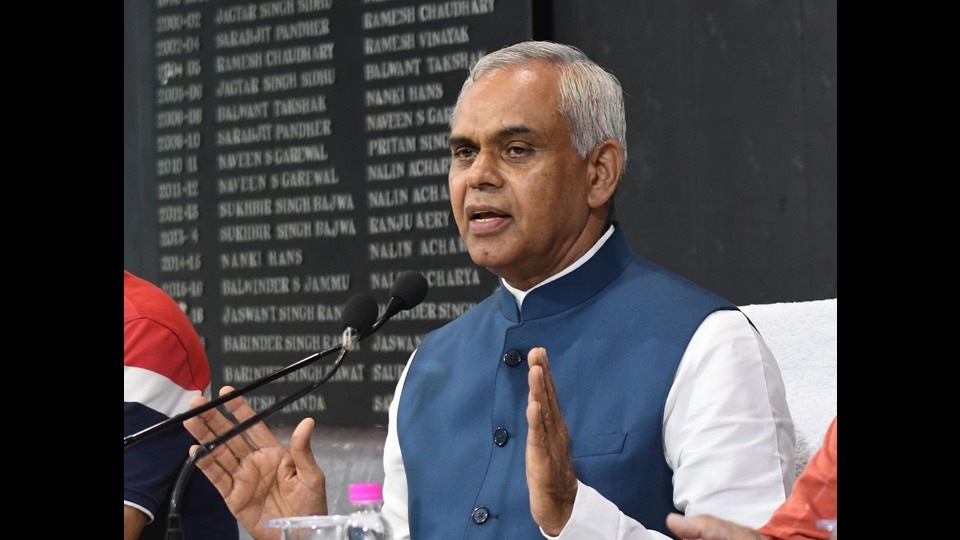
When asked about drugs arriving from Gujarat’s sea ports to Punjab, the governor responded that while the Gujarat government has made significant drug seizures in recent years and is working to combat the issue, he remarked, “Aap ke border kamzor hain (your borders are weak ),” referring to the state’s border controls.
Governor Devvrat was in the city for “Meet The Press” programme where he shared his experiences with natural farming and natural rain harvesting.
He shared recipe of a home-made natural fertiliser made from cow-dung, pulses, and jaggery. He has been using it on his 180 acres of farmland in Kurukshetra for the past few years.
He stated that this method, which doesn’t require pesticides or even organic inputs, is a natural approach that benefits soil, human health, and the environment.
He explained, “Soil with less than 0.5% organic carbon is essentially barren. Before the ‘Green Revolution’, our soil had 2-2.5% organic carbon, but now it’s down to 0.2-0.3%. This means our soil is extremely depleted. As a result, our crops get very few nutrients from the soil and rely heavily on fertilisers.”


