
 E-Paper



The making of a new Rahi Masoom Reza
In his centenary year, the unveiling of a little-known aspect of the poet and novelist, who was the most consequential television scriptwriter of the 1980s

 Prefer HTon Google


There are occasions in literary history when an archive compels us to reconsider not merely an author’s life but the literary history that has grown around him. Some months ago, I had the rare privilege of looking at Rahi Masoom Reza’s papers. It was the first time his family had permitted anyone access to this remarkable archive. Among the papers were the original handwritten Urdu manuscripts of Aadha Gaon, dated 29 July 1964, and Katra Bi Arzoo, as well as numerous letters, notebooks, and other documents. It was a discovery of uncommon significance. For decades, the accepted wisdom has been that Rahi wrote primarily in Hindi and in the Nagri script. The manuscripts tell a very different story. They establish beyond doubt that though his novels appeared in Nagri in print, they were written in Urdu. The archive also contains the script, screenplay, and dialogues of the televised Mahabharat, also all written in Urdu.
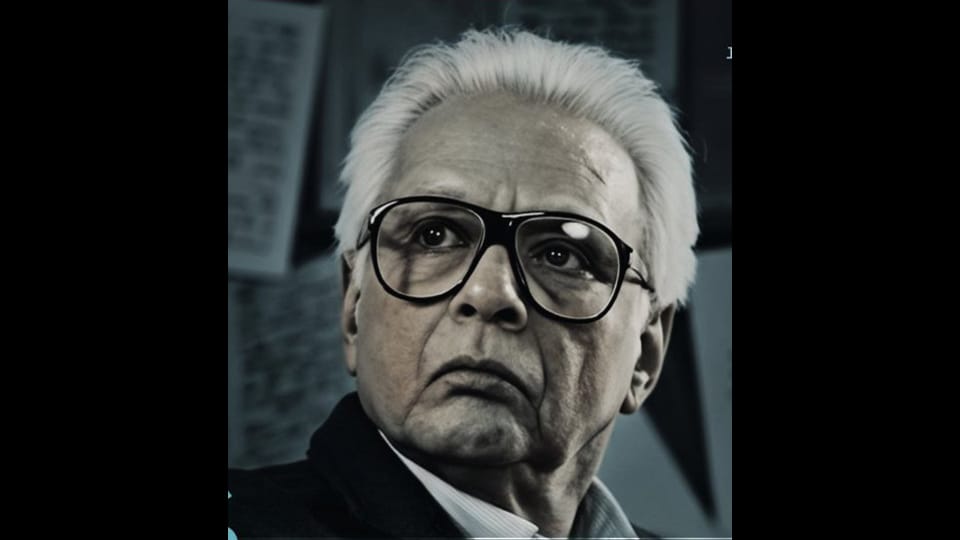
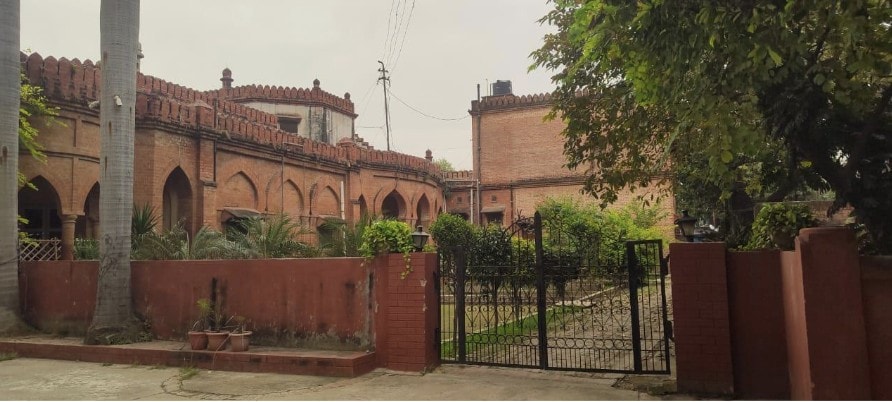
The discovery has implications far beyond literary curiosity. Although Aadha Gaon was completed in Urdu, it never appeared in that language during Rahi’s lifetime. The manuscript now makes possible, for the first time, a critical Urdu edition based on the author’s own text rather than on later printed versions, which were distorted. It also throws fresh light on one of the more unfortunate episodes in modern Urdu literary history. Anjuman Taraqqi Urdu (Hind) had once resolved to publish Aadha Gaon, but the decision was reversed in 1966, most certainly due to reasons related to the internal politics of Aligarh Muslim University.
Together with the suppression of a vital portion of Meer Taqi Meer’s autobiography in 1926 and 1928 by its then general secretary Abdul Haq, it remains among the institution’s least defensible decisions. If institutions sometimes err, they also possess the power to acknowledge those errors with dignity, and now Anjuman has corrected both mistakes. The forthcoming publication of Aadha Gaon based on Rahi’s own manuscript is not just important from the literary point of view but also a measure of historical restitution.
The archive also settles another longstanding misconception. Rahi Masoom Reza was born on 1 August 1927, although his birth date continues to be widely and inexplicably recorded as 1 September 1927.
Few twentieth-century Indian writers have been so widely admired and yet so incompletely understood. Today, for the vast majority of Indians, Rahi Masoom Reza is remembered as the writer of the television series Mahabharat. Admirable though that achievement was, it has tended to eclipse the larger literary figure who had already secured an enduring place in Indian letters long before he entered the world of Bombay cinema and television.
Rahi was born in Gangauli, in the district of Ghazipur, which remained the emotional and cultural landscape that shaped much of his imagination. His father, Bashir Husain Abidi, was a distinguished lawyer, while his mother’s family belonged to an old landed lineage of taluqdars and navvabs of eastern Uttar Pradesh. Yet, privilege is an inadequate description of his childhood. Much of it was spent recovering from various illnesses. Afflicted first by polio and later by tuberculosis, he passed long periods at the Bhowali Sanatorium and, after the disease recurred, in Kashmir. For most children such years would have meant isolation and despair. For Rahi they became years of reading, reflection and observation. The world that physical illness denied him, literature quietly restored.
He entered Aligarh Muslim University at a time when it was one of the principal intellectual centres of Urdu culture. There, he completed his doctoral dissertation on Tilism-i Hoshruba before later joining the Department of Urdu as a teacher. Tilism-i Hoshruba is part of the legendary Dastan-i Amir Hamza cycle, one of the great prose epics of the Indo-Persian world. By then, he had already established himself as a promising poet. His long poem 1857 remains among the most powerful poetic engagements with the Revolt in Urdu, while his seven collections of verse, his 11 novels and his doctoral dissertation together secured his reputation as one of the foremost writers of modern Urdu. Fiction would later make him famous, but poetry shaped the sensibility that distinguished his prose.
That prose drew its strength from a world rarely represented with such intimacy. The villages of eastern Uttar Pradesh, the cadences of Bhojpuri, the composite culture of Ghazipur and Banaras, the rituals and memories of Gangauli, all entered his fiction without self-consciousness. He neither romanticised rural life nor reduced it to sociological illustration. His villages were inhabited by recognisable men and women whose lives were shaped by affection, prejudice, humour, faith and history in equal measure. Religion, caste and class existed in his novels not as ideological categories but as lived experience. It is this refusal to simplify human life that gives his writing its enduring power.
For the wider public, however, another Rahi gradually emerged. When BR Chopra entrusted him with the screenplay of Mahabharat, few could have anticipated the phenomenon it would become. Before him, another distinguished son of Urdu, Ramanand Sagar, had brought Ramayan to Indian television with extraordinary success. Yet, Mahabharat acquired a cultural reach unlike anything Indian television had previously witnessed.
From 2 October 1988 until 24 June 1990, Sunday mornings acquired an almost ritual character across India. Roads fell silent, markets delayed opening and families gathered before television sets regardless of religion, caste or region. Those who did not own a TV watched with neighbours. Muslim households followed the serial with as much devotion as Hindu ones. Few works of popular culture have entered the Indian imagination so completely. The opening invocation, ‘Main Samay hoon…’ became instantly recognisable across the country. The serial did more than adapt an epic; it became part of the shared cultural memory of a generation. SS Gill, the then Secretary of the Information & Broadcasting Ministry, initially sanctioned 52 episodes, but Rahi’s spellbinding script forced the ministry to extend it to 92. This was told to me by BR Chopra in 1996 when I was shooting a documentary on Akhtar ul-Iman’s life. According to Chopra saheb, when Gill asked him to narrate the serial’s central idea, Rahi said, “It is the story of time which is all-powerful, and the serial will start with the dialogue: Main samay hun…”. That was enough. “No need to go on,” said SS Gill, “I am sure it will be much more than I thought. The words and the idea of a poet and creative person! Let us have a cup of tea.”
For Mahabharat, the lump sum payment given to BR Chopra was less than the expenditure, but certain of its success, he spent as much as required for a world-class television serial. Rights were sold to foreign telecast agencies. Surprisingly, he made the most money from Muslim countries, including Iran, Indonesia and the Arab nations, where the televised epic was subtitled in Bahasa Indonesian, Persian, Arabic and other local languages.
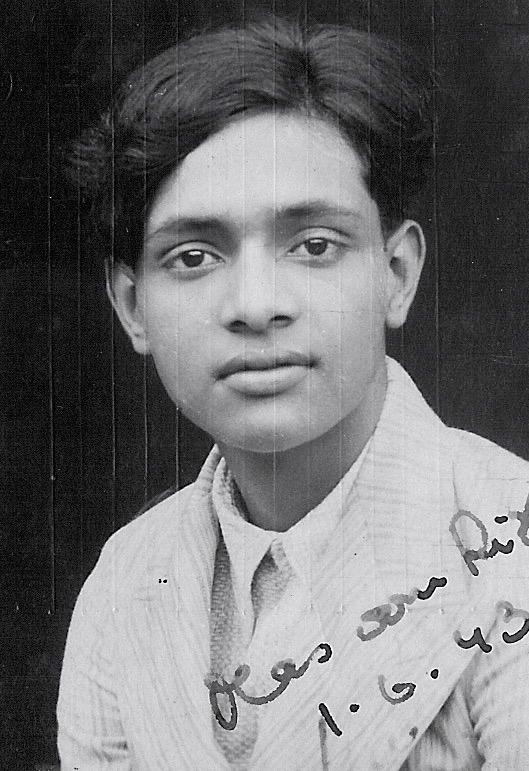
BR Chopra had to face a lot of flak from right-wing Hindus for choosing a Muslim to write the serial. Even more interestingly, Rahi mainly consulted Urdu and Persian versions of the epic for his screenplay. Yet, to remember him only through Mahabharat is to reverse the chronology of his literary life. Long before he became the country’s most celebrated television scriptwriter, he had established himself as one of the leading voices of modern Urdu literature and had written nearly 200 film scripts, screenplays and dialogues. He published seven collections of poetry and 11 novels, all written in Urdu, though his novels first appeared in the Nagri script while his poetry was published in Urdu. His literary imagination remained rooted in the language in which he first learnt to dream, argue and create.
Among those novels, one stands apart. Aadha Gaon is not merely Rahi’s finest work; it is one of the defining achievements of twentieth-century Indian fiction. One of the best fictional explorations of rural Muslim north India during the British Raj, it records the slow disintegration of a world shaped by memory, faith and custom, first under the shadow of Partition and later through the social and political transformations of independent India. Rahi never allows history to overwhelm the individual. National events acquire meaning only as they enter the lives of ordinary men and women, altering relationships, loyalties and identities. The novel is equally distinctive for placing Shia society at the centre of its narrative. Even in Iran, the martyrdom of Hazrat Imam Husain, the grandson of Prophet Muhammad, is not remembered in quite the same way as it is in India. Urdu literature has historically reflected predominantly Sunni, particularly Hanafi, social traditions in the country. Aadha Gaon opened an entirely different cultural landscape. Few novelists have written with such intimacy about a community while simultaneously speaking to readers far beyond it.
The manuscripts at the Rahi archives transform our understanding of the novel’s history. Dated 29 July 1964, they establish that Aadha Gaon was first written in Urdu. They also reveal a writer who revised remarkably little. Although written in Urdu, Aadha Gaon never appeared in that language during Rahi’s lifetime. The Nagri edition, published by Akshar Prakashan in 1966, departed from the original manuscript in many places. Further editorial alterations were introduced when the novel was republished by Rajkamal Prakashan. Words, idioms and expressions were altered to suit the linguistic preferences of modern Hindi. Recent research shows that these changes were introduced without Rahi’s express consent, as the unavoidable price of publication in Nagri. Due to hostile personal circumstances, including his unceremonious exit from his lectureship at the Urdu department of the Aligarh Muslim University in 1966, Rahi was then just happy to see the novel published in Nagri, which saw three reprints in the first year. Unfortunately, readers encountered an altered text. The manuscript now permits the preparation of an authoritative Urdu edition, faithful to the author’s own writing.
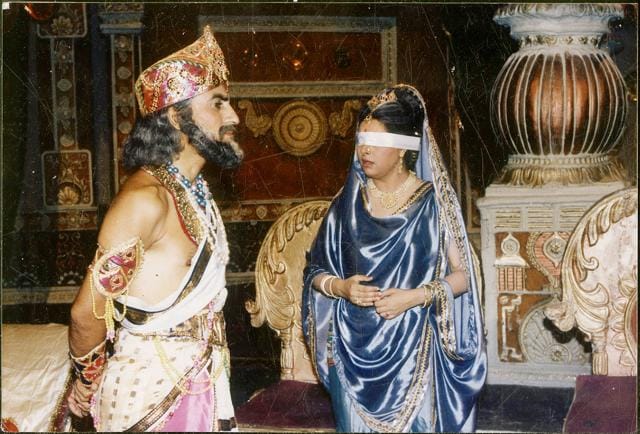
Still, Rahi’s relationship with India’s literary traditions was never confined by language. His work on Mahabharat illustrates this better than anything else. Before writing the screenplay, he consulted every Urdu and Persian version of the epic that he could locate. Nearly 50 Urdu translations were known at the time, and many more have come to light since through digitisation. The screenplay itself was written in the Urdu script, a reminder that the language once served as an important vehicle for transmitting the classical heritage of the subcontinent. The rigid linguistic boundaries that later came to dominate public discourse would have seemed entirely alien to Rahi’s literary imagination.
His public life reflected the same intellectual independence. Along with his elder brother, Moonis Reza, he belonged to a generation of progressive intellectuals who believed literature and public life could not be separated. As young men, the two brothers campaigned against their own father’s candidature and supported a Dalit candidate instead in local elections. Their father lost the election, and the Dalit candidate emerged victorious. Later, while Moonis Reza helped shape Jawaharlal Nehru University and the liberal ethos in its soul, Rahi remained steadfastly independent. During the Emergency, he was among the very few in the Film Writers’ Association to oppose the suspension of democratic freedoms, narrowly escaping imprisonment through the intervention of friends.
Rahi wrote the dialogues of 96 films independently, two screenplays by himself and one in collaboration, and the lyrics for four films. All in all, his portfolio included 101 films and five television serials.
The manuscripts recovered and now in Anjuman’s archives invite a reconsideration of Rahi Masoom Reza’s place in Indian literary history. They also reaffirm a larger truth: literary history is never final. History is unforgiving. Attempts to distort it may prevail for a while, but the documentary record eventually asserts itself. Rahi’s archives remind us that sometimes a forgotten manuscript is enough to compel us to read a familiar writer anew.
Ather Farouqui is an Urdu scholar and critic, and the author of several works on Urdu literature and its critical traditions. He holds a PhD from Jawaharlal Nehru University and serves as General Secretary of Anjuman Taraqqi Urdu [Hind], New Delhi, an organisation established by Sir Syed Ahmad Khan in 1882


