
 E-Paper



Roundabout: Lore of Good Man Di Laaltain, other catchy colloquialisms
The Punjabi language has a fascinating set of Anglo-Punjabi expressions, which were coined during the British rule; one of the most curious phrases involves a lantern


Those born in the decade following the end of British colonisation would be familiar with a peculiar phraseology, which was a hybrid of English and Punjabi. We found these sayings quite funny, even though we did not quite know or understand their meaning or intent.
I remember a rather vicious rhyme starting with the first three letters of the English alphabet, which my brother and I would rattle out with glee: ‘ABC, kithe gayi si? Headmaster mar gaya/ pittan gayi si!’ (ABC, where did you flee? The headmaster died/ I went to mourn him). After ignoring it a couple of times, our mother scolded us for uttering such impolite verses, which were in utter bad taste. That was the end to our favourite nonsense verse, which mocked at the English alphabet and the educational system that we had inherited from the British masters.
But there were other such sayings that were uttered with glee even by our respectable elders who would often say: ‘Natha Singh and Prem Singh one and the same thing.’ It meant that while the names were different yet the two were alike in their way of looking or thinking. This originated perhaps from some Brit officer in reference to the Sikh soldiers in the platoon and went onto become a part of the humour repertoire aimed at the Sikhs. Recently, I came across an interesting variation of this Anglo-desi saying in a piece of short fiction by the master storyteller Gurdev Singh Rupana titled: Nathu Ram and Prem Singh One And The Same Thing.
Heart of the matter
The author, who received the national Sahitya Akademi Award this year, subverted the saying to take its context beyond one religion to point out that Hindus and Sikhs nurtured similar religious prejudices. The story made for the most hilarious account of two village elders, who were best friends, being mistakenly taken to heaven by the Yamadoot (messenger of death). When the Yamaraj (God of death) realised that theirs was a case of mistaken identity, they are returned to Earth. On their return, they relate accounts of their journey by night. However, curiously, Nathuram only saw Hindu gods, saints and freedom fighters and Prem Singh only Sikh saints, scholars, warriors and freedom fighters. Thus, making their view of life based on the religion they belonged to. When coaxed by the narrator to tell whether they saw any person of the other faith, both shook their heads in dismissal adding “I never saw them but maybe they were there in some back row!”
The mysterious lantern
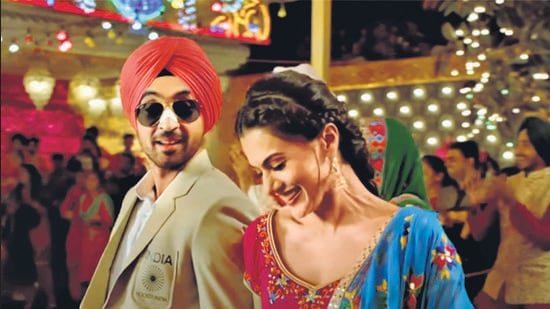
And now to ‘Good Man Di Laaltain’, which has weathered the test of time and remains a popular axiom till date. Some years ago, celebrated lyricist-poet Gulzar, who has a penchant for unusual phrases, including Ibn Batuta bagal mein juta, penned a song on this mysterious lantern for the film ‘Soorma’ featuring Diljit Dosanjh and Taapsee Pannu in the lead, and didn’t they rock!
Towards the end of militancy in Punjab, an enterprising theatre artiste mounted a comedy called ‘Good Man Di Laaltain’ and it caught the fancy of the top cop of those times KPS Gill. Thus, the government sponsored the play and it was staged in villages and towns and all over Punjab. Those were times when the state wanted the people to laugh and banish the tears. What could have been better than this magical laughing lantern which we Indians call ‘laaltain’!
There are a number of theories on the origin of the saying. Those acquainted with western literature feel that it is based on a fable, in which a blind man would carry a lantern, while traversing hills and forests in the night. This seemed strange because the light could not guide him as he had no sight. When asked about the reason for holding the lantern in his hand as he walked, he replied: “This lantern is for the benefit of others so that they do not get lost!”
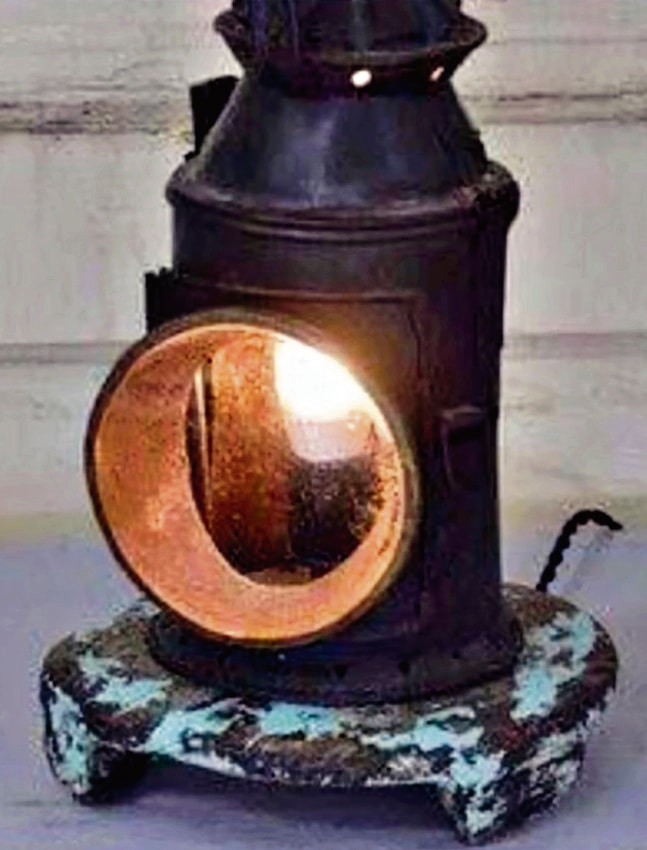
Thus, it was assumed that he was a good man with a lantern in hand but this is not true of this desi adage. The “Good Man” comes from a company in Scotland called Goodmans, which sold solid quality lanterns that were regularly supplied to the Indian Railways in the days of the Raj. A delightful WhatsApp post is doing the rounds with a delightful picture of what the lanterns looked like.
Rhymes and reason
Interestingly, this saying also found its way into the British Indian Army. Lt Gen Vijay Oberoi in a comprehensive article, ‘From Good Man Di Laaltain To Yes Man’ on the rise of sycophancy in the Indian Army and qualifies, “In undivided Punjab, a common phrase, “Good Man the Laaltain” was heard. It was obviously a hybrid phrase like many that Punjabis had formulated! It was a phrase that conveyed one’s appreciation in an informal or friendly way. The phrase was soon picked up by Army officers and often used as a pat on the back for junior officers, while the Hindustani word ‘Shabash’ (good show) was used for junior commissioned officers (JCOs) and jawans”.
Come the struggle for independence from the British Raj and the phrase became a cry for freedom: “Good Man Di Laaltain, Bad Man Da Diva, 1 2 3, India is free!”. This was the retort to centuries of oppression: away with your lantern and we will be fine with our earthen lamp and hard-won freedom!
nirudutt@gmail.com


