
 E-Paper



Roundabout: The world shall end when we forget !
Famous theatre icon MK Raina puts his vast experience in the memoir ‘Before I Forget’ which is not just his journey but that of Independent India as he celebrates the spirit of coexistence


A little Kashmiri boy with sharp eyes and a shock of thick black hair crowning his chiseled face sat watching fascinating plays on Hindu myths in the Sheetal Nath Sathu Mohalla in Srinagar. The boy, who was born a year after the Independence of India, was named Maharaj Krishan Raina. He recalls the modest neighbourhood of his childhood as one of the mixed populations of Pandits and Muslims. He was to grow up to be one of the most talented actors and a director in his own league, taking on the more modest first name of MK. The play was indeed the thing for him and his plays were set around the ups and downs that his country faced as it moved onto being a British colony to a diverse democratic republic building, a rare repertoire of political theatre at its best.
For the likes of this writer, who grew up in the 1970s, the introduction of theatre came through some of the field’s greatest directors courtesy the department of Indian Theatre, housed in the Panjab University, later the short-lived Punjab Theatre Repertory Company and then taking a train to Delhi to watch his plays; Raina’s book, ‘Before I Forget’ (published by Penguin Random House) comes as a valuable gift recording the times we have lived through. The first delight is the title of this memoir beneath scattered red chinar leaves on black surface. Indeed it brings, back to the mind, the forgotten last lines of a Swinburne poem on the tragic Greek myth of Itylus in which the nightingale moans: ‘Thou hast forgotten, O summer swallow, But the world shall end when I forget”.
The train to Delhi
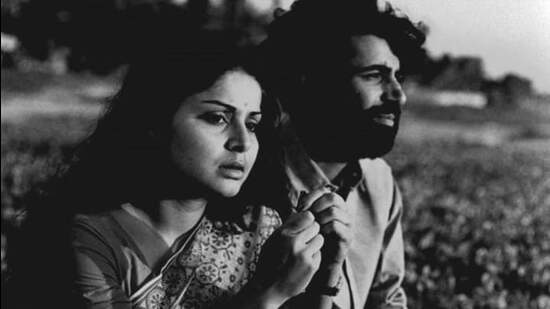
Kashmir was always to remain his first choice but it was Delhi which was to provide him the space for exploring his talent as an actor and director and taking it to great heights. He graduated from the National School of Drama (NSD) in 1970 with the Best Actor Award. In 1974 he did the lead role with Rakhee in a path-breaking parallel cinema film ‘27 Down’ made by late Awtar Krishna Kaul based on a novel by Ramesh Bakshi. The music in the film was performed by classical musicians Hari Prasad Chaurasia and Bhubaneswar Mishra. His other films include ‘Satah se Uthta Adami’, ‘Tamas’, ‘Titli’ and more recent ones like ‘Taare Zameen Par’ and ‘Rab Ne Bana di Jodi’. But theatre remains his most cherished medium for its power to reach out to the people, be it in Kashmir, Punjab or the North East. The finest memories, one has of his inspiratory theatre on war and peace, are of ‘Parai Kukh’ (an adaptation of Brecht’s Caucasian Calk Circle), ‘Muavze’ (Co by Bhisham Sahni and ‘Karmanwali, based on a true partition story by Kashmiri Lal Zakir). In the last I played a small role of driving my moped late night from the newspaper office in Chandigarh to obtain an urgent permission from Zakir Sahib, which he happily gave. All these plays had haunting music by Kamal Tewari which still resounds in the hearts.
Raina’s role was not just of an artiste but an activist with the SAHMAT foundation in Delhi, be it the November 1984 killings of the Sikhs in Delhi and remarkable work more so after the killing of his friend Safdar Hashmi, a playwright and director and renowned for his street theatre.
That’s how it goes
An interesting aspect of Raina’s career has been that he chose to remain a freelancer always even if the going be tough and that perhaps was the reason for the immense work he did so well his way. He recalls some interesting instances in the memoirs. One is the lesson of dignity of labour he learned of from Abraham Alkazi at the NSD. The students were called to the lawns of Rabindra Bhawan to perform actual manual labour by carrying baskets of bricks on their heads and dump them at one place. Shocked, they almost resorted to protest until they saw the director of NSD doing the same. Since the school did not have funds that’s how the Meghdoot Open Air Theatre was built. The other is when in 2000 the Film and Television was reviving its training course in acting, actor Shabana Azmi asked him to take up the position as the acting head. His reply was: “You know, I am a Kashmiri. I can compromise only up to the trees and monuments of Delhi after leaving the gardens and chinars of Kashmir”.


