
 E-Paper



Stunted cotton growth raises Punjab farmers’ worries
Farm scientists say it is for the first time in recent years that poor growth of cotton plants at this scale has been recorded in Punjab

 Prefer HTon Google


Widespread stunted growth of cotton plants across south-west Punjab this kharif season has left farmers and agricultural experts worried.
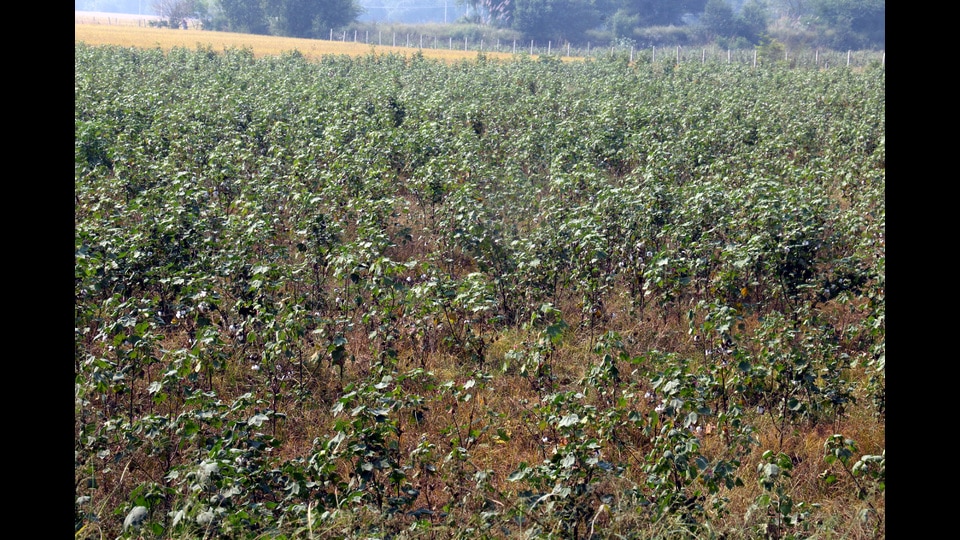
Farm scientists say it is for the first time in recent years that poor growth of cotton plants at this scale has been recorded in Punjab.
With the first picking of cotton bolls underway, field visits to various districts reveal that the height of plants has reached only around three feet, almost half the normal height for this time of the year.
Experts blame unfriendly climatic conditions and whitefly infestation due to the unwanted increase in summer moong crop area for the short height of plants.
State agriculture officials say the initial trend indicates low cotton yield this time as plants are unable to bloom to optimum capacity.
“Farmers and agriculture department worked hard to contain repeat attacks of pink bollworm this year, but we witnessed an unexpected attack of whitefly that hit the state for the first time since 2015-16. Due to delay in canal irrigation support during the sowing period when the temperature was high, the health of plants was severely hit and it is likely to impact yield,” says Mansa’s chief agriculture officer (CAO) Satpal Singh.
Another reason, Singh says, could be that a sizeable number of farmers have avoided putting in required nutrients to cut down input cost amid apprehensions about second consecutive poor cotton crop season.
Sharanjit Singh, a farmer from Mansa’s Mann Khera village, says the plants should have grown to five-and-a-half feet by September, but their growth was majorly inhibited. While Sharanjit cultivated cotton on 17 acres of joint family land in 2021, he brought it down to 10 acres this season.
“Last year, the pink bollworm led to dismal yield and this time the whitefly infestation in the initial phase weakened the plants. Farmers did not want to take risks by spending more on the nutrients, which has also led to poor growth,” he says.
According to Rajinder Kumar, CAO of Fazilka, the hub of cotton cultivation, a team of scientists have conducted field inspections to audit the crop growth and its health. “We have yet to get feedback from the scientists, but the poor growth is evident in fields,” he says.
PAU’s principal agricultural economist GS Romana says when the entire cotton belt was hit by whitely in the 2015-16 kharif season, plants’ growth was normal, but the produce was significantly hit.
“But this time, poor growth of plants is a fallout of an unexpected increase in moong cultivation. Legumes are a natural host of the deadly fly that spreads the cotton leaf curl virus. This season, the whitefly had a huge breeding ground on moong and after its harvest, the population shifted to the cotton crop. The pest attacks hit plant leaves and hampered their growth,” says Romana, adding the higher use of unapproved seeds brought from Gujarat was another additional factor for the stunted growth of plants.


