
 E-Paper



Sukhna Wildlife Sanctuary to get 20 more camera traps by mid-Jan
Chandigarh forest department’s move to set up camera traps at the Sukhna Wildlife Sanctuary aimed at keeping a tab on the movement of wild animals


Looking to keep a tab on the movement of wild animals, the UT forest and wildlife department will install 20 more camera traps at strategic locations in the Sukhna Wildlife Sanctuary by mid-January.
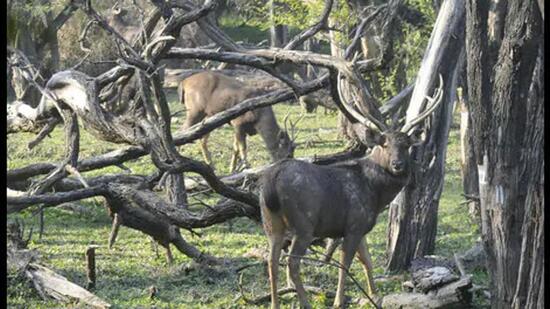
Speaking of the same, a senior forest department officer said, three camera traps had been installed at different places in Sukhna Wildlife Sanctuary on a pilot basis in order to monitor wildlife’s movement in the forest area — adding that the new camera traps would mainly be installed near the water bodies.
“Proper management interventions can be made once we know the locations of the animals, especially leopards,” he said.
Elaborating on the cameras’ functioning, the officer said, “A sensor is attached to the camera. When the animal walks past the camera, it will immediately capture the image or record video which will help the authorities to know the movement of wild animals.”
Notably, leopard pugmarks were spotted at the Sukhna Wildlife Sanctuary while carrying out the second wildlife census in the reserve forests during May last year.
Also in April last year, a leopard was caught in a camera trap installed near a water body in Kansal forests, while a leopard strayed into Sector 5 during the lockdown in March 2020. It was caught and released in the wildlife sanctuary at Morni Hills in Panchkula.
“A good number of direct sightings of wild animals were also recorded during the survey. Besides, indirect evidence such as pugmarks of leopards and other animals were also found,” the officer said.
The data was sent to the Wildlife Institute of India (WII), Dehradun, for further analysis.
The first wildlife census at the sanctuary, spread over an area of 26 sq km in the catchment area of the Sukhna Lake, was carried out in 2010.
According to the subsequent report prepared by the WII, the population of sambar deer in the sanctuary was between 1,000 and 1,200, while the peafowl population was between 900 and 1,100.
The main animals spotted at the sanctuary include sambar, chital, pangolin (anteater), wild boar, jackal, small Indian civet, jungle cat, porcupine, Hanuman langur, rhesus monkey, Indian hare, common mongoose and three-striped palm squirrel.


