
 E-Paper



The magic of street photography from Chandigarh to Barcelona
It is an old acquaintance with city photographer Diwan Manna revived with his recent pictures of love and longing that he carries back from the streets of Europe

 Prefer HTon Google


Some acquaintance has the uncanny way of going long back into time with all the highs and lows, fun and quarrels and yet it endures. So it is with Diwan Manna. In fact it was in mid-70s that Manna decided to move out of his hometown Bareta near Mansa in Punjab, from a family of businessmen and doctors to study art in Chandigarh. A couple of years later I joined the world of journalism, defying my family who wished a steady and safe career of a college lecturer teaching English-Vinglish.
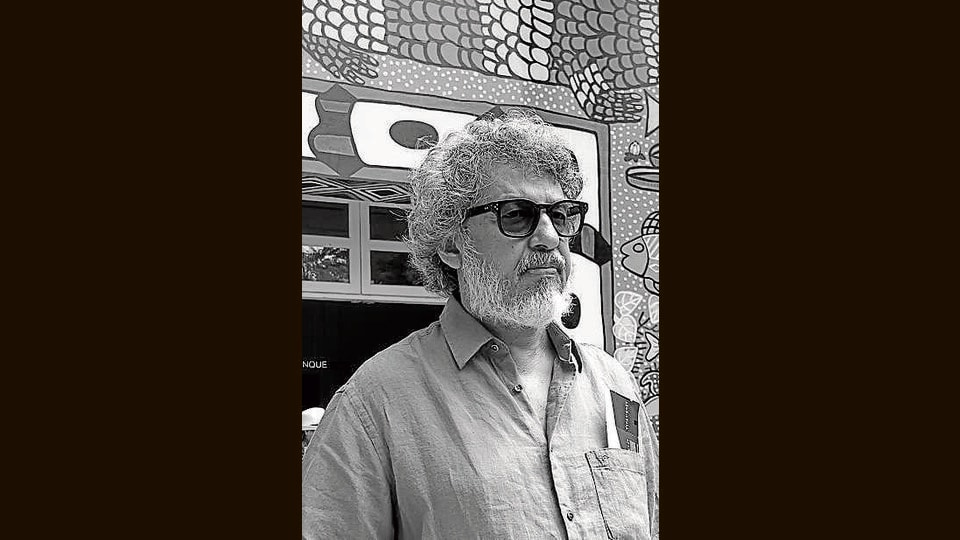
Paths are bound to cross in Le Corbusier’s tiny planned city with roads cutting at safe right angles. I first came across Manna with a shock of unruly hair in dear Gurcharan Channi’s street theatre along with painter Naresh Pandit and dancer Navtej Johar. Diwan and I had the privilege of having the same mentor, the unforgettable Hindi poet of our city, Kumar Vikal. I recall Manna as president of the Students Union of the Chandigarh College of Art holding a joint workshop of poets and painters with Kumar Vikal at the helm of affairs and welcome entry of painter Imroz, besides artists of the calibre of Raj Jain and Viren Tanwar among others. Let me not get caught in the web of fond memories for it is Manna’s work featured this time.
Symphonies in monochrome
With mentors like Vikal and professor Oberoi, Manna had plunged into the street life of the working class in his early work on the peons waiting in corridors of offices or sitting on benches in wait for the Sahib’s call. This made an amazing study of life in waiting all though the photographer says the positions of the subjects were arranged. Yet the boredom and surrender to life on their faces was for real. These were followed by candid street photography of the rickshaw-walas who took the likes of us to and fro from school in their bright made-in-Saharanpur rickshaws, decked up with plastic blooms and black “parandas”, the latter to wave off the evil eye. These wonderful studies are witness to the gentler times and are lost in the high-speed vehicles that took over. Equally evocative were the studies of sweet or mithai makers at hard labour to sweeten our lives.
Old memory returns too often and I recall our older friend saying so of his dear younger friend Manna: “What is this Diwan Manna up to walking the streets with the “jhola” on his shoulder looking for a girl whose name also he does not know.” That was Vikal’s way of bullying lovingly but Manna has come a long way looking for the nameless girl and the jhola is long gone. The recent haul in black and white from the streets and museums of Europe stands witness to it.
Diwan Manna is also a contemporary Indian artist known for his soulful images and is one of the first exponents of conceptual photography in India. He is a pioneer among art photographers in the country. A Diwan Manna artwork raises questions about itself and what it represents. He combines images with objects, moving within a consciously chosen space in order to create a multimedia reality. An art organiser of rare finesse, his exhibitions have graced prestigious, galleries and museums. His street photography stands witness to the art of not intruding but becoming a part of a street walk to bring back rare and endearing visuals. He merges with the mood of the street with a camera in hand and brings back moments to cherish, this artful photographer one has known for long and waits yet for his next journey.


