
 E-Paper



‘Time to act’: After Nepal disaster, experts call for urgent safeguards against glacier risks in J&K, Ladakh
Jalal Jeelani, an avid trekker and environmental filmmaker, who has trekked to dozens of alpine lakes across J&K, said the glaciers and glacial lakes in the higher reaches of J&K are sending a warning that can no longer be ignored

 Prefer HTon Google


The Nepal disaster, which has left over 538 dead and hundreds missing, including many Indian citizens, has left environmental activists, social activists and officials worried in Jammu and Kashmir, with many asking the government to “wake up before it is too late to act”.
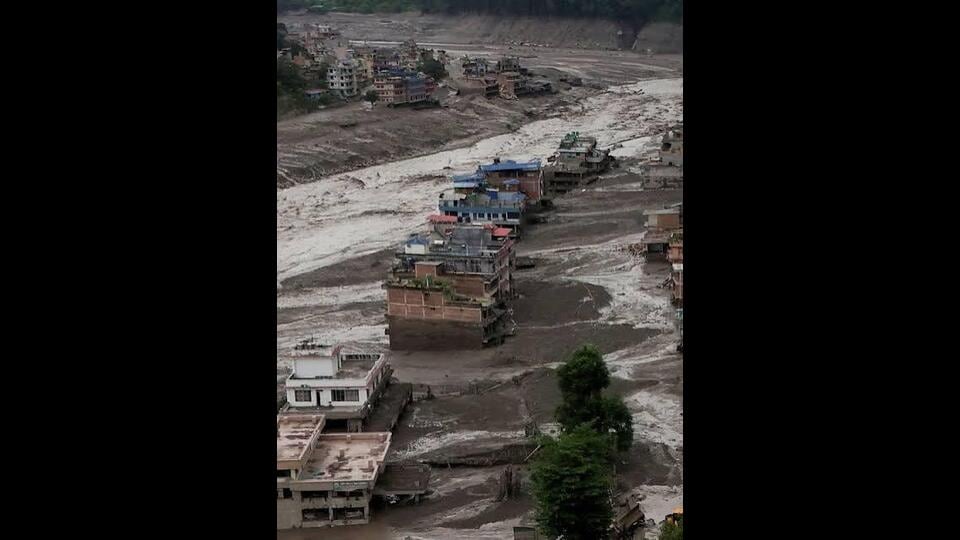
Experts warn that due to global warming and other factors, there is a high probability of Glacial Lake Outburst Flood (GLOF) susceptibility in the Kashmir valley and parts of Kishtwar and Poonch in the Jammu region, as well as several parts of Ladakh.
Jalal Jeelani, an avid trekker and environmental filmmaker, who has trekked to dozens of alpine lakes across J&K, said the glaciers and glacial lakes in the higher reaches of J&K are sending a warning that can no longer be ignored.
“From Sheshnag and its surrounding glaciers extending towards Panjtarni in South Kashmir, to Barafsar and its adjoining glaciers, including the Thajwas glaciers in the Sonamarg region, and across numerous other glaciers and alpine lakes in the upper reaches of Kashmir, the signs of rapid glacial retreat and accelerated melting are deeply concerning. What we are witnessing is not simply the disappearance of ice. It is a transformation of an extremely fragile mountain system, one that has the potential to unleash devastating consequences for the Kashmir plains. The enormous quantities of water locked within glaciers and glacial lakes, combined with unstable terrain, narrow valleys and rapidly changing climatic conditions, create a serious and largely underestimated risk,” Jeelani said.
He said that the increasing human footprint in such fragile glacial terrain, including roads, infrastructure and concrete construction in close proximity to glaciers, glacial streams and unstable slopes, can potentially convert a natural hazard into a human-induced disaster.
“The recent flash flood disasters witnessed in the Himalayan region, including events along the Nepal-Tibet border, should serve as a glaring warning to humanity,” he said.
Jeelani said immediate scientific assessment, continuous monitoring, early warning systems, responsible infrastructure planning and a clear understanding of the carrying capacity of these high-altitude landscapes should be done on priority.
“Mandik Sar in Kishtwar’s Krish Nalla region is a sensitive glacial lake system due to its huge water volume and narrow outlet. Fed by Nun-Kun, MJ Glacier and Shafat La glaciers and numerous alpine lakes, its surrounding glaciers are rapidly retreating, with meltwater channels draining into the lake, warranting urgent scientific investigation.” Jeelani said, adding that the risk of sudden drainage, landslide-induced blockage or glacial lake outburst floods should not be dismissed.
Convener of environmental policy group Faiz Bakshi said that the Nepal-like devastating floods have put Kashmir under spotlight with five identified glacial lakes namely Bramsar, Chirsar, Nundkol, Gangabal and Bhagsar having very high susceptibility to GLOF.
“We should be more worried with swelling lakes, unplanned development, heavy rains, riding temperatures and sudden breaches as happened in Kishtawar and Chenab valley. A study by geoinformatics department of University of Kashmir has assessed that the threat is real. Similarly, the Central Water Commission, on expanded sattellite surveillance of Himalayan glacial lakes, has included 76 glacial lakes and 16 water bodies (area exceeding 16 hectares) in Jammu & Kashmir, as vulnerable,” he said, adding that the system tracks changes in water spread area.
“Kashmir has downturn flood monitoring infrastructure, including automative water level recorders and rain gauges in Jhelum Basin. However, such a system can not necessarily provide advance warning of avalanche, or sudden breach at a remote glacial lake. Government’s claim of bathymetric surveys of vulnerable lakes planned for 2026, the equipment has not yet been deployed. In conclusion, the climate change, global warming , heavy rains, cloudbursts, mudslides, avalanches are a reality we can not shy away,” Bakshi said.
Prominent social activist and member of the Kargil Democratic Alliance, Sajjad Kargili, said the Nepal tragedy must be a wake-up call for the government. “For the past seven years, the people of Ladakh have been demanding constitutional safeguards to protect our land, environment, glaciers, culture and identity. The floods witnessed in parts of Ladakh this year are another warning that we cannot afford to wait. Climate change and environmental degradation are already threatening this fragile Himalayan region,” he wrote on X.
“The time to act is now. Ladakh needs strong safeguards and sustainable policies to protect its fragile ecology and its people from future disasters. Our long-standing demands are not merely political, they are essential for protecting Ladakh’s environment, identity and future,” he said.
In March, chief minister Omar Abdullah had told the assembly that a preliminary geospatial study was conducted to map downstream exposure of glacial lakes, identifying habitations and critical infrastructure at risk in Ganderbal, Shopian and Kulgam.
‘Tragedy in Nepal must be seen as a warning’
Mirwaiz Umar Farooq, addressing a Friday congregation, said J&K is part of the same fragile Himalayan belt and the tragedy in Nepal must be seen as a warning close to home. “We are already seeing more intense rainfall, cloudbursts, flash floods and landslides. Climate change is undoubtedly a major factor, but we must also ask whether our own pattern of development is making the situation more dangerous,” he said, adding that mountains are being cut and blasted for roads, trees are being felled, hotels and buildings are coming up in ecologically sensitive areas and natural drainage channels are being disturbed.
“If this continues without proper scientific and environmental safeguards, we are creating conditions for far greater disasters in the future,” he said.
Mirwaiz said equally worrying is the continued encroachment of wetlands, lakes and flood channels. “I appeal to people not to occupy or build upon these areas. Wetlands are not unused land; they are natural buffers that absorb excess water and protect human settlements,” he said.
Referring to Dal Lake, Mirwaiz said, “We have only to look at the condition of our own Dal Lake to understand how prolonged encroachment, construction and environmental neglect can damage a precious natural system. It is shrinking day by day while we look the other way as if it’s no concern of ours.”


