E-Paper



US-India ties, trade talks: What to watch as the Russia sanctions bill heads to Trump's desk
Delhi does not know whether Trump will use the new authority against India, or what it would do to as US-India trade talks are ongoing.

 Prefer HTon Google


The US Congress this week passed the Lindsey O Graham Sanctioning Russia and Iran Act of 2026, which gives the US President the authority to impose tariffs of as much as 100% on countries that continue to buy Russian oil and gas, among other measures.
India is one of the countries that buys Russian oil, and the prospect of tariffs has thrown India-US relations into fresh uncertainty.
HT explains what happens next, and what it could mean for ties between the two countries.
What happens now?
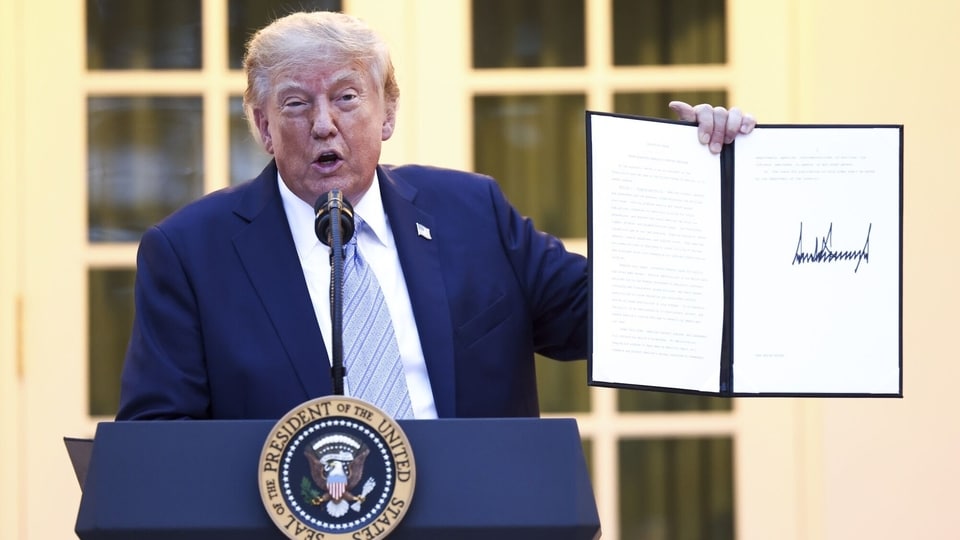
The bill goes to US President Donald Trump for his signature, and White House officials have previously said he intends to sign it. What he will do with the broad new tariff authority it gives him is less clear. The legislation does not compel him to tax imports from India or any other country, and the rate, if he sets one at all, will be fixed by US trade representative Jamieson Greer.
Nonetheless, uncertainty remains.
India’s imports of Russian crude surged to record highs in June, rising 34% month-on-month. Indian purchases that month were worth €4.5 billion, roughly 36% of Russia's exports, making India the second largest buyer of Russian crude behind China, according to the Centre for Research on Energy and Clean Air.
What will India do?
Talks between Indian and US officials on the bill and its potential implications are understood to have been underway for some time.
The ministry of external affairs (MEA) hinted at those exchanges in its statement on the bill’s passage, saying it had made clear to US interlocutors what the legislation could mean for the bilateral relationship.
The subject is expected to feature prominently in a series of high-level meetings between Indian and US diplomats over the coming weeks. External affairs minister S Jaishankar is also expected to travel to the US three times over the next three months.
What does the bill do to India-US trade talks?
That remains unclear.
For now, India has maintained it is ready to sign a trade agreement as soon as Washington can guarantee that Indian goods will keep a competitive advantage over those of its economic peers in Asia, and that guarantee has been the sticking point in the negotiations.
Washington recently imposed a 10% tariff on Indian goods after a Section 301 investigation into forced labour practices. Section 301 of the US Trade Act of 1974 allows the US trade representative to investigate foreign trade practices Washington considers unfair, and to retaliate against them.
A second Section 301 investigation, into excess manufacturing capacity, is ongoing and could bring another tariff. If that happens, Pakistan and other countries in the region, which face no excess-capacity investigation, may end up paying lower tariffs than India.
Tariffs under the Russia sanctions bill, on top of that, would only make a competitive advantage for Indian goods entering the US market harder still to secure.
Also read: US Congress clears Russia sanctions bill, hands Trump new tariff powers: What it means for India
How has the world reacted?
China has said “unilateral sanctions” have no basis in international law. Russia also responded unfavourably, with the Kremlin’s spokesperson calling the bill’s passage an “unfriendly action”.
Ukrainian President Volodymyr Zelensky, who had been pushing for the bill, welcomed it as an “extremely powerful tool” that could bring the years-long Russia-Ukraine war to an end. European Commission President Ursula von der Leyen called the bill an “important opportunity”.