
 E-Paper



Twin pest threat hits cotton crop as acreage shrinks to record low
Early signs of whitefly and pink bollworm infestation have been reported from several cotton-growing districts of Punjab, raising concerns among farmers as humid weather and delayed monsoon conditions create a favourable environment for the spread of the two major pests

 Prefer HTon Google


Early signs of whitefly and pink bollworm infestation have been reported from several cotton-growing districts of Punjab, raising concerns among farmers as humid weather and delayed monsoon conditions create a favourable environment for the spread of the two major pests.
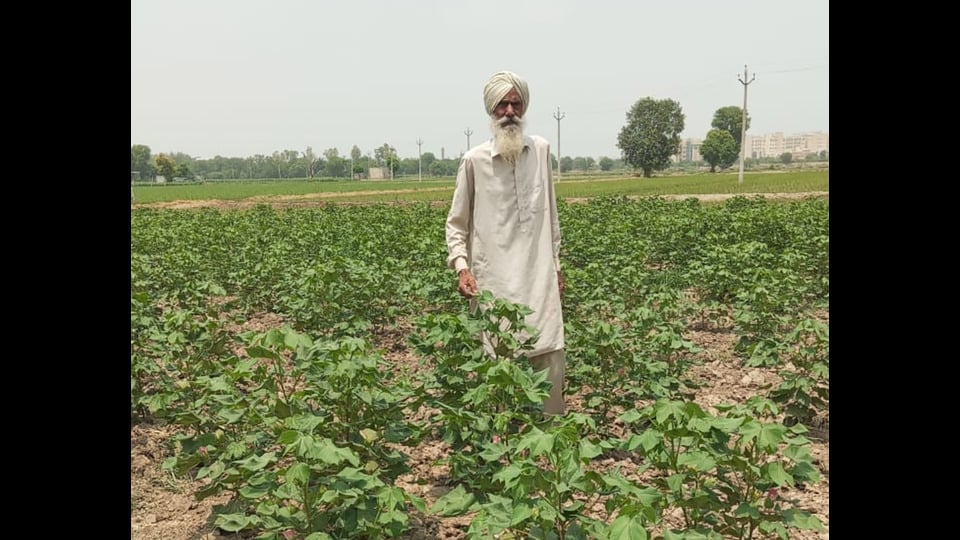
Although agriculture experts say the infestation is still below the economic threshold level (ETL), they have advised farmers to closely monitor their fields over the next two weeks, warning that prolonged humid conditions could accelerate the spread if timely control measures are not adopted.
The development comes in a season when cotton cultivation has shrunk to around 80,000 hectares, the lowest-ever acreage for the cash crop in Punjab’s semi-arid south Malwa region.
To assess the situation, teams from the state agriculture department, Punjab Agricultural University (PAU), Ludhiana, and its network of krishi vigyan kendras (KVKs) have intensified field visits across southwest Punjab. Scientists and extension officials are surveying fields, monitoring pest populations and advising farmers on preventive measures.
Fazilka, which accounts for nearly half of Punjab’s cotton area this season with around 40,000 hectares under cultivation, has reported isolated cases of both whitefly and pink bollworm.
Chief agriculture officer (CAO) Kulwant Singh said the absence of rainfall during July, coupled with prevailing humidity, has created favourable conditions for whitefly multiplication.
“We have observed visible whitefly infestation in a few fields, while pink bollworm has also been detected at isolated locations. However, the infestation has not reached an alarming stage. Our extension teams are educating farmers on timely management practices to prevent its spread,” he said.
In neighbouring Muktsar district, agriculture authorities have advised growers to begin with eco-friendly control measures. Chief agriculture officer Jagsir Singh said farmers are being encouraged to spray neem-based bio-pesticides, which are effective against whitefly during the initial stage of infestation.
“The twin pest attack is only in its early stages. Farmers should continue monitoring their fields and use recommended chemical pesticides only if the infestation crosses the threshold level in the coming fortnight,” he said.
Bathinda district has also stepped up surveillance in view of the prevailing weather conditions. Agriculture department teams are conducting field inspections twice every week to detect pest outbreaks at an early stage.
Bathinda CAO Harpreet Pal Kaur said prolonged hot and dry weather has increased the risk of whitefly infestation.
“Jodhpur Romana and Yatri villages have been identified as hotspots after whitefly attacks were reported there. Pink bollworm has also been detected in pheromone traps installed at a few locations. Our teams are carrying out regular surveillance and guiding farmers on timely intervention,” she said.
PAU principal entomologist Vijay Kumar said there is no visible damage to cotton plants from whitefly at present, but cautioned that farmers should remain vigilant as the pest population could increase over the next 15 to 20 days if weather conditions remain favourable.
He said pink bollworm has so far been detected only in isolated fields where cotton was sown early.
“Delayed rainfall in the cotton-growing districts naturally favours pest emergence under such climatic conditions. At present, the infestation has not crossed the economic threshold level, but farmers should keep monitoring their fields. We expect rainfall this week, and the showers are likely to reduce the adult whitefly population by washing it off the crop,” Kumar said.
Agriculture experts have advised farmers against indiscriminate use of chemical pesticides, recommending regular field monitoring and consultation with agriculture officials before spraying insecticides. They said timely intervention and adherence to scientific recommendations would help prevent the spread of the pests while avoiding pesticide resistance and unnecessary expenditure.


