
 E-Paper



Wildbuzz | A nightjar cast in sunlight
The nightjar is especially a fortuitous encounter because it is a secretive bird that dwells on the undulating winds of the night and known to inhabit shady nullahs and dry riverbeds in the foothills during day


For those who savour glimpses of rare birds from the comfort of balconies or while lounging in the lawns deep in the cities, there are few catches as special as the Long-tailed nightjar, Indian pitta and Asian paradise flycatcher.

The nightjar is especially a fortuitous encounter because it is a secretive bird that dwells on the undulating winds of the night and known to inhabit shady nullahs and dry riverbeds in the foothills during day. An astonished Rajat Verma, who works at NABARD, spotted a nightjar perched on his washing machine, just once. He added to that a coveted flycatcher bagged from his window.
Publisher Vikas Salil Sharma, who resides at the GCG, Sector 11, Chandigarh, with his lecturer wife, was spellbound when a nightjar alighted on a sunlit spot in the lawns last Tuesday amid the uproar of Jungle babblers. Though the insect-eating nightjar is no threat to babblers unlike the Shikra or owls, the unusual, menacing-looking avian was disquieting. Not just babblers. Nightjars have small beaks but legend incredulously had it that these birds were “goatsuckers”’ drinking milk at night or even plucking out people’s eyes while emitting ominous midnight calls!
The nightjar’s GCG presence is a subject of speculation. Was it transiting to the foothills for the breeding season (March to May) and got disoriented in passage, possibly due to Western disturbances? Was it a summer dweller at the GCG but had escaped notice due to its cryptic, nocturnal activity? If the latter holds true, the nightjar’s nocturnal calls should resound soon enough at the GCG.
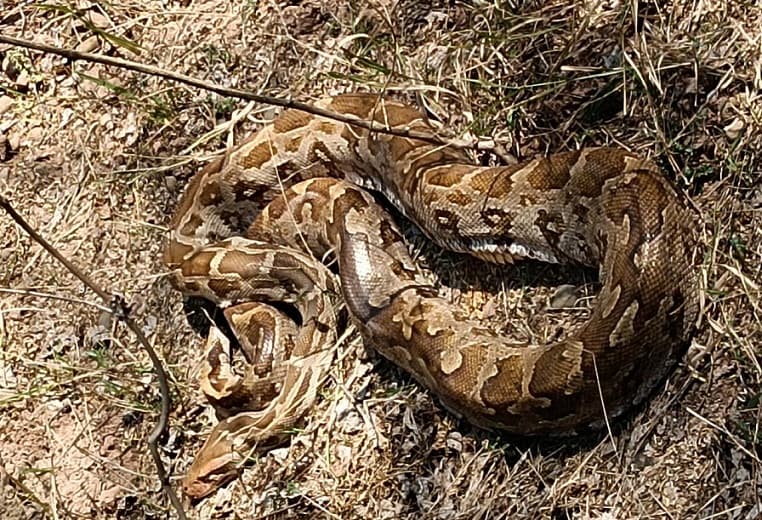
Beach spotting the pythons
The scrub jungles of the Sukhna Lake Nature Trail and Sukhna Wildlife sanctuary host a good number of Indian Rock pythons, with a viable breeding population. The major concern for the python’s long-run viability is the invasive, fast-colonising Vilayati kikar (Prosopis juliflora), whose canopy is a tent-like spread that denies adequate sunlight to the jungle floor in winter.
Due to the notorious kikar, pythons have to work extra hard to find sunny, safe spots for basking. If there is no good spot available on the jungle floor, pythons climb trees as witnessed near the Nature Trail where one was beach-spotted 20 feet high!
After a careful assessment and survey, pythons chose basking spots forsaken by human presence. Such as the tops of remote, unstable and tedious-to-ascent Shivalik hillocks. Only a few grass-cutters wandering for cattle fodder may stumble fearfully upon the mighty serpents. Warming themselves in the sun god’s embrace, like Nordic beauties fleeing icy, gloomy countries and finding solace on Goa beaches. Except, the Nordics may engage here in ‘I damn care, morality do you dare’ sprawls, delighting a section of tittering natives!
Basking in pythons is the most conspicuous thermo-regulatory behavior that enables the serpents to enhance physiological performance, including running speeds, growth, reproduction and digestion. It is not that pythons go to sleep in a burrow through an Indian winter; they are partially active and mate during cold season when they congregate. Naturally, gravid females spend more time basking than non-gravid females.
vjswild2@gmail.com


