
 E-Paper



Wildbuzz: A plover bonanza
On May 29, the greater sand plover was photographed for the first time in the Inter-State Capital Region; deer are being killed by packs of free-ranging stray, village or domestic dogs


The abnormal water deficit at the Siswan and Mirzapur check dams in the Shivalik foothills this summer has churned up an unexpected spin-off. Two avian species rarely found in our region and which were in passage migration to northern latitudes for summer breeding, were photographed by delighted troupes of tricity photographers.

On May 29, the greater sand plover was photographed for the first time in the Inter-State Capital Region (ISCR), an area encompassing a radius of 50km from Chandigarh for the purpose of an avian species checklist.
As luck would have it, the lesser sand plover offered a double, golden opportunity as it was keeping the close company of the greater plover. Both species were at Siswan Dam and prefer the slushy, quicksand-like shores exposed by freshly receding waterlines.The recent photographic record of the lesser sand plover is the second one for the ISCR, the first having come at the Sukhna Lake on May 13, 2018, by this writer.
Both plover species migrate in good numbers to Indian coasts in winter, but few specimens are recorded as deep inland as the Chandigarh region while returning in summer to Ladakh and regions beyond and north of the Himalayas. The novel twist to this bird tale is that the two plover species were photographed by an unusual entrant to the competitive field of avian photography. It is none other than a top cop: ADGP, Welfare, Punjab Police, V (Voruvuru) Neeraja! Her photographs of May 29 triggered a flash wave of photographers, who rushed to the dams to record these rare species before they vanished into the northern horizon.
“I took to bird photography and videos to educate my daughter, nephews and nieces about names of species. Children have to be sensitised to the beauty and diversity of nature so that they grow up to protect the environment and habitats of wild flora and fauna. I also sensitise wildlife officers on safeguarding habitats based on my observations in the field while birding,” Neeraja told this writer. Bravo!
Greed triumphs need
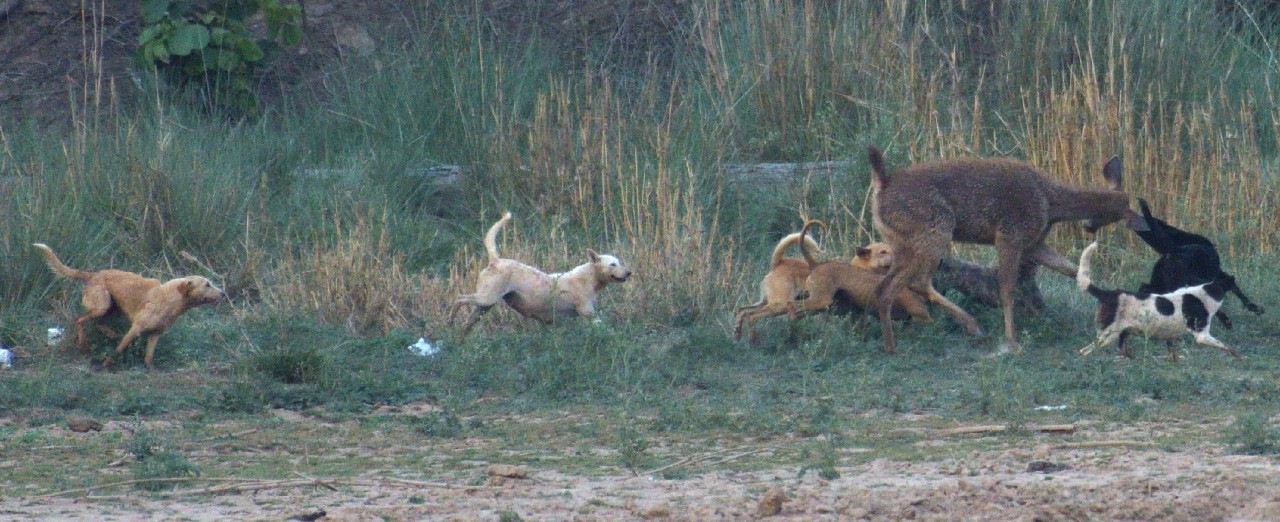
A ramble around the drying water holes in the Shivaliks is distinguished by an odd odour. The standard stink of decaying buffalo dung is replaced by the stench of putrefying sambars. Mostly fawns, these deer have been killed by packs of free-ranging stray, village or domestic dogs when the creatures come to quench their thirst. These dog packs include vicious pit bulls, bull terriers, hybridised pointers, which are deployed to guard fields and are used by some villagers for poaching.
Dogs kill many more fawns than they can eat, as evidenced by a number of uneaten or partially devoured carcasses. The wanton killing is unlike that of natural predators such as leopards or tigers, who kill only as much as they can eat. Killer dogs, as companions of humans, thus subscribe to the despicable creed of greed reigning supreme over need. The purpose of wanton killing of wild mammals or birds by dogs is to establish domination over water holes. However, canny dog packs are less active at night around water holes due to leopard threat.
When water is plentiful and sambars are difficult to slaughter, as in monsoon and beyond, dogs are not seen around water holes. They retreat to villages, where they are heavily subsidised by humans in terms of food, garbage, shelter and water. Exploding dog numbers is in itself an unnatural phenomenon.
Ironically, domestic dogs are among the rarest of rare predators protected by a plethora of Indian “animal welfare” laws and an army of law and social media-savvy urbane activists. The related impotence of wildlife protection laws elevates killer dogs to VVIP immunity! It is pithily said that a man-eating tiger is easier put down by authorities than a dog on a human biting or Sambar-killing spree.


