
 E-Paper



Wildbuzz: ‘Ibexes’ locked horns over Kargil
Himalayan ibexes and brown bears faced challenges during the Kargil War. Ibex armies symbolized the battle for territory between Indian and Pakistani troops. Brown fish owls spotted at Siswan dam after a long search.


Many summers ago, Himalayan ibexes had fled the Kargil heights or taken refuge on reverse slopes to avoid getting caught in the crossfire of artillery barrages. Some ibexes were killed by shells and bullets in the Kargil War, which marks its 25th anniversary this year. Similarly, brown bears had to flee their favoured haunts on the lower slopes of Tiger Hill.
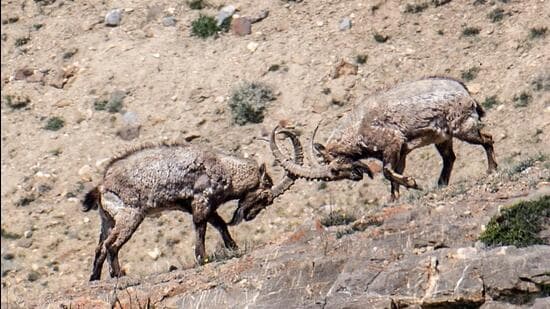
Delving on the plight of the ibexes during the war, Colonel Bijoy Mukherjee (retd.) of the 1 Bihar which battled in Batalik, told this writer: “The ibexes were under severe pressure and hiding on the reverse slopes of the ridges occupied by the enemy to avoid shelling. At night, they would steal out to feed. I could hear their hooves coming down from the slopes to feed on the moss growing next to snow-melt streams flowing down from the LoC watershed.”
The alpine pastures had been taken over by a “war of the ibex armies”. The sparring in summer between ibex males for territory and females was replaced by a set of battling soldiers, who were virtually as adept, acclimated and sure-footed as ibexes in the high-altitudes. The symbolism of warring ibexes arose from the fact that the regimental insignias of the adversary troops — the Ladakh Scouts (LS) of India and Northern Light Infantry (NLI) of Pakistan — both bear the ibex to reflect proficiency in battling on precipitous ridges, ice cliffs, glaciated terrain and towering altitudes were eagles do not dare. The LS and NLI had “locked horns” for territory and the former won hands down!
Colonel Sonam Wangchuk (retd), Maha Vir Chakra, who led the LS (Indus Wing) to the Chorbatla victory in end-May 1999, explained the significance of the ibex regimental insignias. “The ibex can climb a vertical cliff with the use of its highly-adapted hooves. Similarly, LS troops can climb an ice wall with ease. Our troops can run up and down the steepest of slopes without huffing and puffing, unlike troops of the plains who find it arduous. The NLI is also considered as comprising good high-altitude troops as they are recruited from Gilgit-Baltistan, POJK, and are roughly of the same stock as Ladakhis,” Wangchuk told this writer.
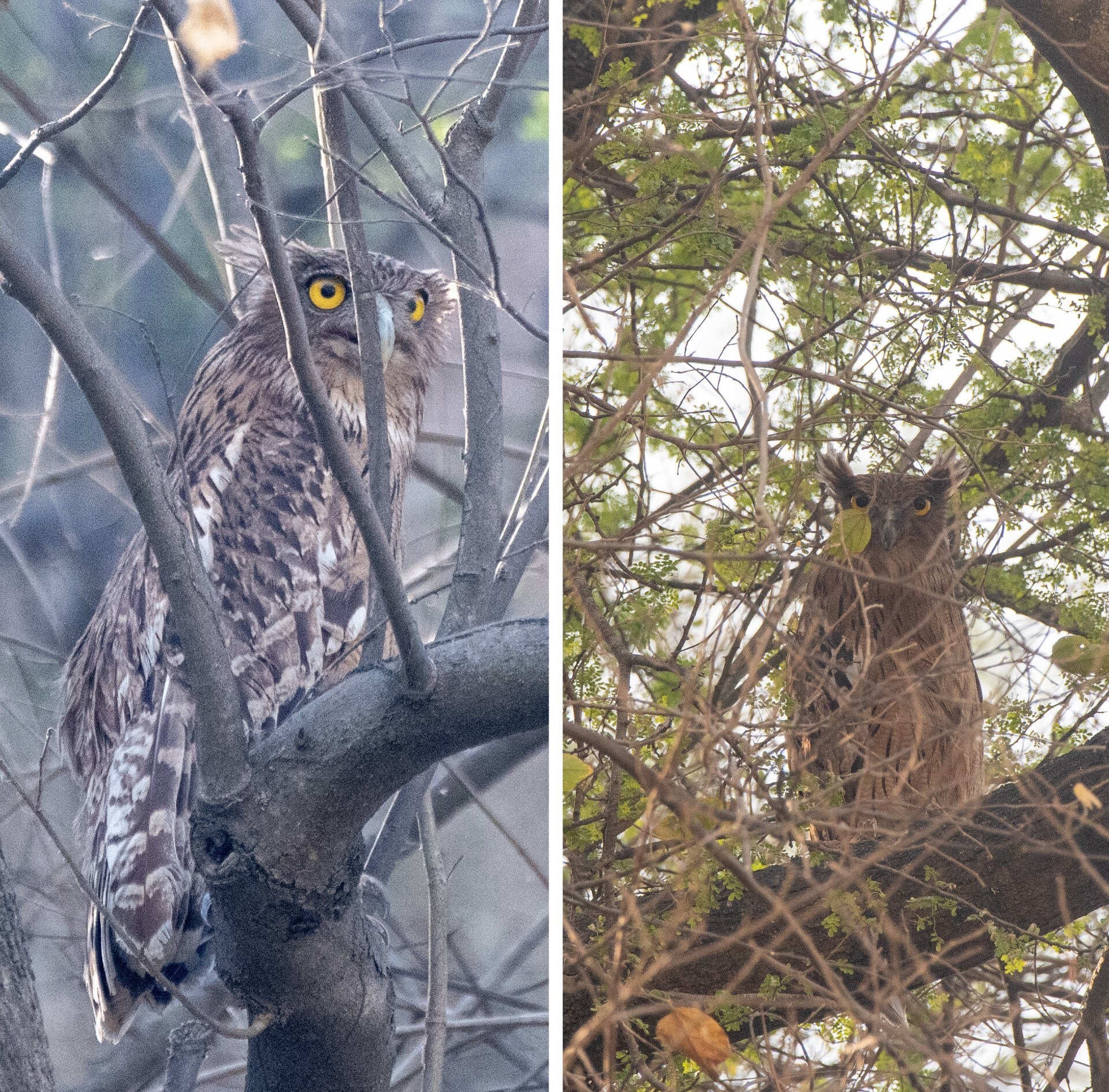
Pair of irritated fish owls
After long last, the evasive brown fish owls (BFO) of Siswan dam have been captured alive, on camera! The last record of the BFO, a species known to dwell here but difficult to spot due to inscrutable terrain and the bird’s reticent habits, at Siswan was from December 2022 when this writer stumbled upon a dead specimen trapped in fishing nets.
Chandigarh birder, Simmi Waraich, photographed a BFO pair recently after a sharp-eyed member of her group, Saiyam Nagar, spotted it. That the owls were flabbergasted at their chance discovery and not liking it at all is evident from the BFO couple’s expressions! When undisturbed, owls are serene and as unmoved as the wise Buddha in a statuesque penance, with scarce a revealing flutter of proverbial eyelashes! Waraich has kept the precise location of owls secret to prevent a beeline of paparazzi from making it to the location and hounding the pair.
The BFO species, as such, is hardly ever spotted in the larger Chandigarh region, with just a handful of records available from Siswan, Perch and Mirzapur dams, Badasher, Morni and at Kuranwala above Mata Mansa Devi temple.
Unlike the kingfisher’s plunge into the water’s depths for fish, the BFO waits for live prey (fish, frogs, reptiles, crustaceans) by occupying a perch above shallow waters or wading into a shallow cove by making use of long legs. As the evening deepens, aquatic creatures nose into the shallow tracts and the waiting owl plucks them from water or skims the surface by flying over it and using its legs to lift the prey clean.
vjswild2@gmail.com


