
 E-Paper



Wildbuzz | Murders written in good English
It is not that such colonial attitudes to wildlife have been erased in Independent India; a degree of institutionalised indifference continues to characterise contemporary road/ railway kills of crossing creatures

 Prefer HTon Google


That line from George Bernard Shaw, “When a man wants to murder a tiger he calls it sport; when a tiger wants to murder him he calls it ferocity,” came to mind when I came across a depiction of a tiger family from the British Raj. It was from the London publication, “Graphic Illustrated” of January 18, 1890, and titled, “An Unexpected Danger --- A Railway Engineer’s Predicament in India”. The illustration showed the coolies fleeing when the ‘Burra Sahib’ inspecting railway sleepers on a trolley suddenly came face to face with tigers “squatting” on the track.
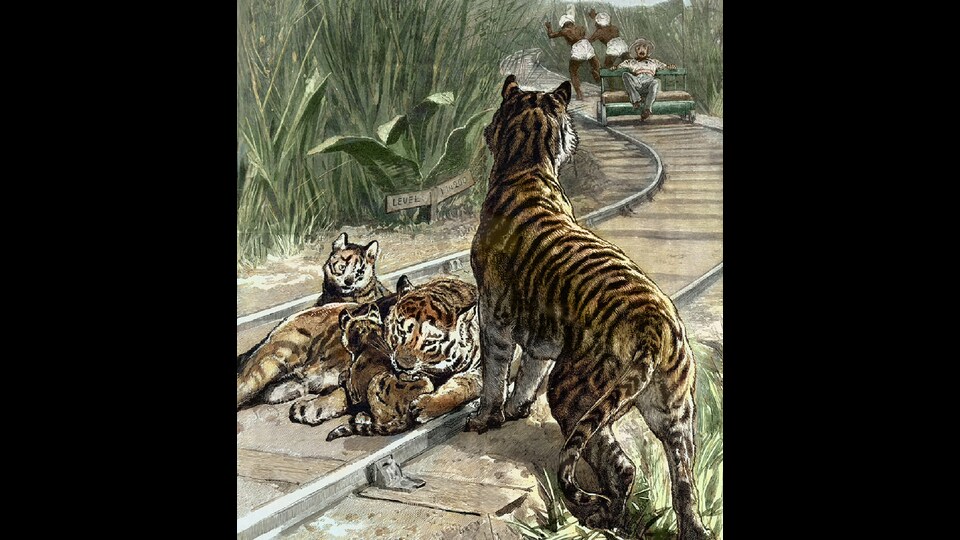
The illustration’s context was the mortal danger posed by animals and serpents to colonial masters engaged in prising open incredible India’s wilderness for exploitation. It never really struck the Raj’s thinkers and artists that it was the railway engineer who had intruded into the ageless home of the tigers and left the big cats with the predicament of having to deal with a situation tantamount to an ‘invasion of remorseless, baddie aliens from Mars’.
It is not that such colonial attitudes to wildlife have been erased in Independent India. A degree of institutionalised indifference continues to characterise contemporary road/ railway kills of crossing creatures. “The British came from the West where there was fear and ignorance of the so-called dangerous animals. They were simply exterminated. The British did the same in India by mass killing of carnivores and venomous serpents after setting bounties on them. However, the traditions in India were of tolerance of wild creatures, and they and humans shared space and made accommodations. Animal life is so intermingling and vibrant in Indian cultures. They are the ‘vahanas’ (carriers) of the Gods, to the extent that the rat is associated with Lord Ganesha and in the Karni Mata mandir of Bikaner, thousands of rats are worshipped,” renowned wildlife biologist Vidya Athreya told this writer.
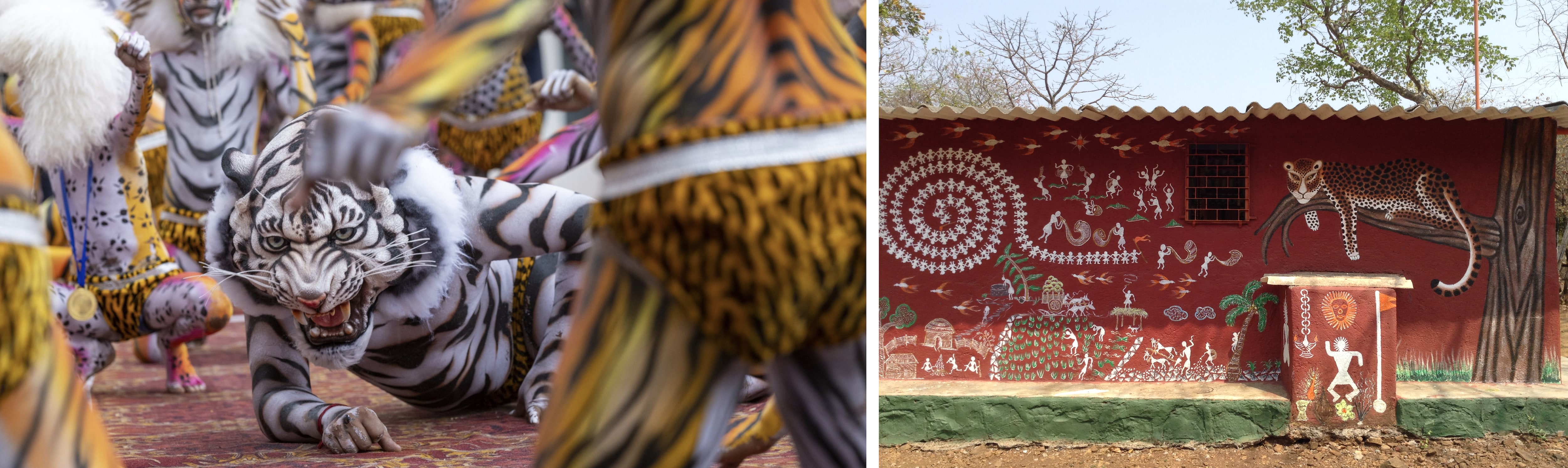
Athreya cites ‘Vana Katha’, a new, illuminating initiative of the NGOs, Nature in Focus and Wildlife Conservation Society (India). “The reverence for the non-human world is deeply embedded in Indian culture, where profound respect for nature has long ensured that human life remains in harmony with the natural world. However, in recent times, the delicate balance between humanity and nature has shifted, with human interests often taking precedence. Yet, despite these challenges, the deep-rooted reverence for nature within Indian society has often served as a crucial counterbalance. People have demonstrated an extraordinary capacity to coexist with the natural world, continuing to worship and cherish it even in the face of negative interactions. The same folklore, art, music, and dance that once celebrated the beauty and bounty of nature now stand as stark reminders of the need to preserve what remains. Today, more than ever, it is vital to recognise and celebrate these ancient connections. This is the essence of ‘Vana Katha’- stories of cultures deeply rooted in nature,” states the preamble to this much-needed initiative.
In stark contrast to the British “predicament”, tribal communities had co-existed with tigers. “We can see this in the Kunubi tribes in Karnataka who believe that tigers hold a divine status...among the Warli tribe in Maharashtra who revere big cats in the form of the deity Waghoba; while the Idu Mishmi tribe in the Dibang valley of Arunachal Pradesh considers tigers to be their brothers. Other communities revere the tiger as the vehicle of the mother goddess,” states a Vana Katha story, “Tiger dance of Tulu Nadu”.
vjswild2@gmail.com


