
 E-Paper



Women representation in Chandigarh Police falls short of 33% target: Lok Sabha data
The 6,000-strong police force in Chandigarh has only 22% women personnel, significantly short of the 33% representation goal set by the Union ministry of home affairs


Women constitute just 22% of Chandigarh’s police force, with 1,327 women personnel out of over 6,000, according to data recently presented in the Lok Sabha.
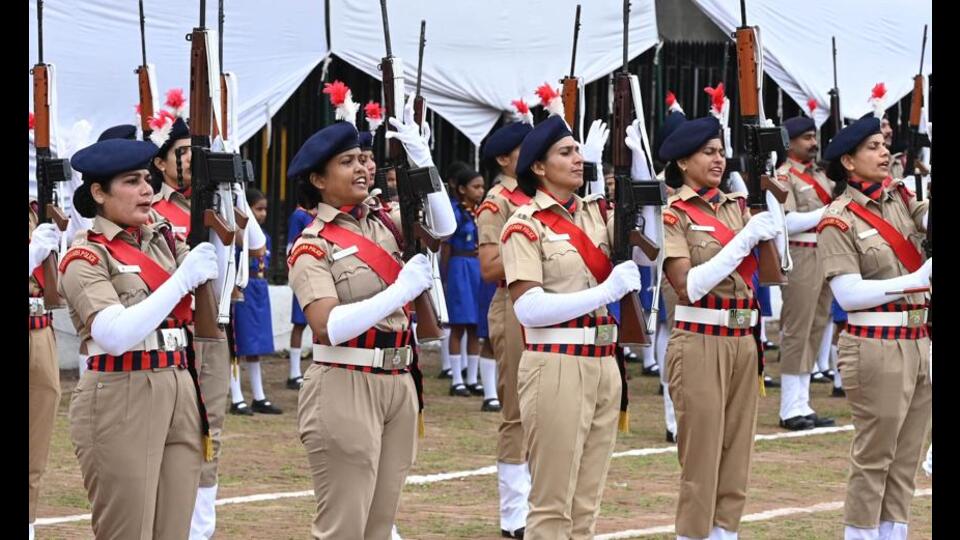
Though the figure falls significantly short of the 33% representation goal set by the Union ministry of home affairs (MHA), the gender gap in the region’s law enforcement was far greater a decade ago, with women taking up mere 15% posts in 2013.
The data on the recruitment of women in the police was tabled by the ministry on August 6.
On the bright side, despite the low overall percentage, women officers in Chandigarh have been appointed to several critical positions, including senior superintendent of police (SSP), deputy superintendent of police (DSP) in Traffic, Women and Child Support Unit, and Welfare, as well as station house officers (SHOs). Currently, seven women officers hold the rank of DSP and two serve as SHOs.
The current SSP in Chandigarh, Kanwardeep Kaur, is the second woman to hold this position after Nilambari Jagadale. Kiran Bedi made history as the city’s first woman inspector general of police (IG) in 1999.
As on January 1, 2023, among the female police personnel, 16 were inspectors, 11 sub-inspectors (SIs), 14 assistant sub-inspectors (ASIs), 119 head constables (HCs) and 960 constables.
Also, the police stations in Chandigarh have women’s help desks, manned by female personnel, a step towards addressing the needs of women in the community.
According to the Bureau of Police Research and Development, with crimes against women on the rise, the need for increased representation of women in the police force is more pressing than ever. Their presence is critical not only in investigating and handling sensitive cases but also in ensuring that women feel safe and supported when approaching the police.
A senior UT police official said, “Chandigarh is already among the top states to have a large percentage of women in policing. There are currently no plans to fill more positions with female personnel.”
Critical roles in high-profile cases
Women officers in Chandigarh have led several high-profile investigations, showcasing their competence and dedication. In one notable instance, a woman officer served as the investigating officer in the 2022 Maloya rape and murder case. The case, which shocked the city, was handled with exceptional sensitivity and thoroughness, with detailed documentation of the crime scene and the victim’s injuries.
The 22-year-old MBA student’s rape-murder case from 2010 was also reopened under the leadership of current SSP Kanwardeep Kaur. In 2023, she reconstituted the investigative team and devised a new strategy to apprehend the accused.
Recently, when a serial molester targeting solitary women in parks came to light, it was again the SSP who took swift action. She ordered daily meetings across police stations for over a month, ultimately leading to the apprehension of the accused. These cases illustrate the crucial role women officers play in handling crimes against women with the required empathy and rigour.
Govt push for increased representation
MHA has repeatedly urged states and UTs to boost the representation of women in their police forces to at least 33%. Various advisories have been issued since 2013, emphasising the need for each police station to have a minimum of three women SIs and 10 women constables to ensure a round-the-clock women’s help desk.
The ministry has also recommended creating additional posts for women by converting vacant constable and sub-inspector positions. This move is aimed at enhancing the visibility of women police at the frontline level, crucial for tackling crimes against women and ensuring a safer environment for female citizens.
Furthermore, MHA has advised states and UTs to strengthen welfare measures for women police personnel, including providing housing, medical facilities and separate restrooms to create a more conducive working environment. Central assistance under the “Assistance to States & UTs for Modernisation of Police scheme” is also available to construct essential facilities, such as separate toilets and crèches for female officers.
What’s keeping women away from the force
Kuldeep Singh, chairperson of the police administration department at Panjab University, noted that urban women were less likely to apply for junior-level police jobs, which were often filled by women from rural or economically disadvantaged backgrounds, seeking government employment. “The demanding nature of police work, which requires 24x7 availability, is also a significant deterrent socially,” he added.
Former IG Kiran Bedi said women should qualify for police roles based on merit, just as men do. She also emphasised that implementing work-life balance measures, such as reasonable support systems and elder care, can help women in policing and potentially attract more women to the profession.


