
 E-Paper



Haryana to set up mandis to procure organic foodgrains, fruits in Hisar, Gurugram
While mandi in Gurugram will cater to produce such as wheat, paddy and pulses, Hisar mandi will deal with fruits and vegetables grown through natural and organic methods.

 Prefer HTon Google


In a major push to promote natural farming on a large scale in Haryana and raise awareness among farmers, chief minister Nayab Singh Saini on Thursday announced to set up natural and organic food-grain procurement mandis in Gurugram and Hisar.
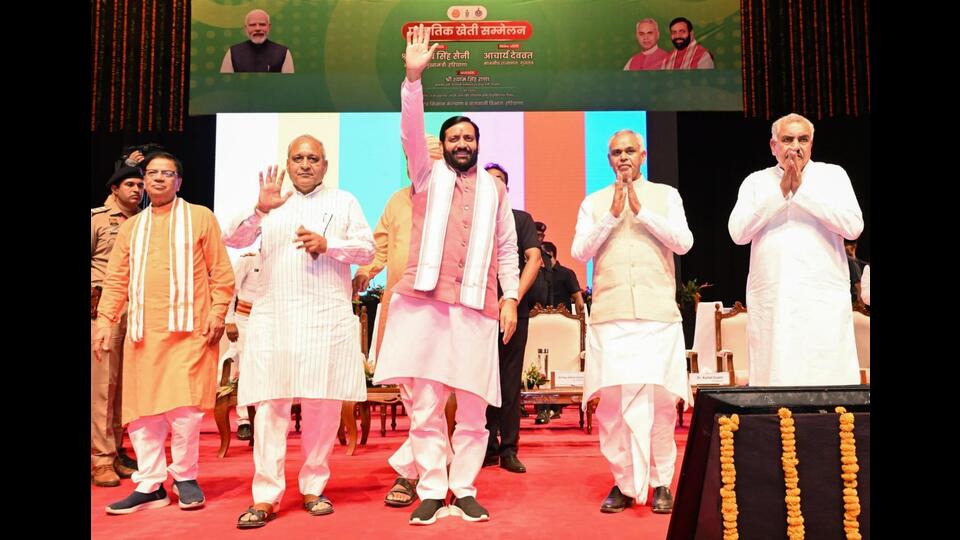
While mandi in Gurugram will cater to produce such as wheat, paddy and pulses, Hisar mandi will deal with fruits and vegetables grown through natural and organic methods.
Ever since the natural farming scheme was launched in Haryana in 2022 as many as 1.84 lakh farmers have registered 2.73 lakh acre land on the portal. Of these, 10,550 farmers have been verified for practicing natural farming on 17,087 acres. Haryana has set a target of bringing one lakh acre land under natural farming in 2025–26 financial year.
Addressing the natural farming conference organised on the occasion of World Environment Day at Chaudhary Charan Singh Haryana Agricultural University, Hisar, Saini said that a committee will be formed under the Haryana Kisan Kalyan Pradhikaran to determine fair pricing for produce grown using natural and organic farming practices.
He further announced financial support of ₹20,000 per farmer for branding and packaging of natural farming products. Dedicated laboratories will also be established to test produce from natural and organic farming. These labs will offer testing services free of cost to farmers, he said.
The chief minister also announced that 53-acre land belonging to the agriculture department in block Pundri of district Kaithal will be leased to farmers engaged in natural farming through an auction process. He said that in every panchayat 10% of panchayat land or at least one acre will be reserved exclusively for natural farming. This land will be allotted only to landless farmers via auction.
As an additional incentive, those who will practice natural farming on government or panchayat land will also receive ₹3,000 per farmer for purchasing four drums used in storing and processing raw materials under the Natural Farming Scheme. A subsidy of ₹30,000 will also be provided for the purchase of a desi cow.
He said that natural farming will not only provide a new direction to agriculture in Haryana but also serve as an inspiration for the entire country.
Saini said that under the subsidy being given on the purchase of indigenous cows for natural farming, so far, ₹1.23 crore has been disbursed directly to farmers. In addition, ₹75 lakh has been provided to 2,500 farmers for the procurement of storage drums.
Gujarat governor and a strong proponent of natural farming Acharya Devvrat while addressing the farmers said that adopting natural farming is now the need of the hour to steer the country towards sustainable agriculture. Highlighting the adverse effects of chemical farming, he said that the excessive use of chemical fertilisers and pesticides is degrading soil fertility and severely impacting human health, contributing to the rising incidence of diseases such as cancer, diabetes and heart ailments.


