
 E-Paper



In Uttarakhand, Covid and lack of jobs top BJP’s worries
Chief minister Tirath Singh Rawat and other top BJP leaders took stock of issues likely to drive the elections discourse in the state at a three-day meeting

 Prefer HTon Google


The ruling Bharatiya Janata Party (BJP) has identified the impact of the second Covid-19 wave on the state government’s popularity, the ongoing agitation against the farm laws and the lack of economic and employment opportunities as the key concerns in poll-bound Uttarakhand, said people aware of the matter.
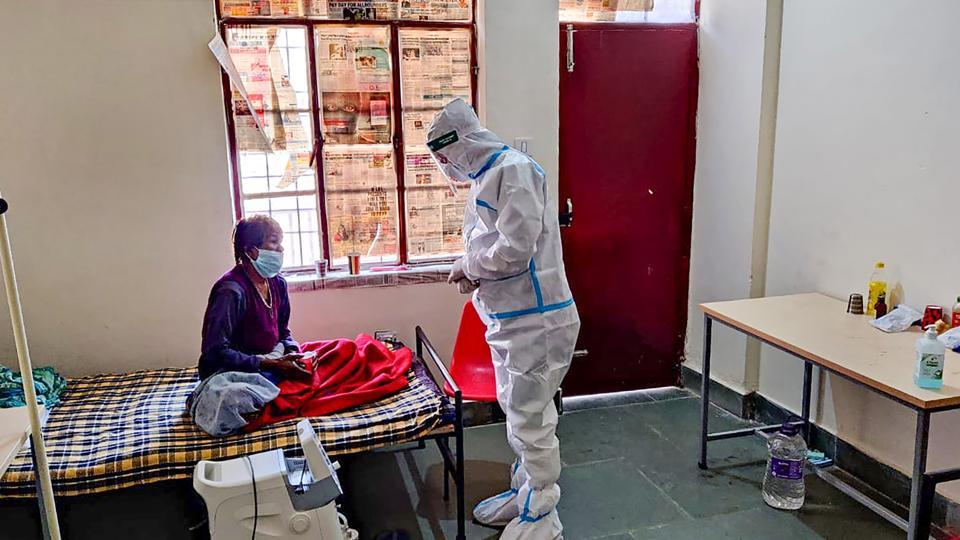
Chief minister Tirath Singh Rawat and other top BJP leaders took stock of issues likely to drive the elections discourse in the state at a three-day meeting. The meeting called to discuss organisational issues and to draw up a roadmap for the 2022 elections in Ramnagar ended on Tuesday.
“There is no denying that people are angry with the state administration for the lapses in providing healthcare during the second wave. Many deaths took place across the state and that issue will be a key concern. But the party also faces a daunting challenge from the farmers who are against the new laws,” said a BJP functionary on condition of anonymity.
Also Read | BJP top brass summons Uttarakhand CM to Delhi ahead of assembly polls
Uttarakhand farmers have been staging a sit-in against the farm laws along with those from Punjab and Haryana at the Delhi border.
The functionary quoted above said the impact of the farmers’ agitation will be felt in the three districts of Udham Singh Nagar, Dehradun and to some extent in Haridwar. “A major impact will be felt in Udham Singh Nagar, which has nine assembly constituencies... the agitation is likely to impact the outcome in at least a couple of them,” said the functionary.
The BJP has sought to redouble efforts to reach out to break the logjam with the agitating farmers. It plans to strengthen booth committees and senior leaders including ministers and members of Parliament will be deputed for mass-contact programmes. The state has so far never re-elected a party in power since its formation in 2000.
The tenuous equation between the leaders in the state unit is another major problem the BJP faces. It is worried about the controversial comments chief minister Rawat, who was elevated to the position in March, has made. His administration’s failures in stemming the Covid infections during the Kumbh Mela have given the Opposition a chance to target the government. The failure in detecting the alleged irregularities in testing during the pilgrimage, which was a prerequisite for allowing visitors, has embarrassed the government. It is also being perceived as a factor for precipitating the second wave.
The leadership in Delhi is also in a bind over whether to project chief minister Rawat as the face of the election or follow the Assam model. In Assam, instead of projecting the serving chief minister, the party remained ambiguous about the leadership.
For now, the central leadership has ruled out changing the chief minister even though a question mark hangs over his election to the assembly. Chief minister Rawat is currently not a member of the assembly. As per the law, he has to be elected to the House within six months of being appointed the chief minister. By-polls are not normally held if the state assembly elections are less than a year away. There are no indications so far on whether the commission will hold elections any time soon. The chief minister needs to be elected to the assembly by September. Two constituencies are lying vacant because of the deaths of the legislators, who represented them.
“The party erred in changing the chief minister too close to the election. Tirath Singh’s elevation in March barely gave him time to coordinate and connect with the people in the state and address the issues that led to the change in leadership. You have to take into consideration that this is a difficult state to administer because of its topography,” a second BJP leader from the state said.
The other issue of concern is the party’s performance. In its 2017 election manifesto, the party promised employment and a clean corruption-free government. It also pledged free education for the needy up to the postgraduate level, smartphones and laptops for academically outstanding students and facilities such as air ambulances and telemedicine to augment the healthcare facilities and a roadmap for the state’s development. Many of these promises have not been kept.
As per a 2018 Niti Aayog report, the state’s rankings slipped from 14th in 2014-15 to 15th in the overall composite index score based on the domains such as health, governance and information.
State leaders blame these failures on the pandemic.
“The pandemic has dealt a blow to the economy. There have been no visitors...this has impacted the tourism and hospitality sectors and though the retail chain supplies were not disrupted, diminished labour forces on account of the pandemic did have an impact on the sale of products as well. Overall, the development works were impacted,” said the second leader.
Prakash Joshi, a Congress leader, said the BJP does not walk the talk on issues it goes to the public with. “They talk of simple living and no-frills administration. Yet the three-day meeting (was) held in a luxurious and expensive resort. As for the promises that were made to the people, none of these has been fulfilled. Whether it is education or healthcare or jobs, the BJP has not been able to present a good report of its achievements.”
Joshi alleged during the first wave of the pandemic, the state provided expired ration to people in Almora and Udham Singh Nagar. “Then faulty PPE kits were provided to the doctors. And now there is a scam in how the tests were conducted,” Joshi said.
The BJP leadership in Delhi is keen to have a unified state unit and strengthen the cadre at the grassroots level. “Instructions have been given to the functionaries to draw up a plan for intensive people-to-people campaigns to assess the concerns on the ground that can be met in the run-up to the polls and also create awareness about key social schemes,” said a leader in Delhi.
“The party unit is much stronger than the Opposition, but there is still a need to enhance our outreach. In areas that border Uttar Pradesh, the party has to prepare for the emergence of the Aam Admi Party in addition to fighting the traditional opponents.”
In 2017, BJP‘s victory was attributed to a groundswell of support for Prime Minister Narendra Modi. Infighting in Congress created a perception that the party was not in a position to offer good governance as the BJP won 56 of the 70 assembly seats.
“The party won because of Prime Minister’s popularity, but the Congress‘s house not being in order also contributed. People in the state, a large percentage of whom have a connection with the armed forces, were ready to give a chance to the BJP‘s promise of development and creating more jobs. So much so that other (parties) ...such as the BSP (Bahujan Samaj Party) did not win any seats and the Congress too was limited to just 11 constituencies, where the local factors overrode other issues,” said the second leader from the state.
Natural disasters that have had a major impact on the state’s economy and led to heavy loss of life and property is another issue the BJP has to contend with. In 2013, when flash floods hit the state, the BJP blamed the Congress government in the state as well as the Centre for negligence. In February, an avalanche in Chamoli led to the loss of 200 lives.
MM Semwal, who heads the political science department at HNB Garhwal Central University, said the BJP’s organisational structure in the state is weak. He added the party faces issues such as the performance of the government specifically linked to education, employment and healthcare.
“Unlike the Congress, which has a strong presence on the ground in the state but has weak central leadership, the BJP will be banking on the popularity of the central government and Modi. Its organisational unit in the state is weak though the party has continued outreach programmes...”
Semwal said the lack of visible development during Trivendra Singh Rawat’s tenure will cast a shadow on the BJP’s development agenda. “There was no innovation or programme that stood out during his tenure. The new chief minister in the first hundred days of his tenure has largely been undoing the decisions taken during his predecessor’s time.” He added the government will have a lot of explaining to do as to why despite both the chief ministers retaining the health portfolio have not improved the infrastructure in the state. “Migration of people from the hilly areas to the lower reaches continues, which has caused demographic imbalance and the government has not shown any readiness as far as disaster management is concerned. These issues will also figure in the election discourse.”


