
 E-Paper



Broad Peak: The 8,051-metre ‘accessible eight-thousander' mountain in Gilgit-Baltistan known for avalanche risks
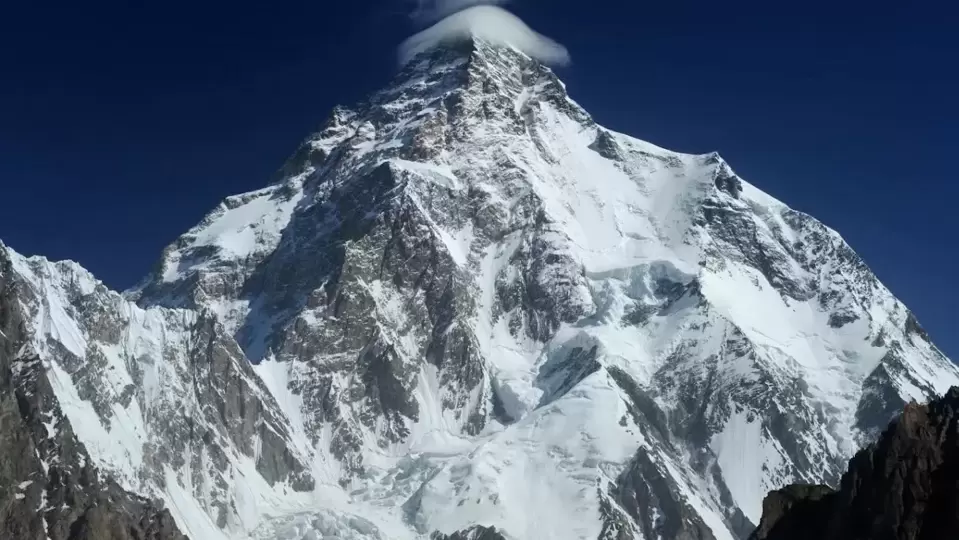
Formed by the active collision of the Indo-Australian and Eurasian tectonic plates, Broad Peak consists of plutonic granite blocks and metamorphic rock layers.

 Prefer HTon Google


Renowned Nepalese mountaineer Nirmal Purja, known widely as Nimsdai, was among 10 climbers who went missing on Broad Peak after an avalanche struck the mountain in Pakistan-occupied Kashmir (PoK) on Thursday.
Rescuers have recovered four bodies so far, with three flown to a hospital, as poor weather hampered search operations. Purja, who was leading the group, has also died, his company said in a statement on Instagram.
The Gilgit-Baltistan government has identified three of the deceased as Nepalese climber Pur Bahadur Gurung, Omani climber Nathira Ahmed and American Mallory Geis.
Broad Peak, the world's 12th-highest mountain, sits in a cluster of some of the most technically demanding summits on Earth. Here is what to know about it.
The mountain
Broad Peak rises 8,051 metres (26,414 feet) above sea level, placing it among just 14 peaks in the world above the 8,000-metre mark — the “eight-thousanders” that mountaineers spend careers chasing.
It sits in the Karakoram range on the border between PoK and China's Xinjiang, roughly 8 km southeast of K2, the world's second-highest peak.
The mountain was formed by the ongoing collision of the Indo-Australian and Eurasian tectonic plates, and consists of massive plutonic granite blocks and layers of metamorphic rock. Its snowpack and ice walls feed the Godwin-Austen and Baltoro glacier systems.
In the local Balti language, it is historically known as Falchan Kangri, which translates to “Broad Mountain”.
Why 'Broad' Peak?
British explorer Sir Martin Conway coined the name in 1892, likening the mountain's elongated summit ridge — which stretches more than 1.5 km (0.93 miles) — to the Breithorn in the Swiss Alps.
Broad Peak has a five-peak structure, three of which cross 8,000 metres. The main summit stands at 8,051 metres, the rocky summit at 8,028 metres and the Central Peak at 8,011 metres.
Its relatively higher success rate compared with neighbouring K2 has made it a popular hub for high-altitude training.
The risks
Broad Peak is often described as one of the more accessible eight-thousanders. But its 1.5-km summit ridge exposes climbers to extreme conditions for long stretches, and the upper slopes — particularly the section between Camp 2 and Camp 3 — are prone to slab avalanches. Such avalanches have proved fatal on past expeditions.
An avalanche triggered by heavy overnight snow and warming temperatures hit below Camp 1 on July 20, 2015, injuring several climbers and resulting in the death of a Pakistani high-altitude porter. Before that, an avalanche struck high on the mountain on July 21, 2003, claiming the lives of 3 South Korean climbers, Pae Kyong-kyu, Kim Jae-koung, and Lee Hwa-hyeung.
The first ascent
A four-man Austrian expedition — Fritz Wintersteller, Marcus Schmuck, Kurt Diemberger and Hermann Buhl — first summited Broad Peak between June 8 and 9, 1957. They did so without supplementary oxygen, high-altitude porters or fixed camps.
For climbers pursuing all 14 eight-thousanders, Broad Peak is a required milestone — and one Nirmal Purja had cleared twice before.
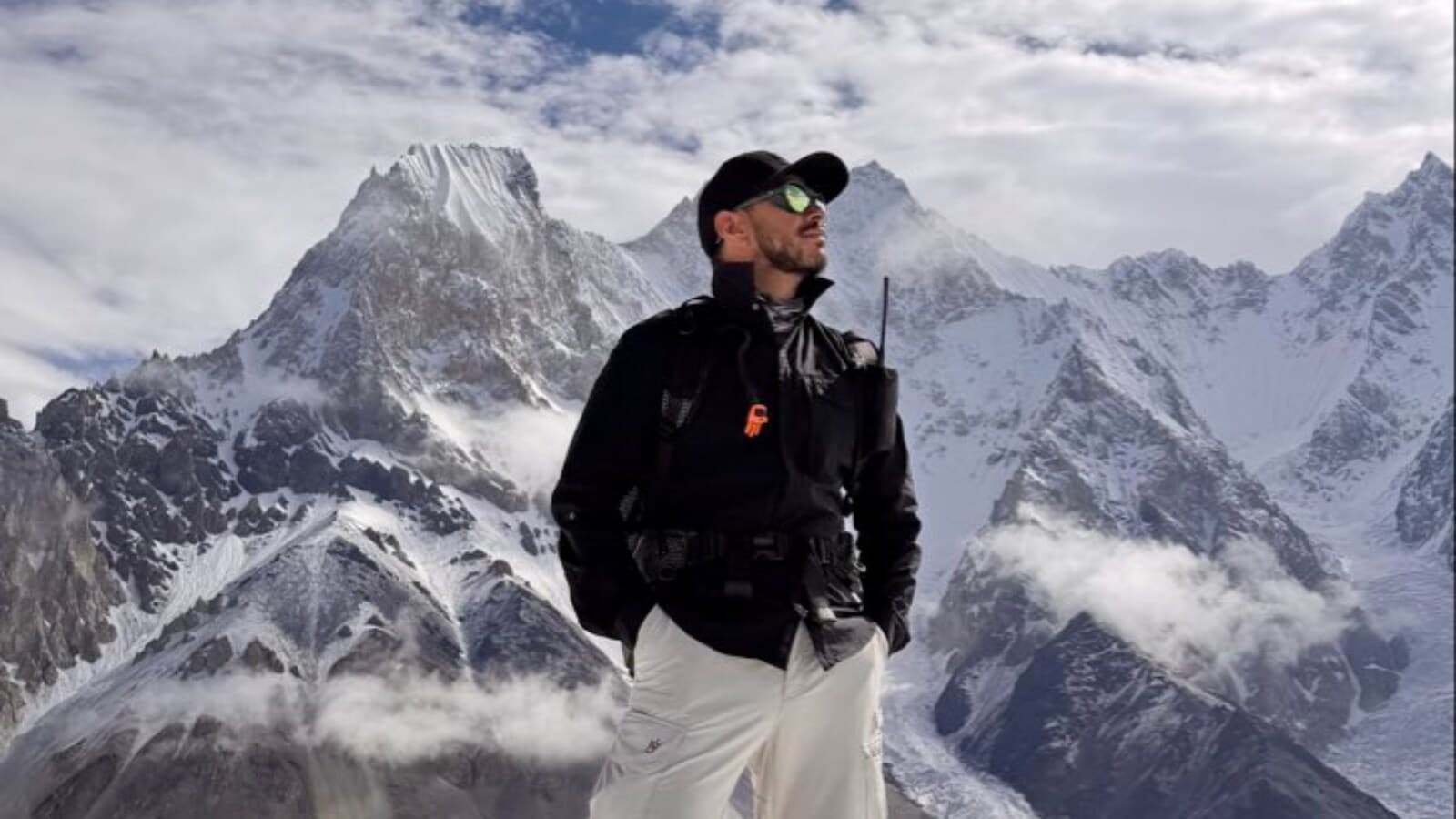
His first project, summiting all 14 with supplemental oxygen, took just 6 months and 6 days in 2019 during his ‘Project Possible’, shattering a previous record of nearly eight years. He returned to climb the same 14 peaks without supplemental oxygen, completing that circuit in under 2 years and 5 months in 2024 — the fastest anyone has done it.


