E-Paper



Lack of strategy impedes fight against forest fires
Since 2000 to April 4 this year, the hill state has lost 49,231 hectares of forest land to forest fires.

 Prefer HTon Google


At least 85 forest fires are raging in Uttarakhand, and have destroyed 165 acres of land in the past 24 hours to 48 hours, forcing the state to seek the Centre’s intervention — two helicopters of the Indian Air Force were pressed into service Monday, and they flew several sorties to spray water over the fires — even as it became clear that the state, with a forest cover of 71% of its area, still does not have an effective strategy to deal with forest fires.
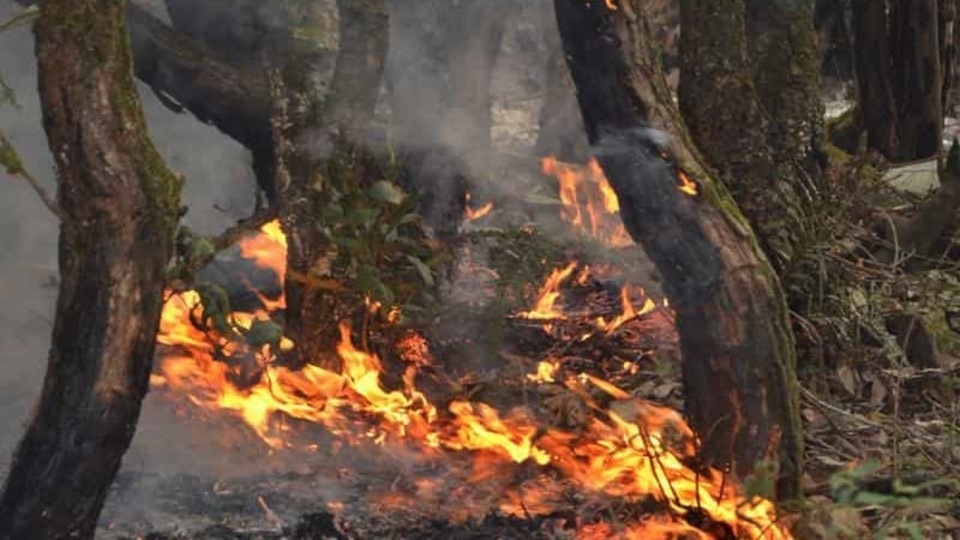
Since 2000 to April 4 this year, the hill state has lost 49,231 hectares of forest land to forest fires. And, the first few days of April 2021 has seen the worst forest fires in the past one decade with the state government grappling to control the damage.
Major forest fires are raging in at least 40 places in the state even as chief minister Tirath Singh Rawat said that around 12,000 forest workers were deployed and 1,300 fire crew stations were set up to douse the flames, which have so far claimed six lives and led to death of several animals.
Forest department officials on Monday said that the fires were spreading to new areas because of the hot weather conditions and strong winds. According to India Meteorological Department, Uttarakhand has received 70% less rainfall than normal in March and there has not been a single rainy day in April, thereby providing perfect dry conditions for the fire to spread.
Since January, the state has reported 1,130 forest fire incidents, which in total ravaged 1,540 hectares of forest land, the highest since all of 2018.
On Sunday, in an emergency meeting, Rawat admitted the need for a long-term plan to check fires. He directed the officials to seek the help of van panchayats and local people in checking forest fires, and set up fire control rooms and fire stations at tehsil and block levels.
At the ground level, when a forest fire occurs, there are three ways in which it can be doused. Using water, soil, or beating the forest fire with branches. As water is not available on hill slopes where forests catch fire and it is not practical or even possible to collect soil, the only way available to locals and forest officials is to beat the advancing forest fires with tree branches.
But when the forest fires are raging, such methods are not of much help. There are also fire lines or spaces created in forests, which helps to check the spread of fires. But given the huge area under forests in the state, such lines also prove ineffective in most cases. Uttarakhand has a forest area of over 38,000 sq km, which constitutes 71% of the total geographical area of the state.
Experts say the only effective way to deal with forest fires is getting locals involved to ensure that: one, such fires aren’t man-made; and two, when fires start, enough people are mobilised to fight them.
But for that, the locals need to be made aware of how they will benefit.
Ajay Singh Rawat, an environmentalist, said dousing forest fires should be a people’s movement and such fires should be declared as a national disaster.
Maan Singh, nodal officer for forest fires in the state forest department, said that the real issue isn’t strategy but the enormity of the challenge.
“The main challenge in hilly areas is how to douse the fire when no water is available. So, most locals try to check the advance of forest fires by beating it with big branches. We also go for routine cleaning of the forest lines. But as forests are huge, we don’t know where the fires will start,” he said.