E-Paper



SC committee seeks reply on illegal felling in Corbett tiger reserve
The development follows a complaint filed by Supreme Court advocate and wildlife activist Gaurav Kumar Bansal to CEC, a committee constituted by Supreme Court on September 20.

 Prefer HTon Google


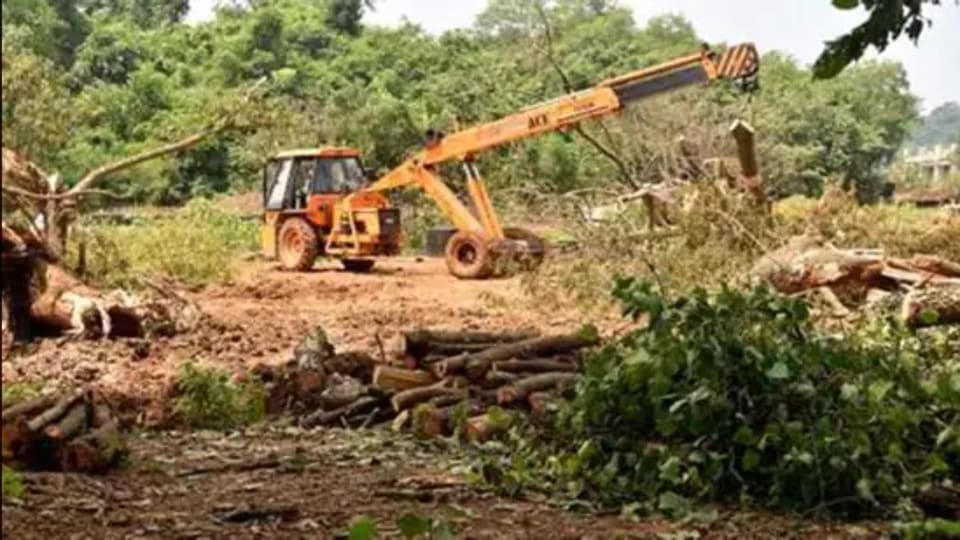
Supreme court-constituted Central Empowered Committee has directed Uttarakhand’s chief secretary and secretary Union ministry of environment, forests and climate change to send their replies “at the earliest” on allegations of illegal felling of thousands of trees for Pakhrau tiger safari, construction of structures and water body in Corbett tiger reserve landscape, officials said.
The development follows a complaint filed by Supreme Court advocate and wildlife activist Gaurav Kumar Bansal to Central Empowered Committee (CEC), a committee constituted by Supreme Court on September 20.
Bansal, in his complaint, alleged that thousands of trees have been uprooted in the name of the establishment of Pakhrau tiger safari as well as in the name of construction of structures near Moregati Range office and a water body between Kalagarh and Moregati.
Bansal said a tiger safari is being developed in Gujjar Sot, Pakhrau Block, Sonanadi Range, Kalagarh Division in Corbett Tiger Reserve.
Responding to allegations raised in the complaint, Amarnatha Shetty, member secretary CEC in his letter dated September 24 asked both chief secretary Uttarakhand and secretary MOEFCC that “specific comments of MOEF&CC and state government of Uttarakhand in the above-said matter may please be sent to the CEC at the earliest”.
Bansal said the Forest Advisory Committee of the MOEFCC had recommended the proposal only after the written assurance from Uttarakhand Forest officials that only 163 will be felled for the setting up of the tiger safari.
“Contrary to its undertaking, forest department officials have uprooted thousands of trees in the name of establishment of Pakhrau Tiger Safari and that too within Corbett Tiger Reserve, which is one of the best and oldest national parks in the country. It is not only against the statutory approvals granted by the National Tiger Conservation Authority (NTCA), Central Zoo Authority (CZA) and Forest Advisory Committee (FAC) but is also contempt of the 2001 SC order in which the apex court expressly observed that no tree whatsoever shall be felled in the Corbett Tiger Reserve by the state or anyone else”.
When contacted, Rahul (who goes by his first name), director CTR said the allegations that thousands of trees were cut for the safari project is incorrect. He said all the required permissions have been sought for the project. “We look into the issues raised in the complaint and the letter of CEC and send our response accordingly”
Earlier this month, Bansal had also sent a legal notice to CZA and NTCA to withdraw their “approval” for the establishment of the tiger safari in CTR.
Responding to the notice, Sonali Gosh, Deputy Inspector General of Forests at Central Zoo Authority in her September 17 letter to the principal chief conservator of forests (PCCF) and chief wildlife warden Uttarakhand had asked them to verify facts and submit their response for further necessary action ·
According to the minutes of the meeting of the forest advisory committee (FAC) held on September 21, 2020, the proposal for seeking prior approval of the Centre for non-forestry use of 106.16 hectares of forest land for setting up of the Tiger Safari was recommended by the FAC on certain conditions that all conditions in the statutory approvals obtained from NTCA and CZA would be complied with and the state government would ensure the infrastructure of the tiger safari is created mainly from bamboo and other natural materials.
The minutes also noted that as the construction activity over 4000 square metres is carried out under the project, the proposal does not require Environment Clearance and consequent Wildlife Clearance from the Standing Committee of the National Board for Wild Life.