
 E-Paper



Tiger spotted at 7k-ft height in Uttarakhand’s Almora
This is the second time in a week that a tiger was spotted in the high-altitude area which is generally not considered a favourable habitat for tigers due to the cold climate

 Prefer HTon Google


After Jageshwar, a tiger has been spotted at 7000-ft height in Binsar wildlife sanctuary of Uttarakhand’s Almora district, officials familiar with the matter said.
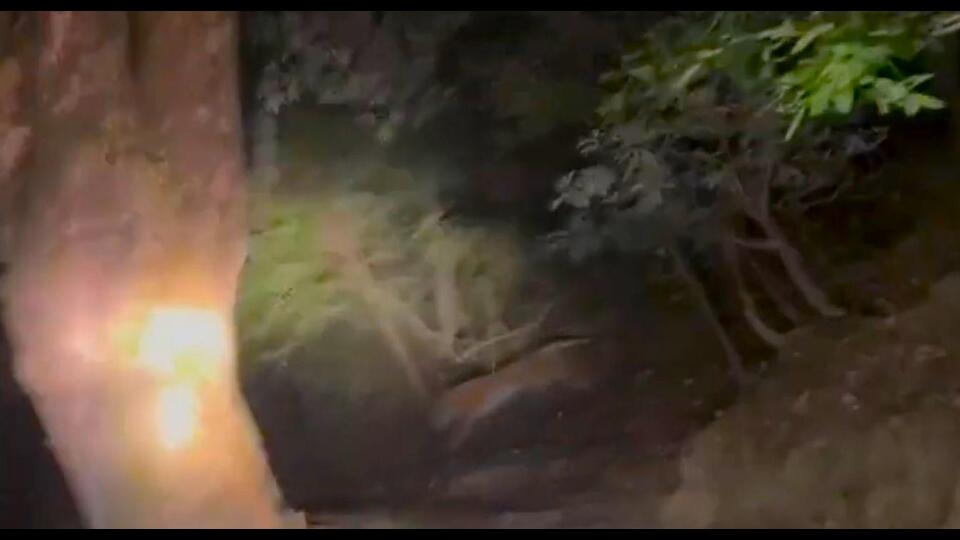
The divisional forest officer (DFO) of the area spotted the big cat on Wednesday and made a video of the sighting.
This is the second time in a week that a tiger was spotted in the high-altitude area which is generally not considered a favourable habitat for tigers due to the cold climate, said officials.
“I was returning from the inspection from Binsar sanctuary in the evening on Wednesday. Suddenly I sighted a tiger near the road and it stunned me. I immediately made a video with my mobile phone. It was a full-sized big cat and might have reached from Corbett Tiger Reserve or Ramnagar forest division,” said Dhrub Singh Martolia, DFO, Civil Soyam Forest Division in Almora.
Martolia had gone for some inspection around 50 km from his headquarters in Binsar Wildlife Sanctuary under his forest division on Wednesday. Binsar is situated at a height of 7,000 ft. He spotted a tiger while on his way back around 7.30 pm. On seeing the tiger, he also made a video of the big cat.
Earlier on Sunday, two locals of Panuwanaula village in the district had spotted a tiger at around 6,000-ft high Shaukiyathal. They made a video of the tiger and put that on social media. Shaukiyathal is a village where Prime Minister Narendra Modi landed by helicopter on October 12 to have a darshan at Jageshwar temple dedicated to Lord Shiva.
The DFO said, “I scanned my video and Shaukiyathal’s video. It seems that it was the same tiger which was spotted in Shaukiyathal. Both are at a distance of 4 to 5 kms. The tiger might have been on its way back to CTR or Ramnagar forest division from Jageshwar.”
He said generally high-altitude areas are not a favourable habitat for the tigers. “Tigers live in plain areas or low height areas. Tigers used to be found in hilly areas in the British era but later they were not sighted or disappeared from hills. But now they are being sighted again. But why the tigers are being spotted again is a matter of research.”
Dheeraj Pandey, director, CTR said, “Increasing numbers of the tiger in the plain area, availability of easy prey base and climate change is the reason that tigers are being sighted in hilly areas. Tigers have their own territory and they don’t tolerate another tiger in their area. So many tigers are venturing out.”
AG Ansari, a Ramnagar-based wildlife expert said, “It is not a new case that tigers are being spotted in high altitudes. Tigers have been reported in Camel Back area in Nainital, Askote in Pithoragarh, Champawat and Kedarnath Wildlife Sanctuary. The government has conducted a study under National Mission for Himalayan Studies and it has revealed that dispersal of tigers due to increasing number will lead the tigers to high altitudes.”
He said, “Wildlife Institute of India also prepared a report under ‘Joining Dots’ which said that tigers will climb the hills in future through Kali, Kosi, Gaula rivers areas in Kumaon hills if dispersal takes place from Terai area. Apart from this, tigers used to live in high altitude during the British era,” said Ansari.
With 229 tigers found outside Corbett Tiger Reserve in Kumaon, Uttarakhand forest department is also working on framing a comprehensive plan to protect these tigers and check the increasing man-tiger conflict, especially in new areas where the tigers will venture out.
Deepchand Arya, conservator of forests (CF) Western Circle Kumaon said according to the tiger census report released on July 29, there are 260 tigers inside CTR and 229 outside Corbett. “There are more tigers outside Corbett, than some of the major tiger reserves in the country like Bandhavgarh (135) and Kanha (105). In Western Forest Circle, 216 tigers have been found, while in Champawat, 11 tigers have been found. One tiger each has been found in Nainital and Almora. Ramnagar forest division has 67 tigers, while Terai West has 52 tigers”, he said
“With so many tigers outside protected areas, there are chances of a surge in man-tiger conflict in Kumaon. So we have decided to form a detailed proposal for the protection of these tigers outside Corbett and how to check their coming into conflict with the villagers. We also have to ensure these tigers don’t become victims of poaching activities,” he said.
According to the tiger census report, CTR has “one of the highest density tiger population in the world which is a source of tigers in the larger landscape. This has led to negative interaction of tigers with humans in and around the tiger reserve. To gain insights in how a territorial large mammal operates at such high density and provide an early warning system to alert nearby villages of tiger movement, radio collaring of tigers should be carried out in the tiger reserve”.
The Wildlife Institute of India (WII) has also emphasised, the Shivalik-Bhabar tracts of the state are nearly full with tigers and habitats that have the potential to increase tigers include Almora, Nainital, and Champawat Forest Division. In the tiger census report, WII experts have stressed on safeguarding this tiger population, which is currently one of the densest in the world due to its productive and comparatively well-connected forest tracts. In view of increased tiger numbers and occupancy, WII has suggested radio-collaring tigers and elephants and the development of an early warning system which can help alleviate the ever-increasing tiger-man conflict in the state.
Uttarakhand has reported the third highest tiger population in the country with 560 tigers, while Corbett Tiger Reserve has reported the highest tiger population with 260 tigers among the country’s 53 tiger reserves. In the latest report, the tiger population in Uttarakhand has risen from 178 in 2006, 227 in 2010, 340 in 2014, 442 in 2018 and 560 in 2022.


