
Sign in

Tiger translocation to resume from Corbett to Rajaji in Uttarakhand

The translocation initiative is part of efforts to repopulate Rajaji Tiger Reserve’s western part, which is home to two tigresses that have not reported breeding in almost a decade

Published on: Sep 29, 2021, 14:07:20 IST
Share
Share via
  • facebook
  • twitter
  • linkedin
  • whatsapp
Copy link
  • copy link

Uttarakhand’s tiger relocation project, which was suspended during the monsoon, will be resumed with the translocation of another tiger and tigress from the Corbett Tiger Reserve (CTR) to Rajaji Tiger Reserve (RTR). On December 24 last year, a tigress, and on January 9, a tiger was relocated from CTR to RTR. The tiger ran away from its enclosure a few days after its relocation.
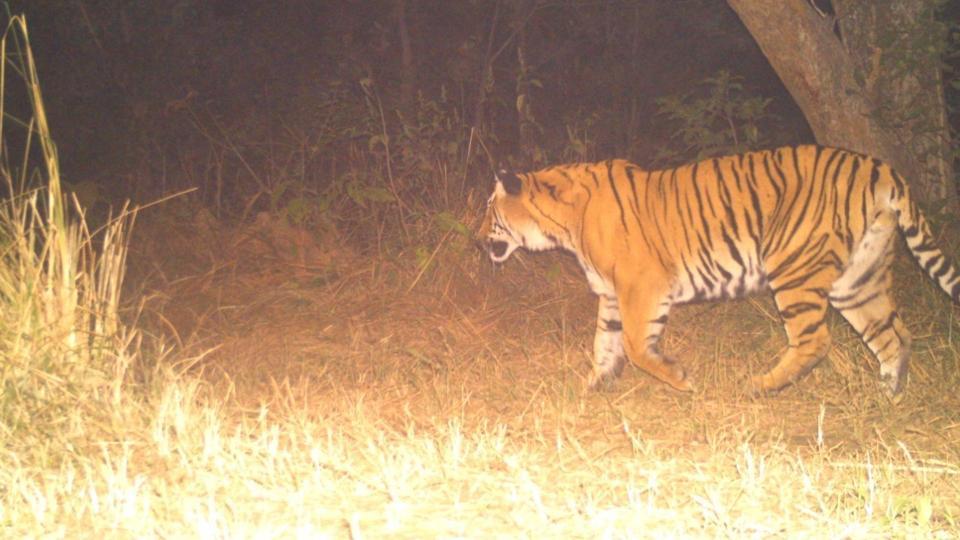
Camera trap image of the male tiger that was translocated from Corbett to Rajaji in January this year. (HT FIle Photo)

JS Suhag, Uttarakhand’s chief wildlife warden, said the translocation project was briefly stopped as it was breeding season and they did not want to disturb the animals. He added it also becomes difficult to venture into these tiger reserves during the monsoon.

“Now our team is in Corbett to select a tiger pair to be translocated to Rajaji Tiger Reserve soon. Under this project, five tigers will be translocated.”

The translocation initiative is part of efforts to repopulate RTR’s western part, which is home to two tigresses that have not reported breeding in almost a decade.

Also Read: Tiger kills man in Dudhwa buffer zone

The Centre approved the translocation in 2016. In September 2019, a National Tiger Conservation Authority team visited RTR for reconnaissance for the exercise. The team suggested the release of tigers in a large, enclosed area for a few days to see whether they suffer from any diseases before completely releasing them in the wild.

RTR had around 37 tigers with only two tigresses in its western part before the translocation began. The reserve has a capacity for 83 tigers. The eastern and the western parts of the reserve are divided by a busy traffic corridor making it difficult for the tigers to move between them.
  • Neeraj Santoshi
    ABOUT THE AUTHOR
    Neeraj Santoshi

    Neeraj Santoshi is the Chief of Bureau for Hindustan Times in Uttarakhand, where he leads the state reporting team while covering government, politics, environment, wildlife, Uttarakhand High Court, and issues shaping the Himalayan region. With more than two decades in journalism across conflict zones, he has covered politically sensitive regions and environmentally fragile landscapes, and focused on stories that combine public interest with in-depth storytelling. An alumnus of Pune University with a Master’s in Communication Studies, he has reported extensively from Jammu & Kashmir (2003-2010), Madhya Pradesh (2010 to 2018 ) and Uttarakhand (Since 2018), covering subjects ranging from insurgency, elections and governance to wildlife conservation, mining, climate change, agriculture, human rights and social justice. He has covered politics and legislative assemblies of both Jammu & Kashmir and Madhya Pradesh over more than a decade. Before taking over as Chief of Bureau in Uttarakhand, he served as Special Correspondent with Hindustan Times in Madhya Pradesh and earlier reported for both Hindustan Times and The Indian Express in Jammu & Kashmir, where he covered state politics, environment and insurgency-related developments. Over the years, his stories have focused on environmental degradation, wildlife, illegal mining, governance and the changing social fabric of Himalayan states and Central India. He is particularly interested in long-form explanatory journalism, and stories that explore the intersection of ecology, conservation, governance and society. Outside the newsroom, Neeraj enjoys reading widely on neuroscience, consciousness studies, Artificial Intelligence and quantum physics, with a special interest in Kashmiri Tantric Shaivist traditions. He is also passionate about wildlife, mountaineering and the Himalayas, interests that continue to inform his reporting and deepen his understanding of the region he covers.Read More