
 E-Paper



Delhi minister issues directives to construction agencies, orders micro-monitoring of 13 hotspots
State environment minister Gopal Rai on Monday ordered five measures that government agencies and private individuals undertaking construction will have to follow to keep dust pollution in check at the sites.

 Prefer HTon Google


The Delhi government has started cracking down on agencies and private individuals not following dust-control norms at construction sites even as air pollution levels saw a huge spike on Monday to push the air quality index (AQI) to 261, the highest so far this season.
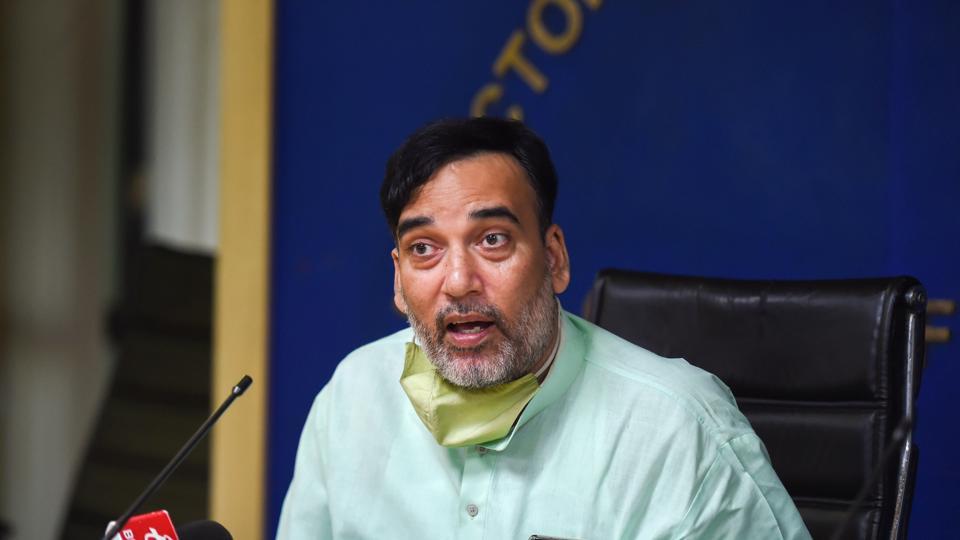
State environment minister Gopal Rai on Monday ordered five measures that government agencies and private individuals undertaking construction will have to follow to keep dust pollution in check at the sites.
Addressing a press conference, Rai said as part of the Delhi government’s ‘anti-dust’ drive; he has been visiting construction and demolition sites across the city.
Rai said while norms are in place at big construction projects operating in an area bigger than 20,000 square metres, many smaller sites were found to be ignoring dust-control measures.
“Even if someone is building a house, if they take small steps such as covering the construction material and ensuring the site is sprinkled with water at regular intervals, it can make a great difference to the overall pollution levels, which tend to worsen every winter,” Rai said.
Listing out the five measures, Rai said in all construction sites, irrespective of the size, 10-metre-thick metal panels will have to be installed to cover the entire site so that dust does not spread to nearby areas. Building material and the construction area will have to be covered with nets and green cloth sheets to trap its residue.
“Construction agencies will have to ensure water is sprinkled inside the site and on the road outside at regular intervals. Construction sites bigger than 20,000 sqm will have to mandatorily install anti-smog guns to sprinkle water. They will make sure all vehicles carrying construction material or demolition debris are covered while in transit and when it is parked at these sites,” Rai said.
Rai said soil and concrete when they spill over to the road break down into smaller particles with the constant movement of other vehicles and turn into ultra-fine particles that can enter people’s organs and bloodstream.
“With Covid-19 still spreading in the city, it becomes all the more imperative that all preventive measures be taken before the winter season to avoid a spike in pollution levels,” the minister said.
The wheels of vehicles carrying debris will have to be washed regularly to ensure construction residue is not circulated.
Apart from keeping a watch on construction activities, the government has come up with ‘micro-monitoring’ teams to check pollution levels at Delhi’s 13 hot spots, Rai said.
These hot spots are Rohini, Bawana, Dwarka, Okhla phase-2, Punjabi Bagh, Anand Vihar, Vivek Vihar, Wazirpur, Jahangirpuri, RK Puram, Mundka, Narela and Mayapuri, where pollution levels remain higher than other areas.
“These hot spots come under nine deputy commissioners of the municipal agencies and we appointed the DCs as the nodal officers. They will keep a direct tab on any violation. Government agencies will keep in touch with these nodal officers to undertake any work in these hot spots,” he said.


