E-Paper



20 tonne of seized plastic heads to Delhi’s waste-to-energy plants
A senior Delhi Pollution Control Committee (DPCC) official said while the government was looking for ways to recycle the banned plastic items, but they were yet to find a viable solution.

 Prefer HTon Google


Over 20,000 kilograms of banned single-use plastic (SUP) has been seized by the 48 Delhi Pollution Control Committee (DPCC) and the Delhi government’s revenue department teams since July 1, when 19 SUP items were banned nationwide, has made its way to the three waste to energy plants in Okhla, Narela-Bawana and Ghazipur.
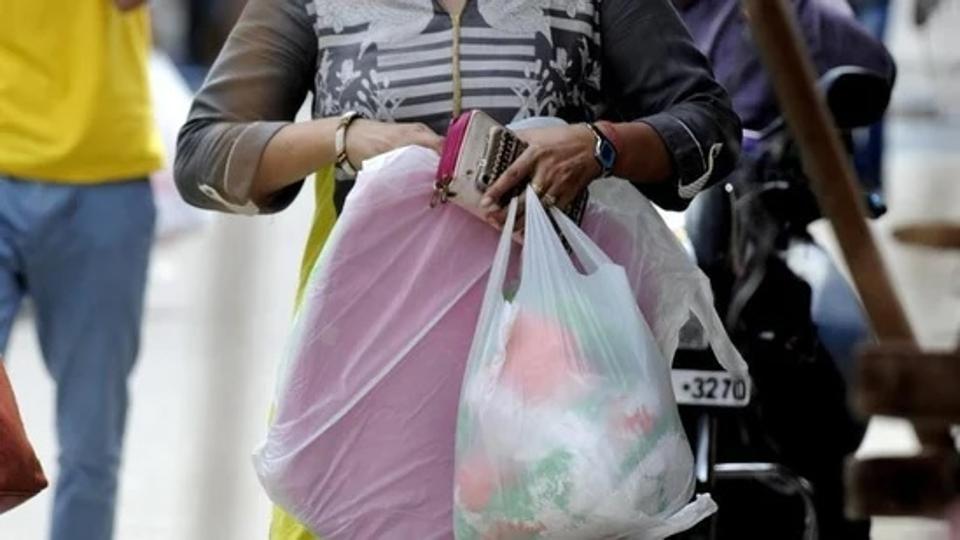
Experts, however, said that incinerating plastic waste may be the usual practice, but the authorities must ensure that waste is segregated first and then the waste to energy plant (WtE) follows the regulations to burn such waste so that it does not release dioxins, furans and unburnt hydrocarbons, otherwise the purpose of the plastic waste ban will be defeated.
Also Read| Single-use plastics: The next five steps
Dioxins and furans are a common name for a group of chemicals that are formed during combustion processes – largely due to waste incineration or at power generation plants. These are carcinogenic in nature, meaning they are toxic and can cause cancer or damage the reproductive organs. They can also interfere with hormones.
A senior Delhi Pollution Control Committee (DPCC) official said while the government was looking for ways to recycle the banned plastic items, but they were yet to find a viable solution. “These banned items are being seized from different factories and markets and being sent to the WtE plants for incineration. We will continue to look at other solutions too,” the official said asking not to be named.
According to an assessment carried out by Delhi government’s environment department in 2020, Delhi generates 1,060 tonnes of plastic waste every day, which is roughly 10.10% per cent of the total municipal solid waste that the city disposes daily. Of the total plastic waste, 587 tonnes was single-use plastic, the assessment said.
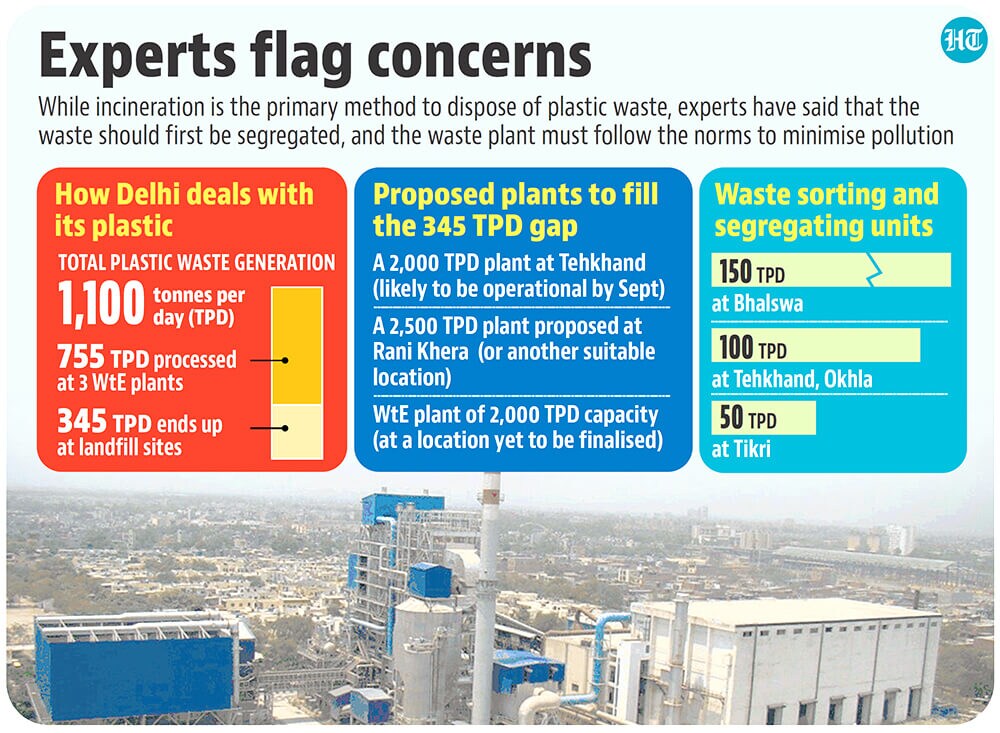
According to the environment department’s latest data, of the 1,100 tonnes of plastic waste, 745 tonnes is sent to the three WtE plants, and the rest 345 tonnes is dumped at the three landfills in Delhi.
If plastic waste ends up at landfill sites, it may disintegrate into microplastics over time, which can contaminate air, the soil and sources of water, including groundwater.
A Delhi government spokesperson did not comment despite repeated attempts.
To add capacity to use all plastic waste to generate energy, the government has built a WtE plant at Tehkhand, with a capacity to process 2,000 tonnes to plastic waste day. It is likely to become operational by September. Also, a 2,500 tonnes per day capacity plant is proposed at Rani Khera and another facility with 2,000 tonnes capacity at an undisclosed location.
Atin Biswas, a waste management expert and programme director of the municipal solid waste sector at the Centre for Science and Environment (CSE), said WtE plants are easy solutions for handling all kinds of waste, but they are not the way forward. “If you burn any kind of plastic, you will get energy out of it, but at the same time, these plants have not been meeting the standards and invariably, one could be contributing to pollution,” said Biswas.
Dipankar Saha, former head of Central Pollution Control Board’s air laboratory said waste to energy plants are among “many solutions” to deal with plastic waste, but the authorities must ensure that before sending it for incineration the waste must first be segregated, and checked if it is chlorinated plastic or not. “For chlorinated plastic, a dual-chamber incinerator is required and the temperatures should be over 1,000 degrees Celsius. Even then, unburnt hydrocarbons are released in the process. For the other kind of plastic too, there are chances of dioxins and furans being released with the other waste, which is carcinogenic in nature.”
Also Read| Delhi govt starts issuing penalties for violating plastic-ban rule
Experts pointed out that Delhi’s waste to energy plants have been fined for not meeting the prescribed standards. Last year in August, all three plants were fined ₹5 lakh each by the DPCC as the values of dioxins, furans and stack emissions were found to be exceeding the norms.
“In India, most WtE plants are defaulting as the waste we generate has a low calorific value. If one needs higher calorific values of over 1600 or 1800 kilocals per kg, then recyclable items also need to be thrown into WtE plants, which would be counterproductive as the informal sector is able to use these items. Using WtE should be the last solution as these plants are regularly exceeding their emission limits and the government can instead segregate the seized waste and identify other solutions where bulk SUP can be incorporated,” said Chitra Mukherjee, a consultant on circular economy and sustainable livelihoods.