E-Paper



6 years and counting for traders as de-sealing tussle continues in Delhi
The sealing and de-sealing of shops in local shopping centres in Delhi has become a point of contention between MCD authorities. Thousands of properties have been sealed over the past six years by a monitoring committee, leading to financial difficulties for traders. The latest sealing data shows that 5,639 properties still remain shut. A judicial committee recently passed an order on de-sealing, but the MCD's executive wing believes this will lead to revenue loss and has filed an appeal with the Supreme Court. The matter is expected to be heard on January 29.

 Prefer HTon Google


De-sealing shops at local shopping centres (LSCs) is the latest point of contention between two distinct authorities of the Municipal Corporation of Delhi (MCD) — the executive wing (comprising bureaucrats), and the deliberative wing (of councillors, led by the Aam Aadmi Party.
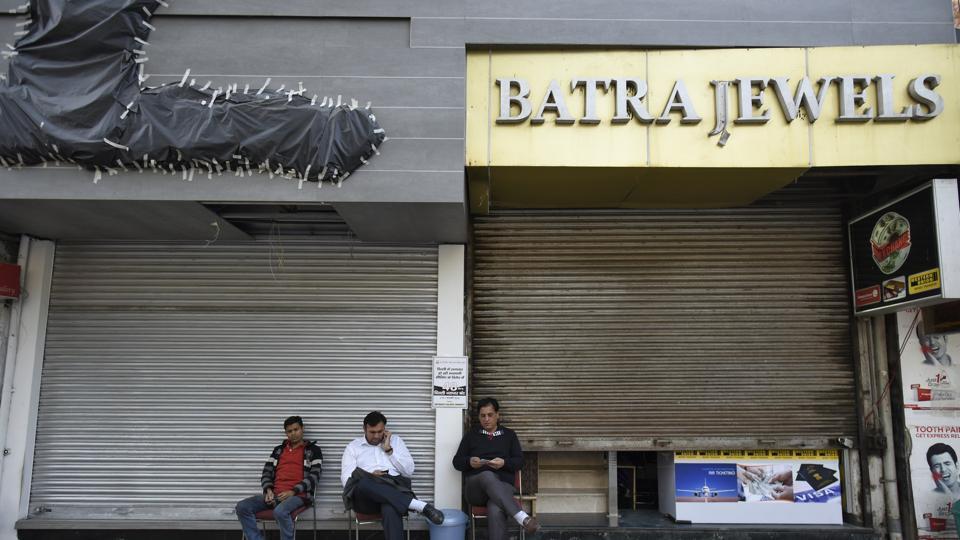
Thousands of properties across the Capital have been sealed over the last six years by a monitoring committee mandated by the Supreme Court over alleged land-use violations.
On Monday, the MCD house of councillors in a special meeting passed a resolution stating that municipal commissioner Gyanesh Bharti should commence the de-sealing drive on January 19. A similar resolution passed by the house on December 23, 2023 did not lead to any de-sealing activity on the ground, and the matter has been taken to the Supreme Court.
Years after they were shut, however, markets across the city continue to bear the brunt of the sealing drive. Jagdish Gupta, secretary of the Defence Colony Market Association, said that the monitoring committee’s argument was that only the ground floor was meant for commercial use, while the upper floors were meant for residential purposes.
“The financial implications for traders have been massive. Many were forced to sell their properties, and go to rented accommodations in Noida and Greater Noida. The footfall went down drastically, and a flourishing market was ruined,” Gupta argued.
The latest sealing data (updated till December 2023) shows that 9,444 properties across Delhi were sealed by various agencies — 4,509 properties for unauthorised construction, and 4,945 for land misuse. Of the properties that were sealed, 3,805 have been de-sealed, and the application of another 2,823 units has been submitted, which means that 5,639 properties still remain shut.
The city first witnessed a large-scale sealing and demolition drive in 2006, when more than 5,000 properties were shut. That drive was stopped after the then central government intervened and enacted the Delhi Laws (Special Provisions) Act, 2006, to provide protection to hundreds of thousands of properties.
In 2012, the Supreme Court once again stopped the monitoring committee from sealing premises. However, the powers of the monitoring committee were restored in December 2017, and the first set of sealing took place on December 21 that year — at Chhatarpur and Defence Colony. Soon after, sealing drives took place in markets located in Amar Colony, Greater Kailash, Green Park, Hauz Khas, and Meharchand Market.
In October 2022, the Supreme Court formed a two-member judicial committee comprising justice Pradeep Nandrajog (retired chief justice of the Bombay high court) and justice GS Sistani (retired judge from Delhi high court) to deal with challenges to the orders passed by the monitoring committee.
On December 18, 2023, based on a plea from seven LSCs — Old Rajinder Nagar, New Rajinder Nagar, GK-I N Block, Green Park, Hauz Khas E Block, South Extension-I D Block and Defence Colony —the judicial committee passed an order on de-sealing, and allowed basements to be used for storage, and commercial and professional activities, with certain caveats, such as compulsory air conditioning of the basement.
Vishal Ohri, general secretary of the Local Shopping Centre Federation, said that the order pertains to these seven markets only, but as a precedent, it would lead to large-scale de-sealing in other LSCs as well. “The judicial committee has accepted our plea that the LSC markers are marked as commercial in the zonal layout plans, and title deeds are also on commercial basis,” he said.
Before the judicial committee order, properties sealed on the directions of the monitoring committee could only be de-sealed on orders of the same committee or the Supreme Court, and many could not go through the process, an MCD official explained.
Traders also had the alternative of paying hefty punitive charges in the form of conversion charges, FAR (floor area ratio) charges, and parking charges to regularise their properties. However, few opted for this route — for example, in Defence Colony, of the 51properties sealed, only seven traders agreed to pay the punitive charges.
According to Ohri, around 2,000 shops are still sealed in LSCs across Delhi.
The judicial committee order has become a point of contention between MCD’s executive wing and deliberative wing — the bureaucrats believe the order will lead to revenue loss for the civic body, while the AAP-led deliberative wing is pushing for de-sealing at the earliest.
A second MCD official said the corporation believes the order would lead to large-scale revenue loss for the civic body, which is already facing a financial crisis. “We have filed a petition in the Supreme Court against the judicial committee order. The upper floors in these markets were meant for residential use, and they cannot be used for commercial purposes without paying conversion charges,” the official said.
The Supreme Court is expected to hear the matter on January 29.
LSCs argue that MCD’s argument of anticipated losses is flawed as there would be no losses if violations have not taken place in the first place. Manish Gupta, president of GK-1 N Block Market Association, said: “MCD says that it will face revenue loss, but it’s like saying ‘I lost the gold medal at the Olympics’, even though I’m not an athlete. The question now is — who will bell the cat?”
Meanwhile, AAP councillor Mukesh Goyal said, “Thousands of traders of Delhi have been ruined due to the closure of their shops.”
In the interim, the AAP, in an MCD special session on Monday, has pushed through a proposal, through a private member resolution, to initiate the de-sealing drive from January 19.
Mayor Shelly Oberoi said, “The judicial committee appointed by the Supreme Court had ordered MCD to de-seal the shops, but officers were not following orders. The Bharatiya Janata Party started a ruckus in the house and did not allow it to function smoothly. BJP should not play politics on such people-friendly measures.”
Leader of the opposition and BJP councillor Raja Iqbal Singh said his party stands with the traders. “AAP should not politicise the issue. We stand with traders. There is no worth of the resolution passed by AAP,” he said.
Experts say the MCD House proposal move is not legally feasible. A third MCD official said that private member’s resolutions — such as the one on de-sealing that the house passed on Monday — are not legally binding. “The MCD commissioner can consider them and act accordingly. If the commissioner agrees with the resolution, it is moved in the form of a policy preamble again before the house, seeking passage,” the official said.
While the tussle between the AAP and the bureaucracy plays out in court once again, traders continue to feel the pinch.
Vinod Arora, president of the Rajinder Nagar Market Association, complained: “The monitoring committee gave the order for sealing, and MCD happily obliged. The judicial committee gave an order for de-sealing, and MCD filed an appeal.”