E-Paper



A colourful shrub with a dark trait: Invasive species sweeping Aravallis
Lantana is the third most common shrub in Mangar Bani now, with 164 saplings found per hectare of area, behind only Dholiya and Jhadber

 Prefer HTon Google


An early morning drive on the Gurgaon-Faridabad Road, running along Delhi’s southern-most border, in the peak of monsoon is a pleasant experience. The sweeping road with gradual changes in elevation cuts through the Aravallis, and is flanked by massive rocks with lush shrubs visible on both sides.
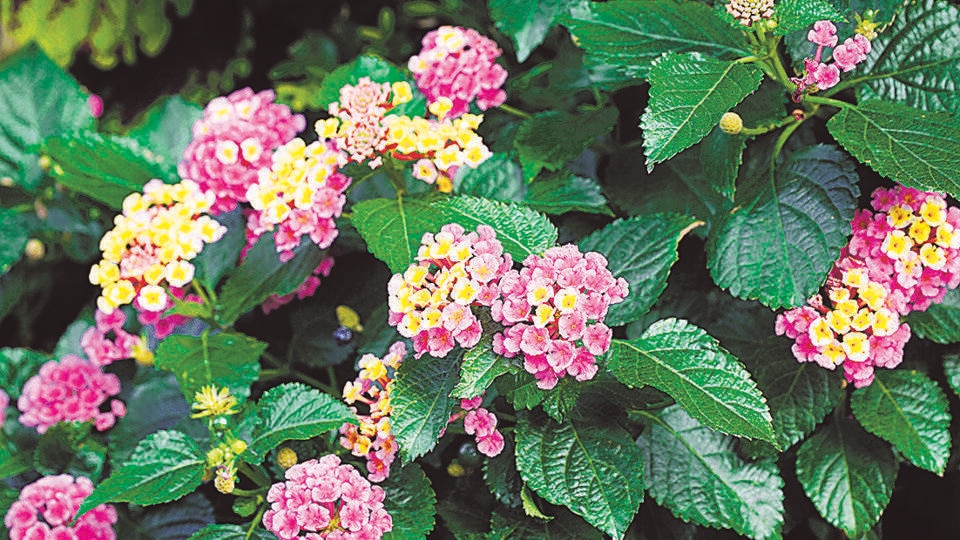
But the colourful shrubs that enhance the view of the drive, with flowers in vibrant hues of white, pink, yellow, orange and red, are what have become a menace for Delhi’s flora ecological balance.
Till about a decade ago, Mangar Bani was devoid of Lantana camara (common lantana) – an invasive ornamental shrub from Central and South America – which now widely inhabits the dense Dhau forest.
An ongoing assessment by the Centre for Ecology Development and Research (CEDAR) found that Lantana is the third most common shrub in the landscape now, with 164 saplings found per hectare of area, behind only Dholiya (194 per hectare) and Jhadber (346 per hectare).
A similar regeneration has been noted in other parts of Delhi-NCR, with the invasive shrub rapidly taking over green spaces, and now directly impacting native ground vegetation including Jungli kharonda (Carissa spinarum) and Heens (Capparis sepiaria) as they fail to compete against it.
Chetan Agarwal, an environment analyst and senior fellow at CEDAR, who has been studying the Haryana side of the Aravallis for three decades, said the species was nearly non-existent till as late as 2012, but a visit to the forest now shows a dense growth, particularly along the highway. Agarwal says CEDAR plans to release a report about the latest assessment on flora there, and though no comparable figures are available for, visually there has been a significant increase in Lantana’s dominance.
“It is suspected that it may have been brought here by birds, as they consume its seed. Once it drops below, it starts to grow fairly quickly and easily and within months, you can see a significant count in a small patch. If unchecked, this only spreads further and does not allow other native species to grow,” said Agarwal, adding that they plan to carry out another assessment of flora in a few years to identify differences in numbers.
An escape of cultivation, but now dominantThe thorny aromatic shrub, which can grow up to heights of up to 20 feet, generally dominates the ground-level vegetation and forms dense thickets. Its flowers, which grow in small clusters of various hues of white, pink, yellow, orange and red, make it a popular ornamental plant. Conducive to growth in Delhi’s climate, this shrub now dominates local species much like the infamous vilayati kikar (Prosopis juliflora) does.
Experts said the plant began to be introduced in other parts of the world in the 1800s by the British, but is most likely an escape from cultivation that was introduced accidentally in Delhi. Once here, there has been quick and steady propagation, particularly in areas that have remained untouched by human activity. This includes much of Delhi’s Central and South Ridge – the final pockets of the expanding Aravallis into Delhi.
“Lantana behaves like a typical invasive species, in the sense that it is outcompeting others. Even though the forest department has tried restoration of forest patches, including the Central Ridge, simply clearing the ground-level does nothing and the shrub simply regenerates within a matter of months,” said environmentalist Pradip Krishen, adding that efforts as recently as March this year in the Central Ridge to clear the ground-level shrubs have seen small Lantana rise up again.
Though there has been no formal assessment of the species and its numbers in Delhi’s green spaces, Krishen says there are large patches in the Central Ridge where only Lantana stands out as the dominant force.
“To measure its dominance, one can use a transect approach and only then we will know its true dominance. However, visually, I have observed it directly impact two woody shrubs that grow naturally on the Ridge – grewia tenax and jungli kharonda (Carasia spinarum),” said Krishen. He added that even Heens (Capparis sepiaria) gets impacted where this invasive species grows.
Krishen attributed this to the plant’s reproductive vigour and the fact that the seeds of the shrub germinate and survive fairly easily. “So, when it falls, there is a high chance, no matter what kind of surrounding it is, the seeds will survive. The seed is also spread by birds, as a number of bird species eat it.”
Environmentalist Padmavati Dwivedi said that she has seen similar growth unchecked at Sanjay Van, a reserved part of the Southern Ridge, that is bound to impact other native species. “I have seen Lantana camara expanding its area at Sanjay Van over the years. Its colourful flowers make it an attractive proposition for gardening enthusiasts, but I strongly advise against planting it, as it is a highly invasive plant and can be difficult to control,” she said.
A recent study on the invasive shrub from 2020, published in the “Global Ecology and Conservation” journal had found that Lantana was occupying 154,000 sq km of forest area – more than 40% of the area in total, in India’s tiger range.Among these forests, the Shivalik Hills in the north, the deciduous forests of central India and the southern Western Ghats were worst hit by invasion.
Vijay Dhasmana, curator at the Aravalli Biodiversity Park in Gurugram, said the species is now found in over 70% of India’s national parks and sanctuaries, with the Aravallis no different. He said the growth of the shrub is bound to impact herbivores in particular in the wild.
“Lantana impacts grasses and grasslands in particular as it crowds up on other plants. At Jim Corbett for instance, large tracts of grasslands have been impacted and the grasses herbivores like chital and sambar feed on, are taken over by the plant,” he said, adding that he had come across the plant in most parts of the Aravallis, including the biodiversity park. “It also does not allow any other species to germinate either.”
Found in nurseries due to its ornamental nature Despite being a threat to native shrubs and grasses, experts said that Lantana camara is still easily accessible and can be found at several nurseries in Delhi-NCR, a fact that further aids its propagation.
“Lantana camara is widely available in all commercial nurseries in the form of various cultivars, which have been bred to have specific characteristics, such as specific flower colours like red, yellow or pink. They also have particular heights, for instance low growing shrubs are particularly common,” said Vallari Sheel, an urban ecologist based in Vasant Vihar.
India’s National Biodiversity Authority (NBA) presently lists 54 terrestrial invasive plant species that are found in the country, which includes Lantana camara. The species were chosen as invasive based on eight different criteria, which included rapid multiplication and spread (RMS), multiple modes of reproduction (MMR), multiple modes of dispersion (MMD), range extension (RE), biodiversity loss, and economic loss, among others. Lantana camara met all eight criteria of invasiveness.
Dhasmana said this is not only popular at nurseries, it is also being used in butterfly gardens due to its colourful flowers.
“Lantana camara is exotic and invasive, whereas Lantana indica is the native variant. Sadly, we are seeing Lantana camara at nurseries in Delhi-NCR and people are also opting for this species to make butterfly gardens. This is unfortunate as the species is highly invasive and impacts local ecology. It also expands its area rapidly,” he said.
Controlling the spreadFaiyaz Khudsar, who heads DDA’s Biodiversity Parks Programme, said the cut-rootstock method, where the root is removed completely was the only way to manage the plant and its spread, adding that it also fares poorly in shaded areas. “We have seen poor growth when it does not get adequate sunlight. However, even then, it does not allow other species to grow around it. To manage it, one needs to ensure its roots are also cut and removed at an angle,” he said.
At Delhi’s Asola Bhatti Wildlife Sanctuary, forest officials have been carrying out drives to remove Lantana and cut its roots every few months. This is followed by re-greening the area using native grasses. Experts warn if the process is not done correctly, Lantana will spring up again in four to six months.
“Its growth its extremely fast and the only way to manage is to remove its roots,” said Sohail Madan, former centre manager at the sanctuary till 2023.
At the Aravalli Biodiversity Park in Gurugram, Dhasmana said the practice was to remove Lantana from its roots. However, instead of periodic drives, the rule is to pluck away Lantana each time it is sighted at the park. “This ensures the spread of the species is checked. The only way is to remove its roots and if that is not done, it will regenerate,” he said.
Krishen, however, warned that even the removal of the species needs to be done carefully and with the right planning.
“Generally, after large-scale removal of a species, other species take over the area, and sometimes this may be another exotic or invasive species,” he cautioned. “Therefore, its removal needs to be done carefully, after assessing the dynamics of the area and which species other than Lantana are prevalent there.”