
 E-Paper



AAP vs Centre tussle over services control: SC bench to hold 1st paperless hearing
On Wednesday, a discussion on technology and schooling conventional, non-tech savvy lawyers dominated the first hearing of a protracted row between the Union government and the Aam Aadmi Party-led government in Delhi on the control of bureaucrats in the national capital.


The power tussle between the Centre and the Delhi government is not only the first constitution bench case to be led by Justice Dhananjaya Y Chandrachud in the Supreme Court but will also go down in judicial history as the first “completely paperless” hearing by a five-judge bench.
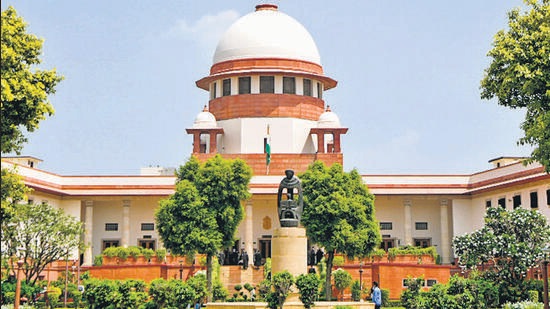
On Wednesday, a discussion on technology and schooling conventional, non-tech savvy lawyers dominated the first hearing of a protracted row between the Union government and the Aam Aadmi Party-led government in Delhi on the control of bureaucrats in the national capital.
Even as the five-judge bench specified October 11 as the tentative date to start hearing arguments, it was firm that it did not want to deal with countless reams of papers containing lawyers’ submissions and case laws when the matter is set down for definitive proceedings.
“I want to tell all the lawyers and parties present that we want to make it a completely green bench. So, no papers at all...completely paperless hearing it is going to be,” Justice Chandrachud announced on behalf of the bench, which also included justices MB Shah, Krishna Murari, Hima Kohli and PS Narasimha.
Justice Chandrachud went on to apprise the lawyers that he met the secretary general, registrars and the IT head of the Supreme Court on Tuesday to put together a plan for training advocates on records (AoRs) and other senior lawyers who want help with technology.
“These officers are the master trainers. They are willing to start with AoRs and then the senior lawyers can also join. Apart from preparing the submissions in this case, please let us know if someone wants training. We are going to conduct such training in the conference room of the court over the weekend. But let us tell you again, don’t circulate any paper compilations in this matter,” added the judge.
At this point, senior advocate Sushil Jain, who was appearing before the bench in a different matter, expressed difficulties that could be faced by lawyers of his age (Jain is in his late 60s) in understanding and becoming familiar with aspects of technology.
“Mr Jain, you do far more complicated things than just arguing cases here. Technology is meant for dummies. Don’t worry, you will have no problem,” retorted Justice Chandarchud.
Justice Shah, on his part, added: “Everybody has to start it someday. We are also starting to learn all this.”
As the bench proceeded to record in its order that the detailed hearing of the case may start from October 11 after the constitution bench cases before another bench headed by Chief Justice of India Uday Umesh Lalit get over, it asked for Attorney General KK Venugopal’s views.
Venugopal replied: “There is a little problem. I am only there till September 30.” The senior counsel’s tenure as AG, which received a third extension of his tenure by three months in June, ends on September 30.
To this, Justice Chandrachud replied; “As I told you earlier as well, you underestimate the power of Article 142.” Article 142 authorises the top court to issue any extraordinary direction to meet the ends of justice.
Solicitor general Tushar Mehta, who represents the Centre in the case, quipped: “I can be the petitioner in such a scenario.”
The court then proceeded to record in its order that advocates Shadan Farasat and Padmesh Mishra will prepare a joint compilation for written submissions, statutory provisions, case laws and other materials that parties will rely on.
“All parties have agreed that proceedings will be conducted in a paperless manner and both the bench and the lawyers have agreed that no paper will be relied upon during the course of the hearing. The registry will scan and create e-copies of the compilations and other relevant material,” directed the bench.
The bench further observed: “We will only have scanned files and common compilations. That will make life so much easier. Make sure your compilations are bookmarked too. We plan to make this (paperless courts) a continuous process.”
Justice Chandrachud also heads the Supreme Court’s e-Committee, which is looking into digitisation reform in the judiciary. At a public event in January , the senior judge underlined the importance of digitisation of case records, electronic filing of papers and making courts paperless. He called it “an important stepping stone for future of a modern Indian judiciary,” adding it is crucial for the judiciary to lead from the front and quell all concerns regarding adoption of modern technology.
Meanwhile, the case relating to the tug of war between the Centre and the Delhi government was listed on September 27 for fixing a definitive schedule of hearing and time that various counsel from the two sides will take to argue the matter. The bench observed that the constitution bench before the CJI-led bench should take precedence and that it would wait for the arguments to conclude before the other bench since there happened to be several common lawyers in these cases.
In May, a three-judge bench referred the matter to a constitution bench, clarifying that the larger bench shall adjudicate the limited issue relating to ‘Services’ in Delhi and that no other substantial issue on the interpretation of Article 239AA requires to be touched since previous orders cover other issues.
Article 239AA delineates the legislative and executive powers of the Delhi government while clarifying three subjects, namely land, police and public order, shall remain under the exclusive domain of the Centre in the capital.
Before the three-judge bench, the Centre pressed for a fresh adjudication by a constitution bench to set the boundaries of the AAP government in Delhi in so far as it relates to transfer and appointment of bureaucrats in the capital.
According to the Centre’s submissions, there can be more than the three subjects specifically mentioned under sub-section 3 of Article 239AA (land, police and public order) on which the Delhi government is restricted from passing a law, and that this aspect should be clarified by another five-judge bench.
The Delhi government, on its part, opposed the Centre’s views, seeking a quick decision on whether or not it has the executive power to transfer and appoint bureaucrats in the Capital.
In a previous round, a constitution bench in July 2018 held that the executive power of the Union government in respect of NCT of Delhi is confined to land, police and public order under subsection 3 of Article 239AA.
However, solicitor general (SG) Tushar Mehta and additional solicitor general (ASG) Sanjay Jain, appearing for the Union government, made the fine point during the proceedings in April that the 2018 judgment did not specifically declare that the Delhi government is empowered to make laws on all subjects other than land, police, and public order.
At that point, senior advocate Abhishek Manu Singhvi, appearing for the AAP government, strongly countered this submission. He argued that the 2018 verdict by the constitution bench is unequivocal in demarcating the powers of the Delhi government and that the submissions by the Centre are aimed at eroding the federal structure. Singhvi added that accepting the Centre’s submissions would render the Delhi legislative assembly meaningless.


