
 E-Paper



Are urban ropeways a good bet for future?
Existing ropeways in India and the world function primarily as additional attractions in tourist hot spots but not as alternative mass transportation systems

 Prefer HTon Google


The temple town of Varanasi — one of the oldest inhabited cities in the world — is synonymous with the vibrant yet chaotic narrow alleys, bustling markets, food, sight, and sound, all of which make for a sensory overload. But soon one will have the option to navigate these streets from a height of 45 metres, as trial runs for India’s first urban ropeway system is expected to start in the city in February.
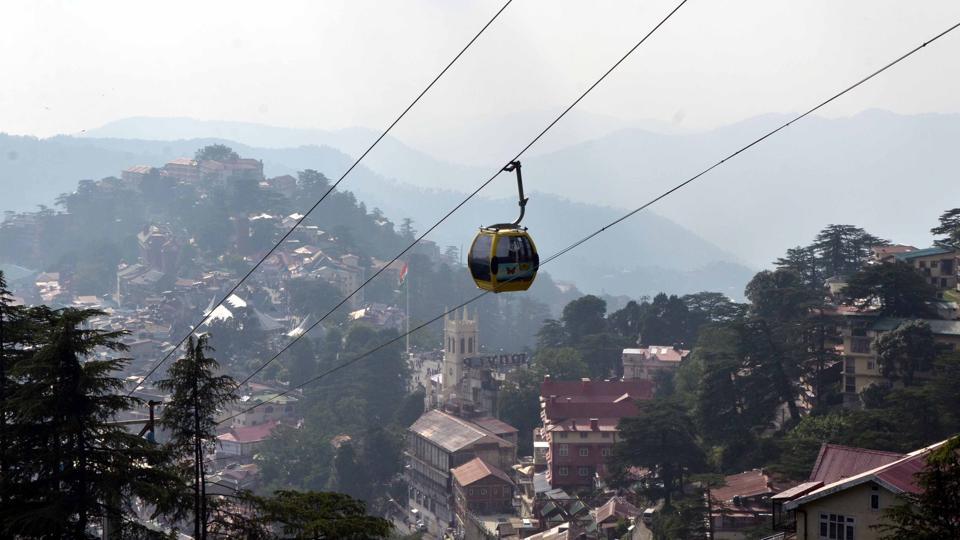
With peak tourist footfalls reaching 200,000 on a single day, this cable car system will help tourists and locals alike, say authorities. It will reduce the journey time from the Cantonment area to Godowlia to 15 minutes, which takes 45 minutes to even an hour during peak hours, said Pulkit Garg, vice-chairman of Varanasi Development Authority.
The 3.85 km ropeway system, with stops at Godowlia Chowk, Girja Ghar, Rath Yatra, Kashi Vidyapith (Bharatmala Mandir), and Varanasi Cantonment Railway Station, is designed to carry 3,000 people in one direction in an hour. Operating for 16 hours a day, the system will have the capacity to carry 96,000 people daily, according to officials. Garg said commercial operations are likely to start in the first half of this year.
The project is being built under a hybrid annuity model (HAM) under the public-private-partnership framework by the National Highways Logistics Management (NHLML), a subsidiary of the National Highways Authority of India. NHLML is also currently setting up around 200 ropeway projects with three such projects tendered out in Himachal Pradesh’s Kullu, Mahakaleshwar Temple in MP’s Ujjain, and Dosi Hills in Haryana under the National Ropeways Development Programme — Parvatmala Pariyojana.
While the fares are yet to be officially set, Garg said ticket prices are likely to be in line with Metro fares in other Indian cities, while an NHLML official said that ticket prices will be comparable with existing auto-rickshaw fares in Varanasi.
The affordable tickets will be made feasible with the help of revenue generated from the commercial space in the stations. “We will have at least 2,000-3,000 sq m of commercial space available at each station with the two terminal stations having even larger space,” said Garg.
Originally, the commercial operations were set to begin by mid last year after Prime Minister Narendra Modi, who is also the Varanasi MP, laid the foundation stone for the project in March 2023. However, the project faced delays including land acquisition hurdles. Garg said the final land acquisition hurdle was cleared last week only. He said while majorly the project was built on government land, there was minor land acquisition needs with only ₹60 crore spent for land acquisition from private parties.
Once the ropeway is ready, the city will join many South American cities to have such an aerial mass transit option.
Existing ropeways in India and the world function primarily as additional attractions in tourist hot spots but not as alternative mass transportation systems. While ropeways, cable cars, and aerial trams are often used interchangeably, they differ slightly. However, all three can be classified as aerial lifts.
Medellin in Columbia (the second most populous city after the capital Bagota) was the first such city globally to start a mass transit cable car system that connects with the city’s metro network in 2004. By 2022, the network grew across six lines to a total of 14km in length carrying more than 220 million people annually with one major line carrying 44,000 passengers daily. A similar system in Mexico City currently around 24.75km in length spread across two lines serves around 135,000 people daily, especially in hilly underserved areas by conventional transport.
Mi Teleférico (My cable car) in Bolivia — the world’s largest and highest cable car system joins the two cities of El Alto and La Paz and the contiguous urban area, and sees a daily ridership of 300,000 across 10 lines with one major line carrying more than 65,000 passengers daily. Commuting between the two cities, which would otherwise take an hour through windy roads on a bus, has been reduced to just 15 minutes at a cheaper fare due to this.
Such systems have gained traction in New York or Constantine in Algeria or Haifa in Israel or Namur in Belgium but nothing comparable to the South American cities. In 2008, New York City developed an aerial tramway between Roosevelt Island to Manhattan. This one-km journey over the East River is made by more than 2 million persons annually.
Is ropeways a good bet?
While cable cars in Medellin, La Paz or even Caracas in Venezuela has tasted success, not only as a transport solution but also bringing much intended socio-economic benefits, it failed to take off not so far away in Brazil’s Rio de Janeiro after it was introduced in the run-up to the 2014 FIFA World Cup.
Garg said that given the dense settlement, there was no scope to widen roads at-grade or even build flyovers. Ropeways also solve the twin problems of pollution and congestion without requiring much land acquisition with only about ₹60 crore spent for this purpose. “The only viable alternative was to build an underground metro but given the historical and cultural importance of the city, the risks of digging up was avoided.”
Another city-based official said that to reduce congestion, the traffic police and the municipality have already restricted vehicular movement in about 4km length of roads leading to the Vishwanath temple in recent years with increased pedestrianisation under Smart Cities Mission.
Incidentally, Varanasi was chosen to be part of Toyota Mobility Foundation’s $9 million Sustainable Cities Challenge as a host city along with Detroit and Venice among a total of 150-plus cities from 46 countries in 2023.
As part of the global challenge, around 80 applications from around India and abroad are being filtered to select 10 solutions which will include deep-tech-enabled crowd control measures based on virtual simulations, especially for high footfall days such as Mahashivratri or Diwali.
An independent expert working on selecting solutions for Varanasi said, “The ropeway is an integral addition to the transportation mix as it links both the railway station and the highway with the old temple town. It also connects the other primary pilgrimage sites of Annapurna Devi, Vishalakshi Devi, and Jyotirling.”
With time, if the tourist footfall continues to grow, he said the authorities could decide on staggered, time-based entry and exit or one-way routes inside the core temple town and also have an option of elevated walkways.
He added more options are necessary as accessibility to the temple is available only from the west and south. “The north side is Manikarnika Ghat, which does not have big access to allow mass movements towards the temple and the east side is the river. So there is a need to develop a two to three-tiered crowd management system if the footfalls continue to increase.”
A senior NHAI official said if the financials work out in Varanasi as planned, then the central government may push for such urban ropeway projects in densely built-up pockets across the country such as Chandni Chowk in New Delhi and the old-city area of Hyderabad among others. Incidentally, Delhi lieutenant governor (LG) VK Saxena directed the Delhi Development Authority to initiate surveys and identify suitable sites for installing a ropeway system across the Yamuna in the previous week.

Stay updated with all top Cities including, Bengaluru, Delhi, Mumbai and more across India. Stay informed on the latest happenings in World News along with Delhi Election 2025 and Delhi Election Result 2025 Live, New Delhi Election Result Live, Kalkaji Election Result Live at Hindustan Times.


