
 E-Paper



Army gears up to face 3-tier PLA deployment along LAC
Military planners say there is evidence of PLA deploying one border regiment, backed by two divisions of Xinjiang and Tibet Military districts with four CABs in reserve across LAC in East Ladakh in the western sector.

 Prefer HTon Google


New Delhi: Nearly three years after the Pangong Tso transgression by the Chinese People’s Liberation Army, the Indian Army has geared up to face the challenge of what military planners describe as a three-tiered force arrangement by the opposition along the western and the eastern sector of the 3488 km long Line of Actual Control (LAC).
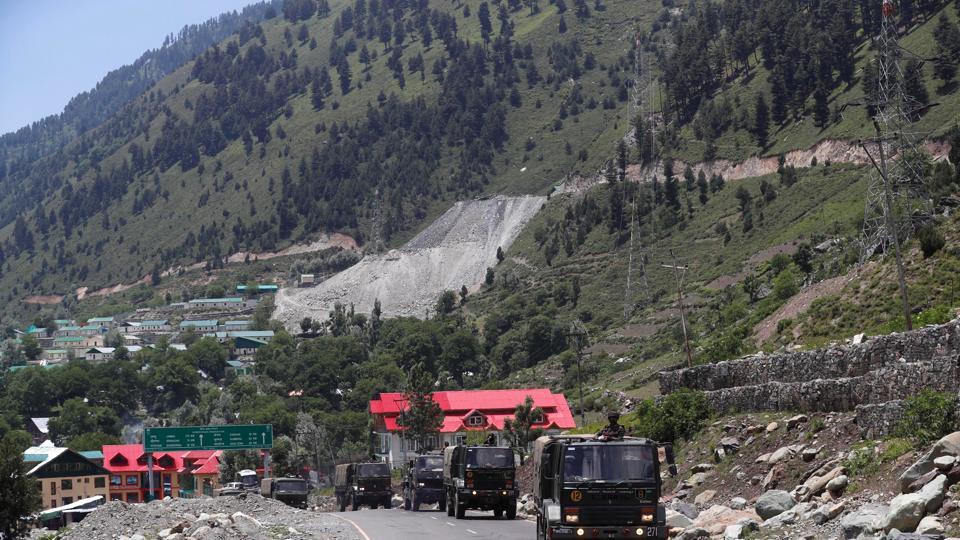
According to available surveillance and satellite imagery inputs, Beijing has a three-layer arrangement to project force along LAC with border guards forming the first layer, Tibet military district troops as the second, and reserve troops in the form of light to medium combined armed brigades or CABs (each CAB has around 4500 troops with mechanized elements and armour as per terrain requirement) forming the third.
Military planners say there is evidence of PLA deploying one border regiment, backed by two divisions of Xinjiang and Tibet Military districts with four CABs in reserve across LAC in East Ladakh in the western sector. This force is adequately matched by Indian Army and armour deployment despite the terrain being treacherous on the Indian side of LAC in East Ladakh. Even though the two armies have disengaged from the April 2020 friction points, PLA is yet to restore patrolling rights to Indian Army in Depsang Plains and Charding Ninglung Nullah (CNN) junction in Demchok with there being no signs of any de-escalation in these areas.
There is no PLA troop accretion in the middle sector, but Beijing has built a dual purpose airport at Burang county in Ngari prefecture across Uttarakhand on the way to Mount Kailash-Mansarovar lake pilgrimage from the Indian side. This will allow faster deployment of PLA troops in case of any military emergency, the planners add.
The situation in the eastern sector is similar to the western sector as additional CABs from eastern and northern PLA theatre commands were inducted as reserve after the October 2022 National Party Congress in which Xi Jinping was re-elected as President of China by the Communist Party of China (CPC). After border guards and military district troops, as many as three light to medium CABs have been deployed by PLA in Cona county (across Tawang), Lhunze and Mainling county, south of Nyingchi headquarters across Arunachal Pradesh. The situation is the same across the sensitive Siliguri corridor, which links India’s northeastern states to the rest of the country, the planners said.
PLA has deployed three CABs across the Siliguri corridor with reserve troops in Phari Dzong, Shigatse and Lhasa in the interior of Tibet. There is an accretion of PLA troops in the India-Bhutan-Tiber tri-junction area where PLA is exerting military pressure on Bhutan to come to a beneficial border agreement in favour of Beijing, the planners added.
Since there was some withdrawal of troops from a light CAB deployed at Cona county after the conclusion of the CPC Party Congress, there was an expectation that reserve troops would be withdrawn elsewhere too, but this turned out to be a false hope and it is now evident that all the six CABs along LAC in the eastern sector and four CABs in the occupied Aksai Chin area will remain permanently deployed as part of the three-tier arrangement, the planners explained.
The Indian Army took note of PLA’s capacity and capability in the eastern sector over the winter and is geared to meet the military challenge with no less than 10 divisions at its command in Sikkim and Arunachal Pradesh. With tunnels under Sela and Nechiphu ready to become operational this summer, Indian troop deployment in the sensitive Tawang region will no longer be at the mercy of inclement weather. It will also have the additional flexibility to open other fronts in the eastern sector in the worst-case scenario., the planners said


