
 E-Paper



Attempts to build a ‘shrine’ for don-turned-MP Shahabuddin at Delhi graveyard
For the past week, the guards at the Qabristan Ahle Islam, one of the biggest burial grounds for Muslims in the city, have been told to be vigilant, especially during the night, and look out for people who are determined to build a shrine for gangster-turned-politician Mohammed Shahabuddin.

 Prefer HTon Google


The management of the graveyard at ITO in central Delhi has a complicated problem -- one that involves religion, politics, Covid-19, and a dreaded former gangster.
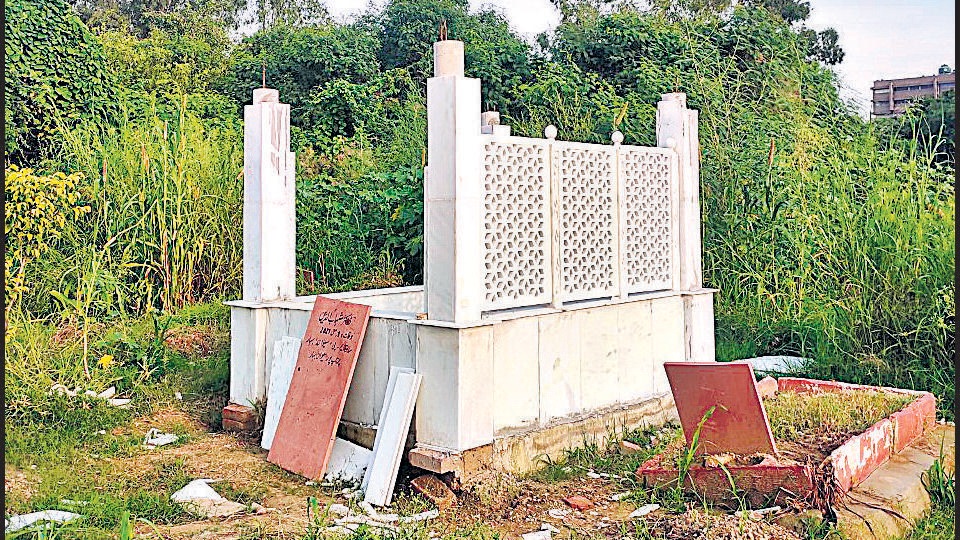
For the past week, the guards at the Qabristan Ahle Islam, one of the biggest burial grounds for Muslims in the city, have been told to be vigilant, especially during the night, and look out for people who are determined to build a shrine for gangster-turned-politician Mohammed Shahabuddin.
Last week, unidentified supporters of the former parliamentarian succeeded in placing marble slabs, and a green cloth, usually placed over shrines of sufi saints, on Shahabuddin’s grave. A labourer at the graveyard noticed this, and informed the police.
A senior police officer, who asked not to be named, said, “No FIR has been registered. There were photographs of the structure circulating on WhatsApp groups so the deputy commissioner of police concerned visited the spot. The management authorities had asked the police to intervene so that there is no further construction. No one has been arrested.”
This was the second attempt by Shahabuddin’s supporters to build a shrine to him in the graveyard. Shahabuddin, who was infected with Covid-19 in Tihar jail on April 20, succumbed to the infection on May 1. His family was unable to take his body back home in Bihar, and he was laid to rest at the ITO graveyard.
In May, the former don-turned-politician’s supporters started making a permanent structure above the grave when the management committee intervened and informed the police. Due to the paucity of space within the graveyard, building a permanent structure on a grave is not allowed. Also, according to the rules of the management, a shrine inside the cemetery can only be constructed if the person was a spiritual leader or a famed Islamic scholar. In 2017, when the Supreme Court heard Shahabuddin’s case, he had at least 45 criminal cases against him.
An official of the committee that manages Qabristan Ahle Islam said that days after Shahabuddin’s death, a man who claimed to be the dead MP’s uncle wrote to them seeking permission to build a mazaar (shrine). But the permission was not granted. The official, who spoke on the condition of anonymity, said, “Despite rejecting the request, we noticed after some days that the grave was covered with stone blocks by some labourers. There were some musclemen who had also fought with our workers. We informed the police and the work was stopped.”
At the burial ground, everyone thought that the matter was laid to rest, until last week, when a workers saw some locals curiously standing in front of the under-construction marble shrine.
The structure above Shahabuddin’s grave stood out because it is the only one – resembling a shrine – in one corner of the cemetery filled with Covid-19 bodies.
Mohammed Shamim, caretaker of the graveyard, said, “People came at night and tried to build a shrine. Senior committee members had refused them permission. A shrine can be constructed only for a holy person or a spiritual leader. The police have been informed. Senior police officers came here and inspected the site. The work is now on hold.”
Workers at the graveyard suspect that the supporters of the former Rashtriya Janata Dal MP may have climbed over the wall from the rear side of the cemetery, near the old Delhi Police headquarters, and constructed the structure at night.
Haji Shamim, secretary of the Qabristan Ahle Islam, said, “I want to clarify that the committee has never given permission to build a shrine. The construction by some unidentified people is illegal and against rules. If this happens, everyone will want to build a shrine here.”
Shahabuddin’s son, Osama Sahab said the family was only trying to cover his father’s grave. “People are using this issue for publicity. Our family only wanted to cover the grave. We did not want to build a mazaar.”
Shahabuddin,53, was brought to Tihar prison in February 2017 on the Supreme Court’s order on a petition by Siwan-based businessman Chandrakeshwar Prasad, whose three sons were killed in two incidents. Two of them were drenched in acid before they were killed. Asha Ranjan, the wife of journalist Rajdeo Ranjan who was murdered in Siwan, also pleaded that they would never get a fair trial as long as Shahabuddin was in a Bihar jail. Shahabuddin was an accused in both the cases.


