
 E-Paper



Beneficiaries of Delhi’s two in-situ rehab projects still wait to move in
Long wait for residents of Bhoomiheen Camp and Kathputli Colony as DDA yet to hand over flats under the two projects.

 Prefer HTon Google


New Delhi: Sheikh Mustafa’s dream of owning a house in the national capital came close to fruition last year when the Delhi Development Authority (DDA) decided to allot flats at Kalkaji Extension to 2,700 families of nearby Bhoomiheen Camp. But the 61-year-old, who owns a shop owner in the area, says that the DDA is yet to start the allotment as construction work is still going on.
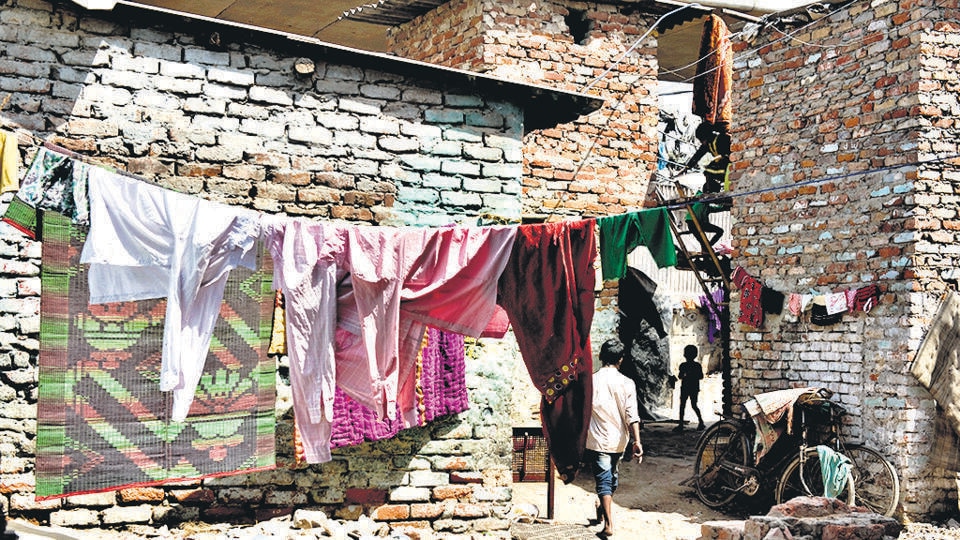
“It has been a long wait. DDA’s decision got our hopes up last year, but now we don’t know when we will be able to shift to our new homes,” said Mustafa, a social worker who has been pursuing the matter with DDA.
Conceived in 2011, these flats are part of DDA’s second in-situ slum rehabilitation project. Former Delhi chief minister Sheila Dikshit laid the foundation stone for the project in October 2013. The plan was to rehabilitate 8,461 families of three slum clusters -- Jawahar Lal Camp, Navjivan Camp and Bhoomiheen Camp -- located in Govindpuri, Kalkaji, in a phased manner. In the first phase, 3,024 flats were to be constructed on a nearby plot and the remaining were to be constructed on the land vacated by slum residents.
In September last year, DDA said that the construction work is 93% complete and the allotment was expected to start in December. “The allotment process will now start in March,” said a senior DDA official.
Mustafa said, “In 2013, we were told that we will get the new houses within 2-3 years. Our families have grown and our children don’t want to live in the basti (slum). But we can’t leave this place, as we all work nearby.”
Around 22km away from Kalkaji extension, 2,800 residents of Kathputli Colony have been living in a transit camp for over five years now in the hope of getting a flat.
Though the in-situ slum project at Kathputli Colony was conceived in 2008, it faced stiff resistance from locals. In December 2016, the DDA finally started the demolition exercise and, amid protests from locals and civil society members, they took almost a year to clear the land. The construction work started in April 2018 and the first batch of houses were to be given by March 2019.
Patasi (65), a Rajasthani folk artist and local leader of Bhat community (one of the many communities at Kathputli Colony), said, “We were to get our flats within two years after demolition of our houses. But it has been over five years and we have no idea when we will be able to finally have a house of our own.”
DDA officials said that the two projects have been delayed due to the ban on construction activity followed by the Covid pandemic. “The Kalkaji flats will be completed soon. The construction work there was affected due to the ban. At Kathputli colony, we got permission to clear encroachments from a large piece of land at the site in April last year. Clubbed with the restrictions due to Covid, the work got delayed further. Close to 500 residents will be allotted flats at Kathputli by March and remaining 2,300 by December-end,” said a senior DDA official, aware of the development.
The years-long delay in its two pilot projects has not deterred the DDA is already planning new projects and has invited bids for construction of 10,500 flats for in-situ rehabilitation of six slum clusters -- three sectors in Rohini, Haiderpur, Dilshad Garden and Shalimar Bagh -- on a public-private partnership (PPP) basis. “The proposals for the six projects will be finalised by the end of this month (January),” said a senior DDA official.
In-situ redevelopmenthas been a poll promise of all political parties in the Capital, but no in-situ project has been completed in the past so many years, says Shakeel Ahmed, convener of Basti Suraksha Manch, an organisation working for the welfare of slum dwellers.
“How long can people live in transit camps? The projects should have been completed in a time bound manner. But till date, no one has got a flat under the in-situ rehabilitation projects. The concept of in-situ on PPP mode is flawed . It has failed in Mumbai. Today, slum residents are scared of giving consent to such projects as they fear they won’t get the flats on time,” says Ahmed.
Land and housing rights activists say that there is a need to learn from the past mistakes and look for new solutions to address the housing problem for people in the economically weaker sections.
Enakshi Ganguly, executive director of the Housing and Land Rights Network, an advocacy group, said that while in-situ redevelopment is a solution, there is a need for an area or locality specific approach. “For redevelopment of slums, there is a need to find solutions by working around the needs of the people living there. One plan can’t be replicated everywhere. For instance, Kathputli Colony residents are mostly artists and they have a specific requirement related to their profession. The project has to factor in the needs of the people of the slum,” she said.
In the baseline report prepared for the Master Plan of Delhi-2041, the National Institute of Urban Affairs (NIUA) has said that there are 675 JJ clusters in Delhi occupying close to 800 hectares of land and containing over 300,000 housing units in the Capital.
For their rehabilitation, housing rights activists say that there is a need to examine the provision for housing/shelter in the new master plan, which is likely to be notified this year.
Housing rights activist Aravind Unni, a member of Main Bhi Dilli -- a campaign aimed at making planning in Delhi more inclusive in the Master Plan of Delhi-2041, said, “The in-situ rehabilitation on PPP basis has clearly not worked in Delhi. Now that the new master plan is being prepared, there is a need to relook the strategy. But the DDA is still continuing with the old strategy.”
However, senior DDA officials said that PPP is the only way to rehabilitate and redevelop slum clusters.
With close to 16 projects of in-situ redevelopment of slum clusters in various stages of planning, the land-owning agency recently has approved an amendment in the in-situ policy to “mitigate risks of prospective bidders for upcoming projects” and expedite the work.


