
 E-Paper



CBI to probe if excise policy aided liquor cartels
Delhi’s deputy chief minister Manish Sisodia is accused in the case and Bharatiya Janata Party (BJP) has said he benefitted from the excise policy, a charge denied by the Aam Aadmi Party (AAP)


As part of its corruption probe in the Delhi excise policy 2021-22, the Central Bureau of Investigation (CBI) is examining whether the policy, which was meant to curb the cartelization of liquor trade in Delhi, actually allowed it, with the Delhi government either not being aware or choosing to ignore this, people familiar with the development said.
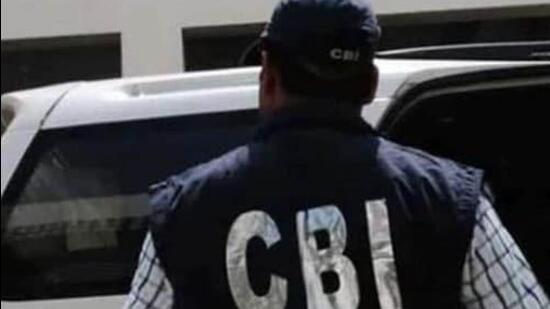
The focus is also on how the money generated through a nexus of manufacturers-distributors-retailers made its way to the public servants, they added, asking not to be named
Delhi’s deputy chief minister Manish Sisodia is accused in the case and Bharatiya Janata Party (BJP) has said he benefitted from the excise policy, a charge denied by the Aam Aadmi Party (AAP).
Also Read: ‘Will not touch this matter’: SC rejects petition seeking national liquor policy
The Delhi government has claimed that Sisodia is being framed by the Centre. An official said on Wednesday: “This is just an eye wash. Their main aim is to arrest Manish Sisodia before the Gujarat elections. They are scared of AAP’s increasing popularity.”
A key condition in the policy was that no manufacturer or wholesale licence holder would be allowed to bid for the retail vends or vice versa but the central agency is investigating multiple instances of links that have emerged between manufacturers, wholesalers and retailers. To be sure, the agency has not arrived at a conclusion on whether these links are significant, whether they violated the policy, and whether the state government knew about them.
For example, Sainik Industries, a company which got L7Z zonal retail licence for zone 17 under the new excise policy appears to have links with the Wave Group (of the late Ponty Chadha). The ministry of corporate affairs (MCA) company data reveals that one of the directors in Sainik Industries was associated with the Wave Group. Since Wave Group is already a major manufacturer and distributor of liquor in various states, it would have been ineligible to enter retail market in Delhi, according to the now-scrapped excise policy. Rajinder Singh Chadha of Wave Group (brother of Ponty Chadha) told HT over the phone: “I have nothing to do with Delhi excise policy. We were not involved in it at all. These are all baseless allegations”.
Similarly, Madhya Pradesh-based Som Industries , a major manufacturer-distributor group appears to have links with Raisen Marketing Pvt Ltd with received a retail licence for zone - 13 during tendering process. A look at a group company’s website reveals that there are common directors in Raisen and Som, which is run by Jagdish Arora. When contacted, Jagdish Arora denied the charges of “cartelization”. “There is no basis in these allegations. We are not connected with any other company”.
A common link between Som and Wave appears to be L1 wholesale licencee – Delhi Liquors. While there is no publicly available data on Delhi Liquors, it is said to be linked with Prashant Arora of Rock and Storm Group, a major liquor player in Punjab with distribution network in many states. Prashant Arora declined comment.
To be sure, Wave Group, Som Industries or Rock and Storm Group are not named in the CBI first information report (FIR) filed on August 17 against Sisodia, former excise commissioner, Arva Gopi Krishna, former deputy commissioner Anand Tiwari, assistant commissioner Pankaj Bhatnagar and 11 other individuals/entities.
However, CBI is looking at a larger conspiracy and involvement of all those who seem to have benefitted from the policy.
Another instance of a suspected syndicate that is under the scanner is that of Indospirit Group run by Sameer Mahendru, named as accused in the CBI FIR, and the Balaji Group of YSR Congress party Member of Parliament Magunta Sreenivasulu Reddy.
Indospirit got the L1 wholesale licence in the new excise policy, and it is believed to have links with Khao Gali Restaurants, which received retail licences for zone 2 and 3 (itself a violation according to the rules). Balaji Group’s Magunta Agro Farms Pvt Ltd is believed to have got zonal licences for 4 and 23 and one of its companies, Pixie Enterprises, initially for Zone 32. Zone 32 later went to another company.
MCA data reveals Khao Gali has linkages with Indospirit as Mahendru’s wife Geetika’s father Shyam Kapur is one of the directors in it.
Indospirit was the wholesaler for both Magunta Agro and Khao Gali.
In fact, a show-cause notice dated November 21 issued by Delhi excise department to Indospirit Group last year stated : “The complainant states there is a cartel formation between M/s Khao Gali Restaurants Pvt Ltd, an Indospirit group company and the Balaji Group for winning five zones. It has been further alleged that the Balaji Group and the Indospirit Group have formed a cartel in a clandestine manner and have won five zones between them despite being distributions and manufacturers in violation of Clause 4.1.1, Clause 4.1.2(i) and Clause 4.1.2(iv) of the Excise Policy 2021-22 and Clause 2.3, 2.6, 6.6, 20.2, 20.3, 24.1 and 26 of the Tender.” It isn’t clear what happened after that.
Sameer Mahendru’s residence was raided by CBI on August 19 and by the Enforcement Directorate (ED) earlier this month. He is also accused of making two payments : ₹1 crore to the UCO Bank account of Radha Industries, a company managed by Dinesh Arora , a close associate of Manish Sisodia; and another cash payment of ₹2-4 crore to Gurugram based Arjun Pandey, an alleged middleman also named in the FIR. To be sure, the investigation into the money trail is ongoing.
Sreenivasulu Reddy said : “These are just allegations. We don’t have any licences (in Delhi)”. Mahendru didn’t respond to HT’s calls or texts.
Another case of possible manufacturer-wholesaler-retailer nexus that the central agency is looking into concerns Buddy Group , promoted by Amit Arora. Buddy got a L1 licence in the name of KSJM Spirits and two L7Z zonal licences – one at the airport in the name of Buddy T-1D Retail Pvt Ltd and another in the name of Popular Spirits LLP in Zone 30. The MCA data shows that one of the directors of Popular Spirits , Sahil Arora is also a director in Buddy (T-3 Delhi) Retail Pvt Ltd and Buddy Airport Retail Pvt Ltd. Similarly, one of the directors in KSJM is also associated with one Buddy Group company.
Amit Arora didn’t respond to HT’s calls and an email query.
In Zones 1 and 27, which went to Karnal based Bhagwati Transformers Pvt Ltd -- Mahadev Liquors was its wholesaler -- the agency is looking into whether the latter is linked to manufacturing-distributing Adie Broswon Group. Names of Bhagwati’s directors are not available on the MCA database but Sunny Marwah, named as one of the accused in CBI FIR, is director in Mahadev and Adie Broswon. The group was anyway already in the manufacturing and distribution business, and hence, ineligible for retail licence in Delhi.
CBI has said that Sunny Marwah, an authorized signatory of Mahadev Liquors, was also a director in companies/firms managed by family of Ponty Chadha, and was in close contact with accused public servants .
When contacted, Marwah denied having any links with Ponty Chadha’s Wave Group. “I am giving my statements to CBI. I am not part of Raju Chadha (Rajinder Singh Chadha of Wave) group but Mahadev Liquors. My company was not involved with anyone”. Adie Broswon group did not respond to an e-mail query.
A CBI officer said the agency is verifying all these connections. The federal agency is also examining various documents collected by it during the raids and sent to its office ‘anonymously’ to find linkages between different wholesalers, retailers and liquor manufacturers.
“We are keeping a neutral view. It is being examined if this entire process was a result of cartelization with connivance of Delhi government officials in it. But, it must be said that it would have been easy for Delhi’s excise department to verify the ownership of companies and their cross-connections, particularly since there are some major players involved”, the officer added.
CBI has claimed that Manish Sisodia, along with others, was “actively involved in managing and diverting the undue pecuniary advantage collected from liquor licencees to the public servants”.
The irregularities, according to the CBI case, were committed including in modifications in excise policy, extending undue favours to the licensees, wavier/reduction in licence fee, extension of L-1 license without approval etc and Illegal gains were diverted to concerned to excise department officials by the private parties beneficiary of the policy.
Delhi’s new excise policy was introduced in November, 2021 when the government exited the retail liquor business. It ran into controversy in July this year when lieutenant governor of Delhi VK Saxena recommended a CBI investigation into alleged irregularities, including alleged bending of rules and processes. The issues included a ₹30 crore refund to a bidder who failed to get the requisite clearances, and the waiver of ₹144.36 crore in license fee for the period when a Covid-19 outbreak-induced lockdown was in force.
The AAP has denied the allegations, saying the charges are vague and fail to connect any officials directly to any kickbacks, and the controversy was meant to derail the party’s growing popularity nationwide.
A second officer said that the CBI is looking at how government officials, in connivance with big liquor businessmen, “killed the smaller competitors who could not pay the bidding amount of ₹225 crore for a zone.”
“By getting the wholesale and retail businesses both, some groups had a monopoly in the entire zone, defeating the entire purpose of what the policy was supposed to achieve,” said the second officer.
CBI officials say identifying the manufacturer-retailer-wholesaler nexus at the initial stage was not very difficult.
Establishing the money trail will be more difficult, they added.
“We have information about money paid to some people. From the beginning, the idea seems to have been help some liquor businessmen and allow new groups to control the entire trade in the name of different companies. If the retail licencees didn’t disclose their associations with wholesalers and manufacturers, it was the duty of the excise department to conduct due diligence to verify their ownership, funding and directorship,” said the first CBI officer.
The agency has questioned several licence holders, middlemen and liquor distributors in the case so far.
Stay updated with all top Cities including, Bengaluru, Delhi, Mumbai and more across India. Stay informed on the latest happenings in World News along with Delhi Election 2025 and Delhi Election Result 2025 Live, New Delhi Election Result Live, Kalkaji Election Result Live at Hindustan Times.


